Burg Beetzendorf, castle
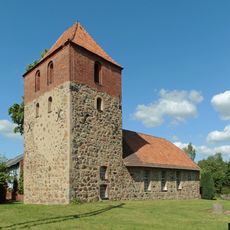
Burg Beetzendorf is the ruin of a lowland castle in the wooded park of Beetzendorf. Surviving are the northern castle gate, reconstructed in the 19th century by Werner von der Schulenburg, and nearby the roughly 20-metre-high bergfried of red brick on an 8.5 by 8.5 metre base, with a high entrance 4 metres up and walls one metre thick. The baroque garden is preserved in its basic outlines.
The castle was built around 1140 and first mentioned in writing in 1204 when the Krocher family pledged it to the Schulenburg family. Over the 14th century it passed fully into Schulenburg hands, was rebuilt as a fortress around 1600, and ceased serving defense purposes during the Thirty Years War before the family left in 1760.
The name Beetzendorf derives from the Slavic settlement on the marshy lowland where the castle was built around 1140. The von der Schulenburg family made it their main seat from 1343, and in 1424 brothers Bernhard VI and Werner VIII founded a chapel dedicated to Mary, likely abandoned after the Reformation. Today the site hosts an open-air stage added in 1950–52, used for performances.
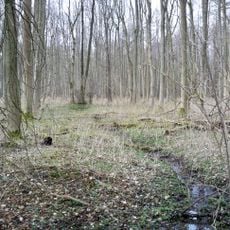
The ruins lie in the high forest of the Beetzendorfer park; the surviving north gate was secured and reconstructed in the 19th century by Werner von der Schulenburg, and an open-air stage used to this day was added to it between 1950 and 1952. The red-brick bergfried nearby stands about 20 m high on an 8.5 by 8.5 m base, with its entrance set 4 m up and walls one metre thick. Traces of the baroque garden can still be made out in the grounds.
An open-air stage was built in the ruins in the 1950s, transforming the grounds from a fortress into a venue for public performances. This adaptation shows how historical sites gain new life and continue to draw visitors today.
The community of curious travelers
AroundUs brings together thousands of curated places, local tips, and hidden gems, enriched daily by 92,620 contributors worldwide.