Burg Dringenberg, Medieval castle in Bad Driburg, Germany.
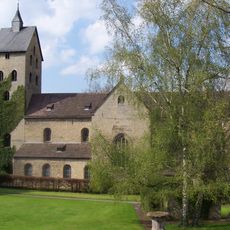
Burg Dringenberg is a medieval hilltop castle on a 298-metre spur above the village of Dringenberg, in Bad Driburg, North Rhine-Westphalia. Its defensive wall encloses a courtyard with a 38.60-metre well, and the south side has a gatehouse reached by a massive bridge over the moat. The southeast wing contains the Hungerturm, a defensive tower.
The fortress was built in the 14th century as a main stronghold for the Paderborn bishopric to control the region. Throughout its history, it played a key role in regional power struggles and the territorial disputes of that era.
The castle's name comes from the Freigrafschaft Dringen, which Bishop Bernhard V. zur Lippe bought from the Count of Everstein in 1316. In May 1471 the "Peace for 33 Years" ending the Hesse-Paderborn feud was concluded here. The historic chapel is still used for weddings, and the south-east wing serves local clubs as meeting and rehearsal rooms.
Access to the castle requires walking up a path from the valley floor, and sturdy footwear helps since the ground can be uneven. Plan enough time to explore the walls and towers at a relaxed pace and enjoy the views across the surrounding landscape.
The Hungerturm is a defensive tower in the castle's southeast wing, built in 1488/98 together with the gatehouse and castle chapel under the supervision of Dringenberg's Landdrost Otto Arndt von der Borch zu Detmold. The sources record no prison function for it. The castle well in the courtyard, 38.60 m deep, is the subject of a legend: the knight Teudebert was said to have cut it through the rock while held captive, promised freedom once groundwater appeared, and died the day that day came.
The community of curious travelers
AroundUs brings together thousands of curated places, local tips, and hidden gems, enriched daily by 93,744 contributors worldwide.