Kloster Willebadessen, Benedictine monastery in Willebadessen, Germany.
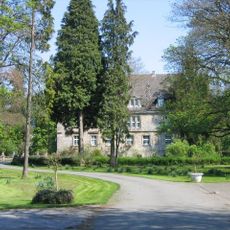
Kloster Willebadessen is a Benedictine monastery in North Rhine-Westphalia with stone walls, arched corridors, and rooms arranged around a central courtyard. The buildings display typical monastic architecture designed to support the structured life of a religious community.
The monastery was founded as a center for Benedictine nuns and became an important religious institution over several centuries of German history. Its establishment and growth were connected to broader religious movements in Northern Europe.
The monastery was dedicated to Saints Vitus, Cosmas, Damian and Mary; its church became the parish church in 1830. The name Willebadessen comes from the settlement that Bishop Bernhard I of Oesede allowed to be founded as a town in 1317. The former smithy of 1688 now houses the Haus des Gastes, and the 1738 barn serves as a seminar building of the Auslandsgesellschaft Nordrhein-Westfalen.
The site is accessible by regional trains to Willebadessen station, followed by a short walk through the town center. Visitors should check current access conditions as they can vary depending on the season and special events.
The Vitus shrine, an altar-shaped reliquary of yew wood decorated with silver and gold, dates from around 1200 and is among the church's oldest furnishings. Parts of the wings of the 1521 high altar by Gert van Loon are now kept in the LWL museum in Münster.
The community of curious travelers
AroundUs brings together thousands of curated places, local tips, and hidden gems, enriched daily by 94,289 contributors worldwide.