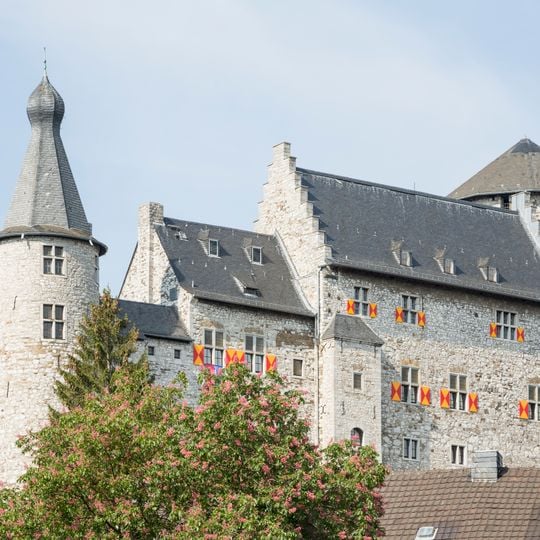
Burg Stolberg, Medieval castle in Stolberg, Germany
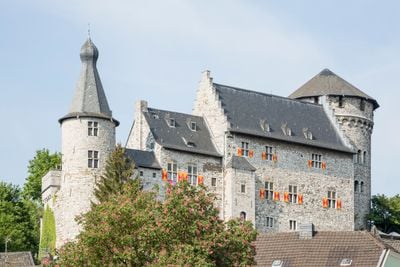
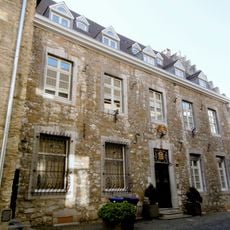
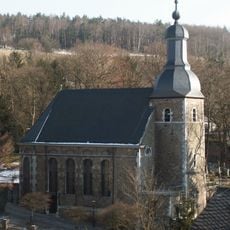
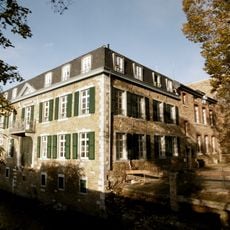
Burg Stolberg is a medieval fortification perched on a hilltop with three sides dropping steeply, creating a striking outline against the North Rhine-Westphalian landscape. The complex combines original medieval structures with significantly rebuilt sections and now houses exhibition spaces, halls, and other areas open to visitors.
Built in the 12th century by the Lords of Stalburg, the castle was pledged by the Dukes of Jülich in the mid-15th century to the Lords of Nesselrode, who rebuilt the demolished complex as an open house. In the mid-16th century Hieronymus von Efferen extended it after destruction. It fell into ruin in the 18th and 19th centuries, passed to bourgeois ownership in 1863, and from 1888 the manufacturer Moritz Kraus rebuilt it in historicist style, donating it to the city in 1909.
The name Stalburg comes from Middle High German stal, "firm", and became Stolberg by sound change; the spelling Stolberg is recorded from 1572. Today the castle serves as a venue for cultural events and houses various clubs, with a local history and crafts museum in the Torburg.
The castle stands on a steep limestone crag reached from the Stolberg old town; the grounds are split into four terraces falling southward, linked by stairs. A lift inside the north tower and a spiral staircase lead up to the upper courtyard with its covered well. The lower gate castle, housing the local history and crafts museum, is entered from the east.
The castle's name began as Stalburg, from the Middle High German "stal" meaning firm or steadfast, so it can be read as "strong castle". Sound shifts turned the long a into o, and the spelling Stolberg is first recorded in 1572; between 1276 and 1756 documents also use Stollberg.
The community of curious travelers
AroundUs brings together thousands of curated places, local tips, and hidden gems, enriched daily by 92,893 contributors worldwide.