Weinsberg Castle, Castle ruin in Weinsberg, Germany
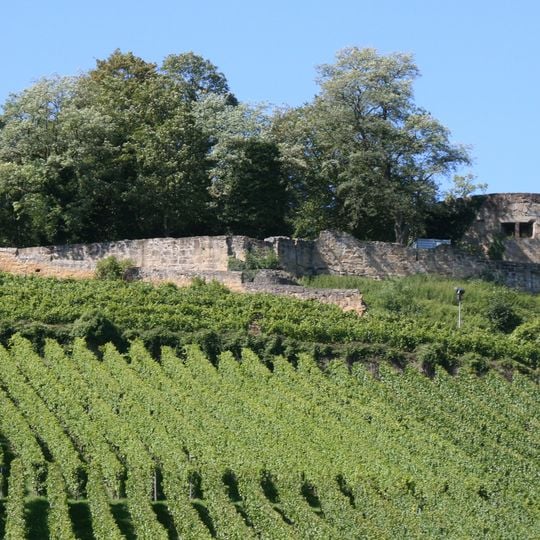
Weinsberg Castle, originally Burg Weinsberg, is a ruin on the 272.2 m Burgberg northwest of Weinsberg's town centre. Rough stone walls in pale grey, tan and brown run behind rows of vines; at the right a taller block holds a small wooden-framed window with a short metal railing, and a lower wall section stands in front near the centre.
Built probably in the early 11th century, the castle first appears in the founding history of Öhringen Abbey, where Countess Adelheid of Metz, mother of Emperor Conrad II, is said to have lived there before the abbey's foundation in 1037. In 1140 King Conrad III besieged it for weeks; after the battle of 21 December the garrison surrendered, and the women carried their husbands down the hill, saving them. The castle remained a Reichslehen of the Lords of Weinsberg until 1450.
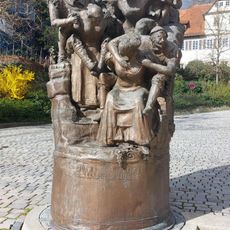
The name Weibertreu refers to a 1140 event when women carried their husbands on their shoulders to save them from execution. This story remains central to how locals understand the castle's identity.
Visitors can reach the castle ruins via marked hiking trails that wind through surrounding vineyards and orchards in the area. The paths are well-signposted and suitable for different fitness levels.
The castle's exposed position in the southwest corner of the Weinsberg motorway junction, where the A6 and A81 meet, makes the ruin familiar to many drivers who have never climbed the hill. Its owner is the Justinus-Kerner-Verein und Frauenverein Weinsberg, and the site can be visited for an admission fee.
The community of curious travelers
AroundUs brings together thousands of curated places, local tips, and hidden gems, enriched daily by 92,647 contributors worldwide.