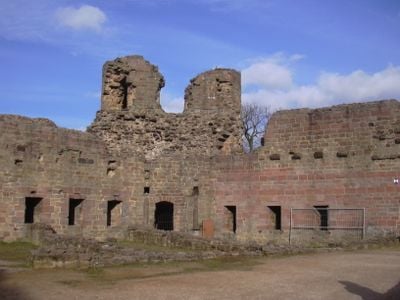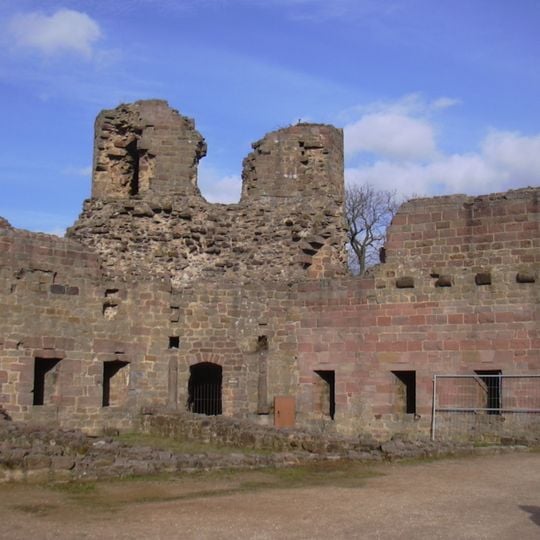
Neuleiningen Castle, Medieval castle ruins in Neuleiningen, Germany.
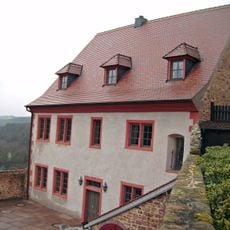
Neuleiningen Castle is a ruined quadrangular fortress begun around 1240, with four round towers projecting beyond the walls and many narrow arrow slits for bows and crossbows. The surviving masonry dates from the 14th to early 17th century; the north side keeps the stepped gable of the palas, and the southeast corner retains a cellar of about 1508.
The fortress was built between 1238 and 1241 under Count Frederick III of Leiningen to control the Eckbach valley. French troops destroyed it completely in 1690 during military conflicts in the region.
The castle's name comes from the Frankish counts of Leiningen, who held the Leiningerland. In 1525 Countess Eva (1481–1543) feasted rebellious farmers so generously that they left without doing damage; Paul Münch retold the episode in his Palatine dialect poem Die Gräfin Eva vun Neileininge. Since 2004 the courtyard hosts the Neuleininger Burgsommer, five open-air concerts on Saturdays between June and August, and since 2007 a wine festival run by local vintners.
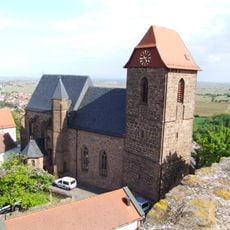
The southeast tower, rebuilt from 1874 by Count Charles Emich, is open as a viewing tower; its two upper floors hold a small museum of stoneware from a local factory that closed in 1932. The castle stands right beside the A 6 motorway, and at night the illuminated walls are visible from the carriageway. The courtyard hosts open-air concerts on five Saturdays between June and August.
The southeast tower, rebuilt from 1874 by Count Charles Emich of Leiningen-Westerburg, holds a small local history museum on its two upper floors. It displays stoneware from a local factory that closed in 1932, alongside other handicrafts.
The community of curious travelers
AroundUs brings together thousands of curated places, local tips, and hidden gems, enriched daily by 92,655 contributors worldwide.