Leininger Oberhof, Baroque palace in Grünstadt, Germany
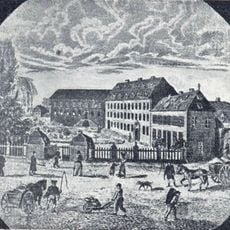
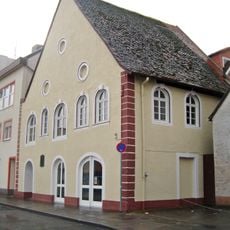
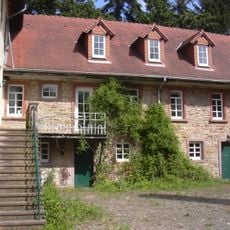
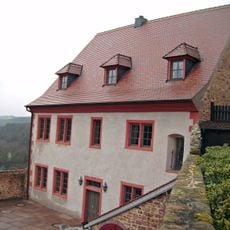
The Leininger Oberhof is a baroque palace on Neugasse in Grünstadt, built from 1716 for Count Georg II. Carl Ludwig of Leiningen-Westerburg-Neuleiningen. It has two wings facing the street, a south wing with seven and a north wing with eight window axes, linked by a figure-decorated entrance portal topped by a balustraded terrace. Sandstone frames the windows, doors and corners; the rest is plastered.
Georg II. Carl Ludwig of Leiningen-Westerburg-Neuleiningen and his wealthy wife Margarete began building the Oberhof around 1716 as their residence in Grünstadt, after the castles of Altleiningen and Neuleiningen had been destroyed. It served the Neuleiningen line until the end of noble rule in the French Revolution. A tobacco factory followed, and in 1823 the city bought the north wing for a school, adding a storey in 1854; the south wing came to the city in 1881.
The Leininger Oberhof was the seat of the Counts of Leiningen-Westerburg and remains a symbol of Grünstadt's noble past. Its ornate baroque entrance portal reflects the importance this family held in regional affairs.
The building is freely accessible from the outside and can be viewed from street level, revealing its baroque details and ornamental gate clearly. It is centrally located in Grünstadt and easily reached on foot without requiring a car.
The south wing's stairwell holds a ceiling painting of Orpheus in the Underworld, attributed to Johann Martin Seekatz (1680–1729). The palace and especially its figure-decorated portal are counted among the landmarks of Grünstadt.
The community of curious travelers
AroundUs brings together thousands of curated places, local tips, and hidden gems, enriched daily by 94,005 contributors worldwide.