Schloss Heidesheim, Former palace site in Colgenstein-Heidesheim, Germany
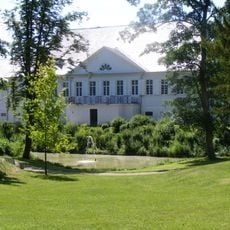
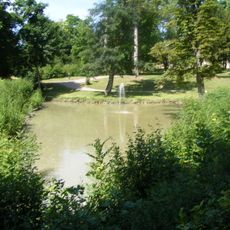
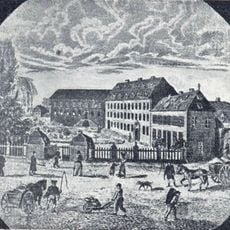
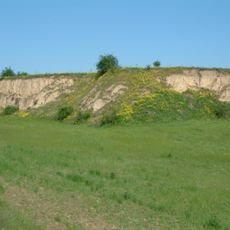
Schloss Heidesheim was a palace of the Counts of Leiningen in Colgenstein-Heidesheim, of which only the palace park with moat remnants and old trees survives. No image of the building is known, and the park is all that remains of the residence.
Emich XI's sons Johann Ludwig and Philipp Georg had the palace built from 1608 on an old family estate in Heidesheim and moved in as their residence in 1612. In 1787 a settlement made Heidesheim again a count's residence under Wenzel Joseph of Leiningen-Heidesheim. French revolutionary troops burned the palace in January 1794 and the family fled to Neudenau.
The name Heidesheim comes from the Leiningen-Falkenburg-Heidesheim line, which split from the Guntersblum branch; the castle became its residence again from 1787. Count Wenzel Joseph kept a Catholic house chapel there, where the holy oils were stored, and on 1 September 1791 auxiliary bishop Stephan Alexander Würdtwein consecrated a pyxis for it. The counts were among the few Catholic rulers in a largely Protestant area.
The grounds are accessible year-round for walking and exploration, with the park layout providing the clearest view of the historical site. Visit during warmer months when vegetation is fully grown to better appreciate the landscaping and overall layout of the area.
No image of Schloss Heidesheim is known to exist, so its appearance can only be inferred from records. What survives is the Schlosspark with remains of its moat and old trees, in Colgenstein-Heidesheim. The palace itself burned in January 1794, set alight by French revolutionary troops during the War of the First Coalition.
The community of curious travelers
AroundUs brings together thousands of curated places, local tips, and hidden gems, enriched daily by 94,072 contributors worldwide.