See the monuments around you in AROpen chests in the app
Around Us is built for your phone — point your camera at the streets and discover the monuments and places around you in augmented reality.Around Us is built for your phone — chests unlock when you walk, explore and capture nearby places.
Medieval castles and Roman fortresses in Rhineland Palatinate
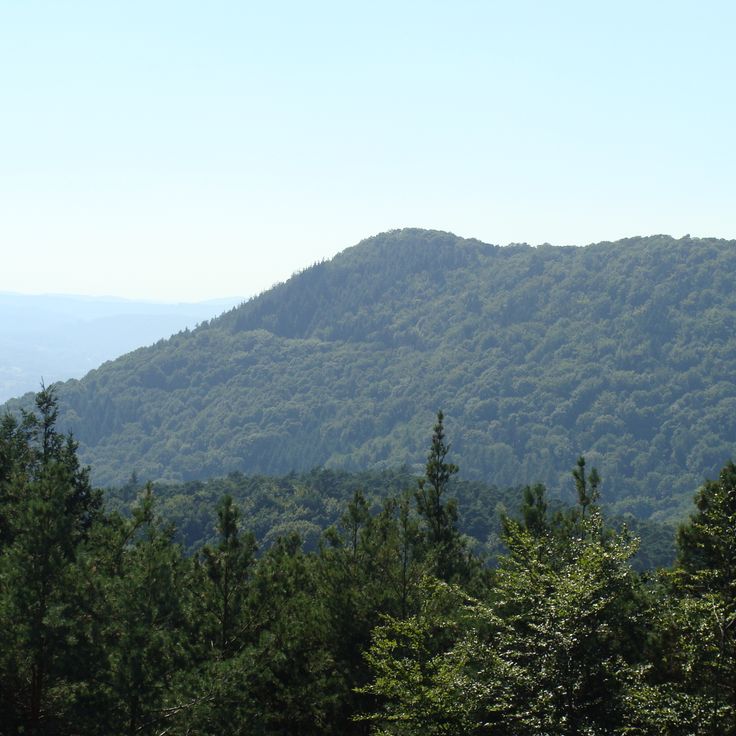
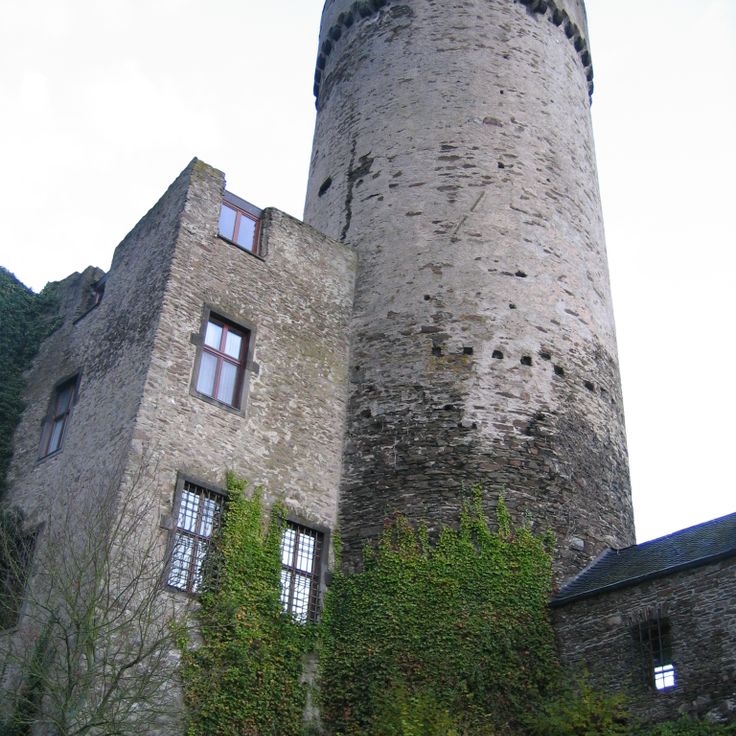
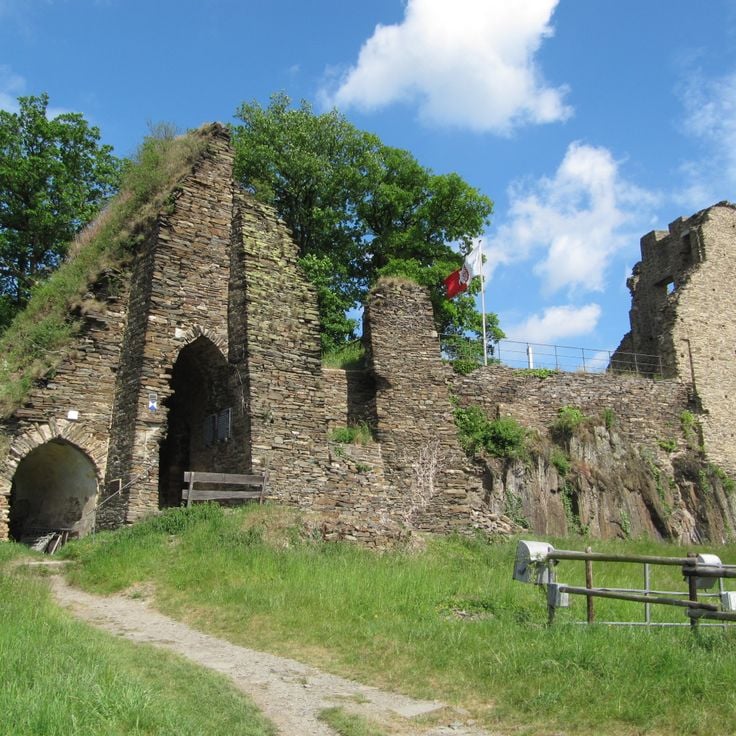
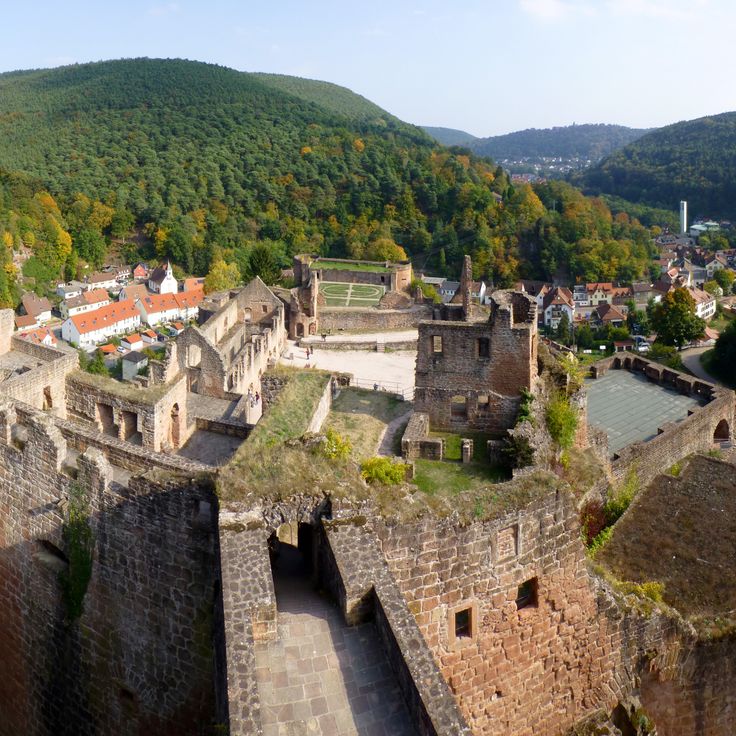
Rhineland-Palatinate preserves centuries of European fortification architecture across a region shaped by river valleys and forested highlands. Medieval castles like Eltz Castle rise above the Moselle loop at Bremm, while Pfalzgrafenstein Castle sits on a Rhine island at Kaub, where it once controlled river traffic. Roman foundations lie beneath later structures such as Limburg Monastery near Bad Dürkheim, and Romanesque abbeys like Maria Laach demonstrate monastic design from the 11th century. The landscape ranges from the Teufelsfels rock formation in the Hunsrück to the ruins of Hardenburg, among the largest fortress complexes in the state.
From the Rhine Valley with Stolzenfels Castle and the Loreley to the Palatinate fortresses of Hambach and Trifels, these sites document the region's strategic importance. Pyrmont Castle stands beside a waterfall near Roes, while the ruins of Frankenstein Castle near Kaiserslautern show medieval defensive works. Natural formations like the Kaltwasser Geysir at Andernach and the Geierlay Suspension Bridge at Mörsdorf complement the historical structures, providing access to the geological features between the Rhine, Moselle and Nahe rivers.
Medieval castles and Roman fortresses in Rhineland Palatinate
Rhineland-Palatinate preserves centuries of European fortification architecture across a region shaped by river valleys and forested highlands. Medieval castles like Eltz Castle rise above the Moselle loop at Bremm, while Pfalzgrafenstein Castle sits on a Rhine island at Kaub, where it once controlled river traffic. Roman foundations lie beneath later structures such as Limburg Monastery near Bad Dürkheim, and Romanesque abbeys like Maria Laach demonstrate monastic design from the 11th century. The landscape ranges from the Teufelsfels rock formation in the Hunsrück to the ruins of Hardenburg, among the largest fortress complexes in the state.
From the Rhine Valley with Stolzenfels Castle and the Loreley to the Palatinate fortresses of Hambach and Trifels, these sites document the region's strategic importance. Pyrmont Castle stands beside a waterfall near Roes, while the ruins of Frankenstein Castle near Kaiserslautern show medieval defensive works. Natural formations like the Kaltwasser Geysir at Andernach and the Geierlay Suspension Bridge at Mörsdorf complement the historical structures, providing access to the geological features between the Rhine, Moselle and Nahe rivers.
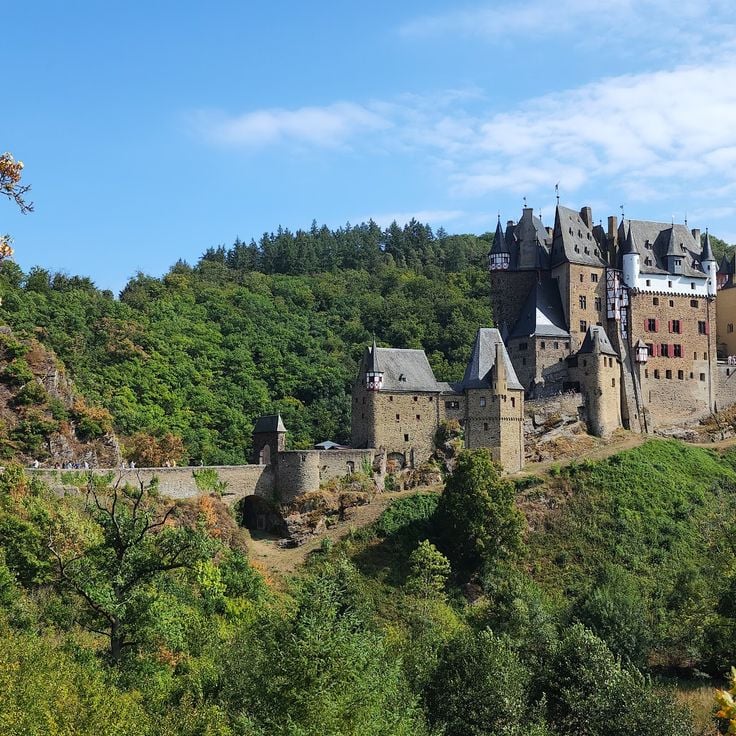
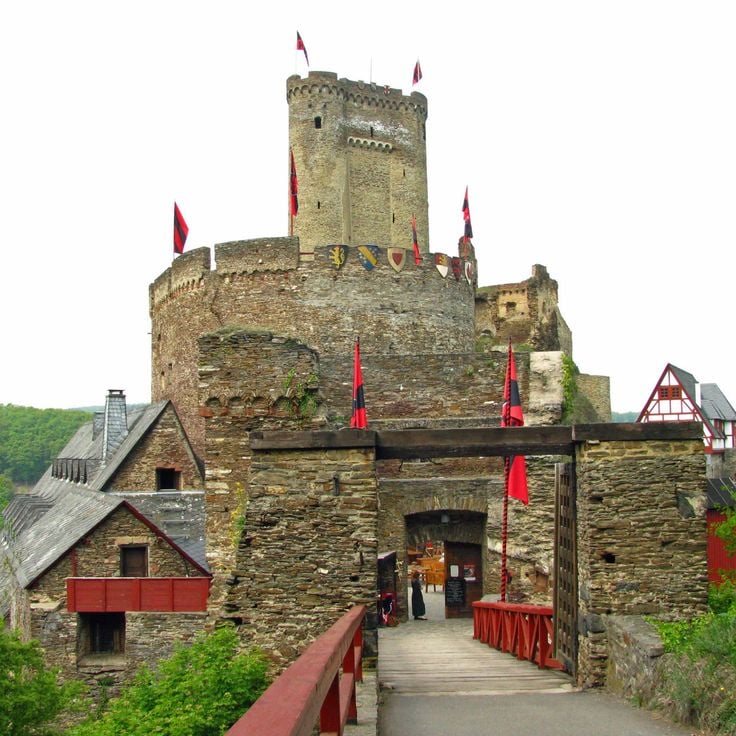
This medieval fortress rises above the Moselle Valley in Rhineland-Palatinate, where it has been continuously expanded since the 12th century. Eltz Castle ranks among the significant historical structures in a region that combines medieval architecture with Roman fortifications. The complex occupies a rocky outcrop above Wierschem and documents several centuries of European castle building.
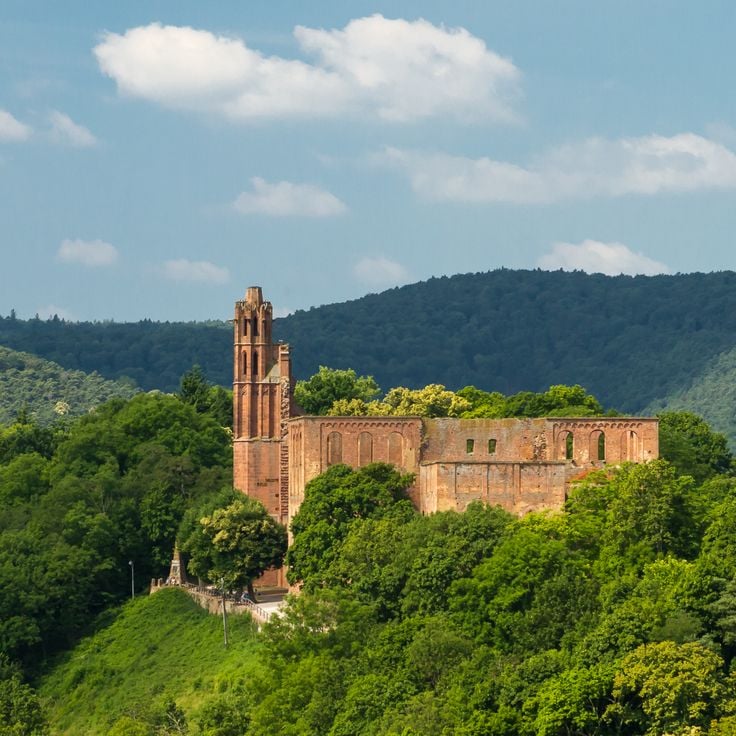
This 11th-century monastery was an important Benedictine foundation in the Palatinate Forest and displays characteristic features of Romanesque construction in its preserved ruins. The tall arches and massive walls document monastic architecture from the Salian period. Limburg Monastery belongs to the medieval structures in Rhineland-Palatinate that have retained their historical significance despite partial destruction.
This 13th-century fortress rises above a natural waterfall on the Elzbach stream and forms part of this collection's medieval structures across Rhineland-Palatinate, which documents historic fortifications throughout the region. The structure once controlled local trade routes and displays typical features of castle architecture from that era. From its walls, views extend across the surrounding valley and forested hillsides.
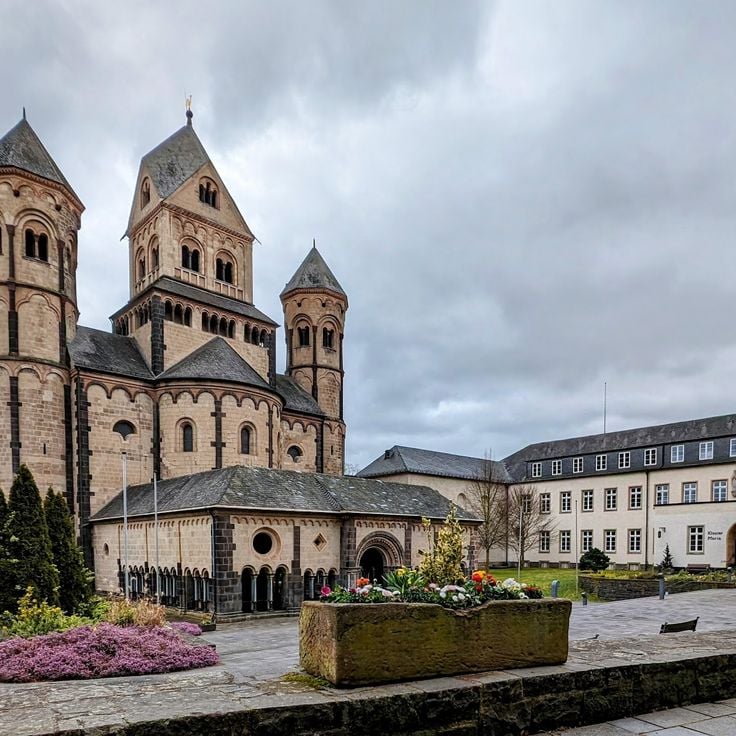
This 11th-century Benedictine abbey stands on the shore of Lake Laach and displays Romanesque architecture with six towers. Maria Laach Abbey belongs to the historical structures of Rhineland-Palatinate, where medieval castles and Roman fortresses mark the landscape. Monks continue monastic life here and operate the attached farmlands.
This red sandstone formation rises 492 feet (150 meters) above Hahnenbach Valley in the Hunsrück and offers observation points overlooking the surrounding mountain ranges of Rhineland-Palatinate, where medieval castles and Roman fortresses underscore the historical significance of the region.
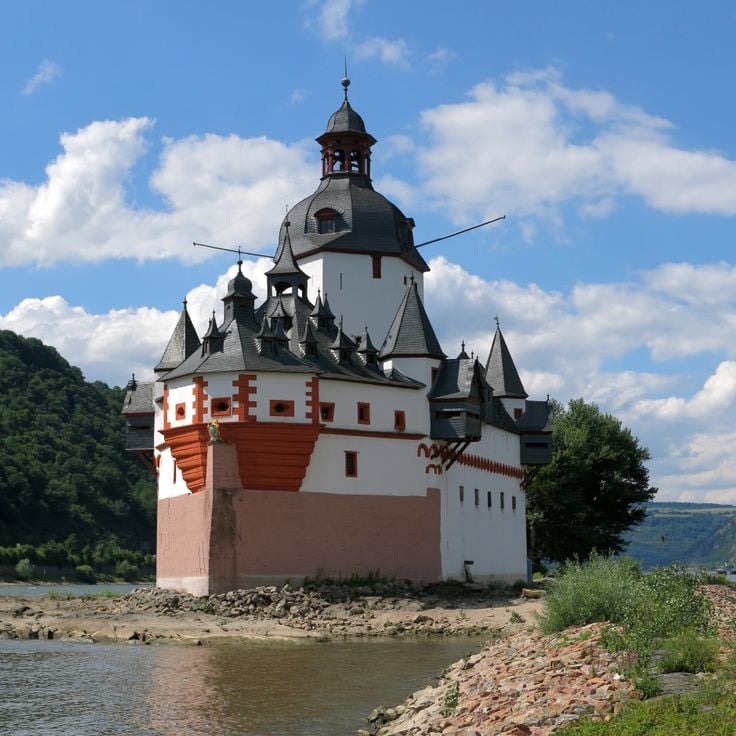
This customs fortress was built in the 14th century on a rocky island in the Rhine River and controlled ship traffic between Mainz and Koblenz. The hexagonal tower with its pointed turrets and surrounding curtain wall served as a checkpoint for collecting tolls from passing vessels. The fortress remained nearly intact due to its isolated location on the river and demonstrates the typical construction of medieval toll stations along the Rhine.
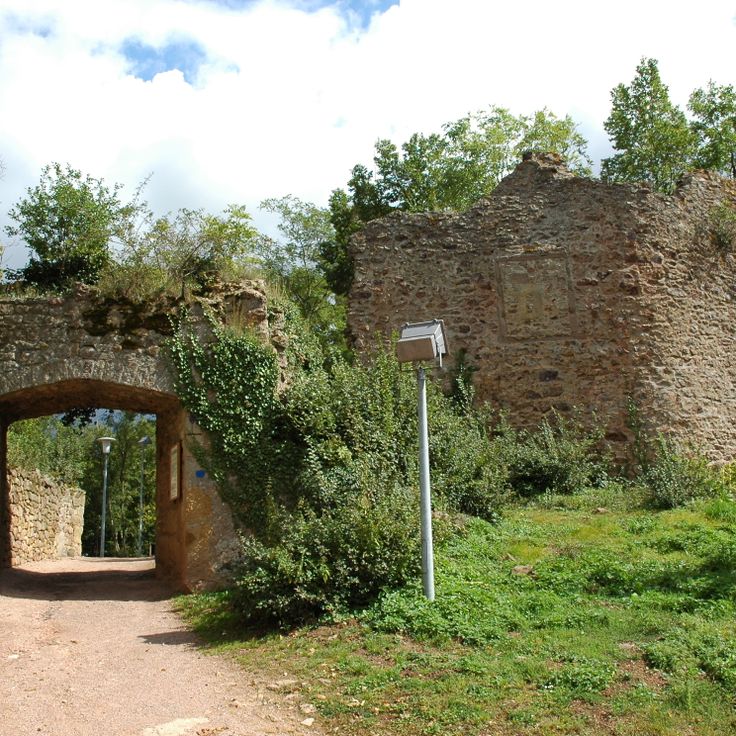
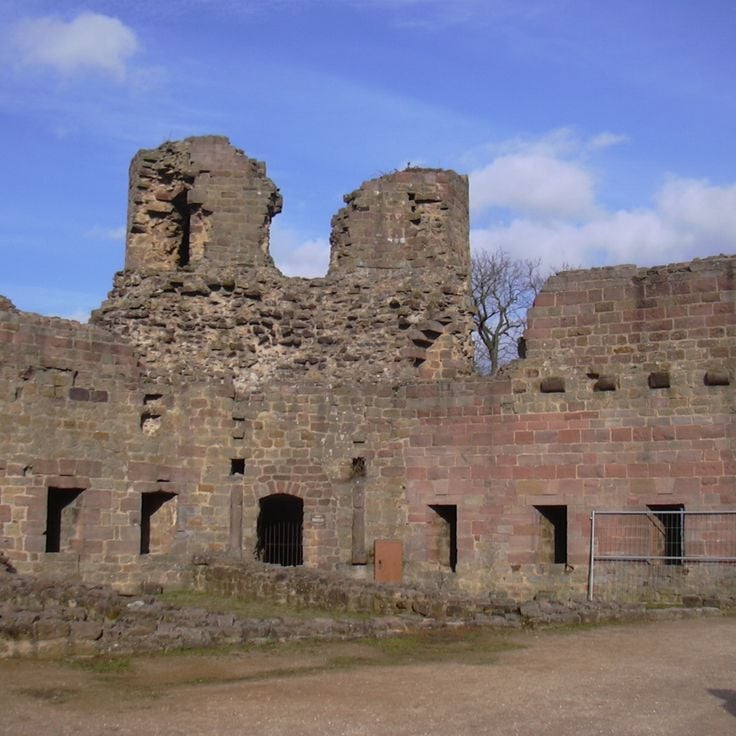
Frankenstein Castle Ruins date from the 12th century and consist of foundation walls, a keep, and sections of the medieval fortification system. This structure stands among the historical buildings in Rhineland-Palatinate that document medieval architecture alongside other castles and Roman fortresses in the region.
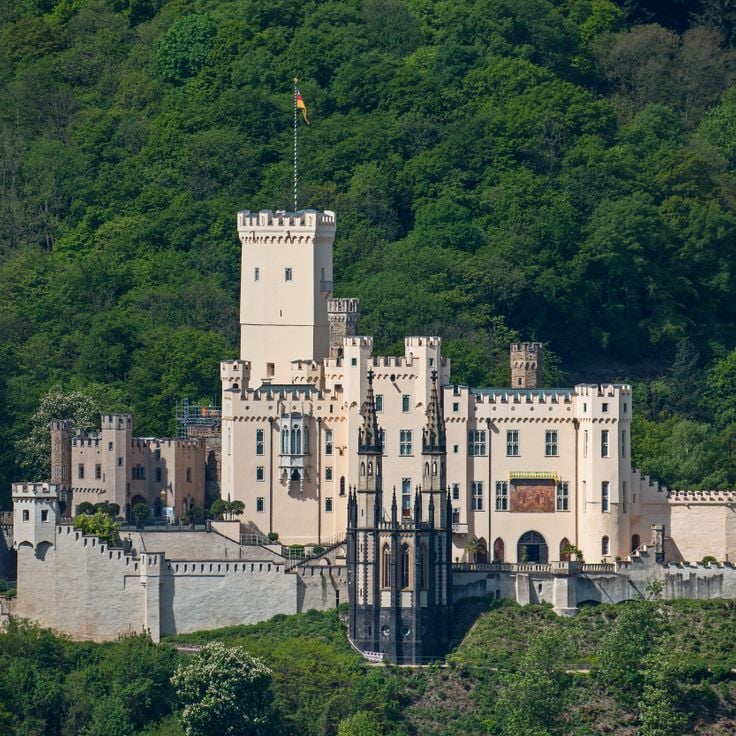
Stolzenfels Castle rises above the Rhine near Koblenz and ranks among the significant historical structures in Rhineland-Palatinate. Rebuilt in Gothic Revival style during the 19th century, this castle houses a collection of medieval art, armor and wall paintings from the restoration period under King Frederick William IV of Prussia.
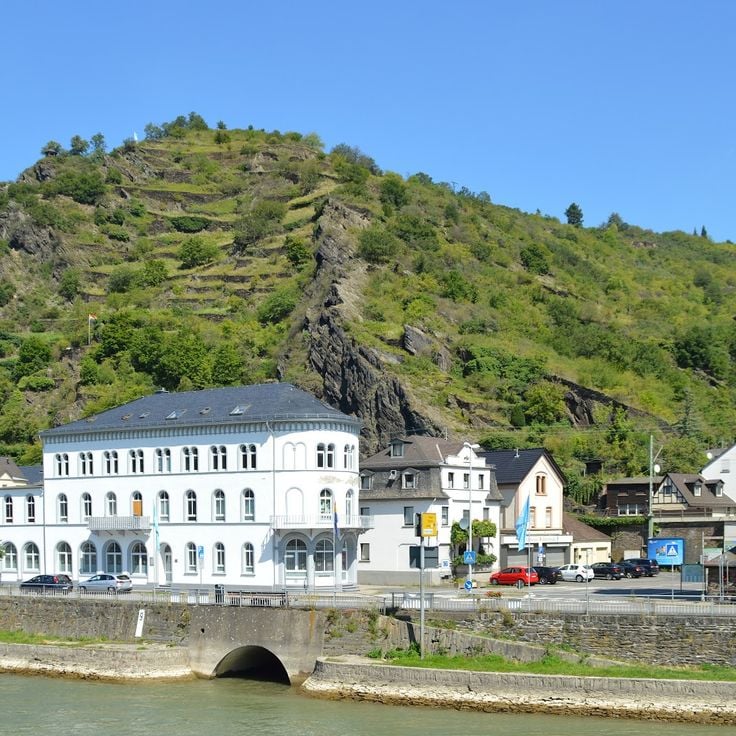
This slate cliff rises 132 meters (433 feet) directly from the Rhine at the narrowest point of the Middle Rhine Valley. Currents and underwater rocks made the passage dangerous for ships over centuries, generating numerous legends. The rock marks a significant point along the historic trade route between the Roman fortresses and medieval castles of Rhineland-Palatinate.
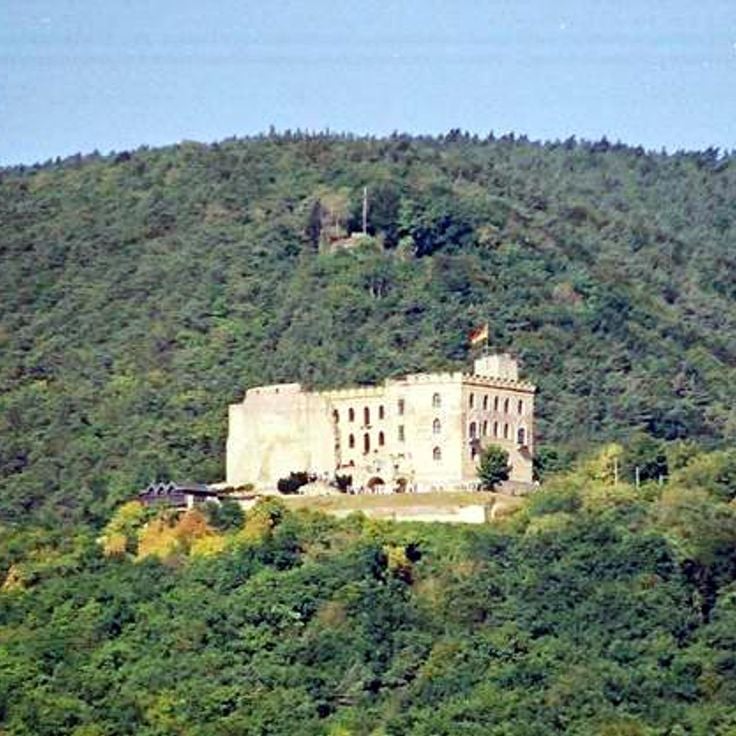
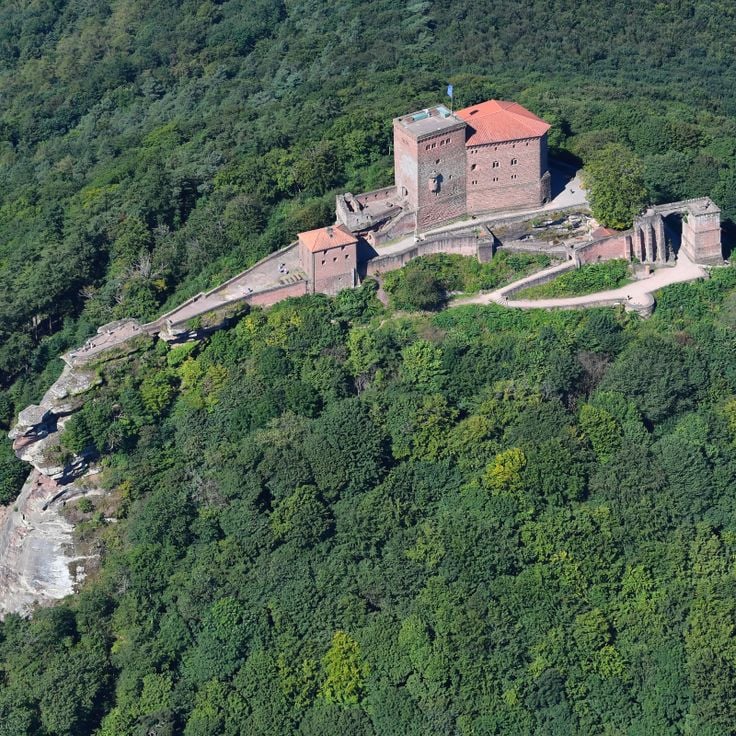
This medieval fortress southwest of Neustadt an der Weinstraße became a site of German historical importance in 1832 when approximately 30,000 people gathered here to demonstrate for national unity and democratic rights. The 11th-century structure sits on a forested hill above the Rhine plain and served for centuries as a noble residence under various ruling families. After the Hambach Festival, the castle developed into a symbol of the German democracy movement. Visitors today find a museum dedicated to democracy history within the restored rooms.
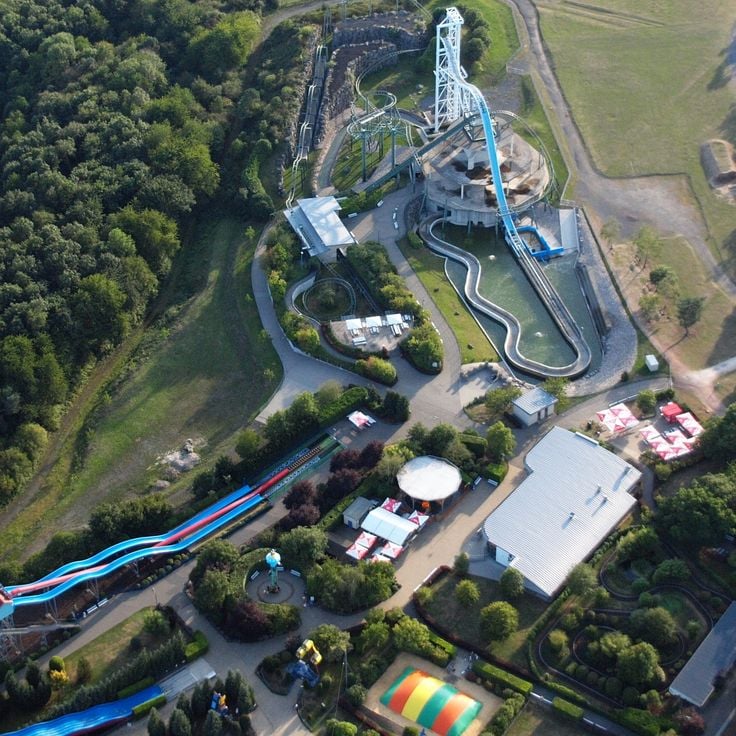
This 30-acre (12-hectare) park in the Moselle Valley combines regional wildlife exhibits with amusement rides. Visitors encounter red deer, wild boar and birds of prey in naturalistic enclosures. The grounds include several roller coasters and additional attractions designed for families with children of varying ages. Klotten Wildlife and Adventure Park complements a region known for medieval fortifications like Eltz Castle by offering recreational facilities that serve diverse visitor interests.
This castle rises 494 meters (1,621 feet) above Annweiler and ranked among the most important imperial fortresses during medieval times. The structure safeguarded the crown jewels of the Holy Roman Empire and served as prison for King Richard the Lionheart following his capture in 1193. Construction began in the 11th century, and the fortress formed part of a strategic triangle with neighboring castles Anebos and Scharfenberg to control the surrounding region.
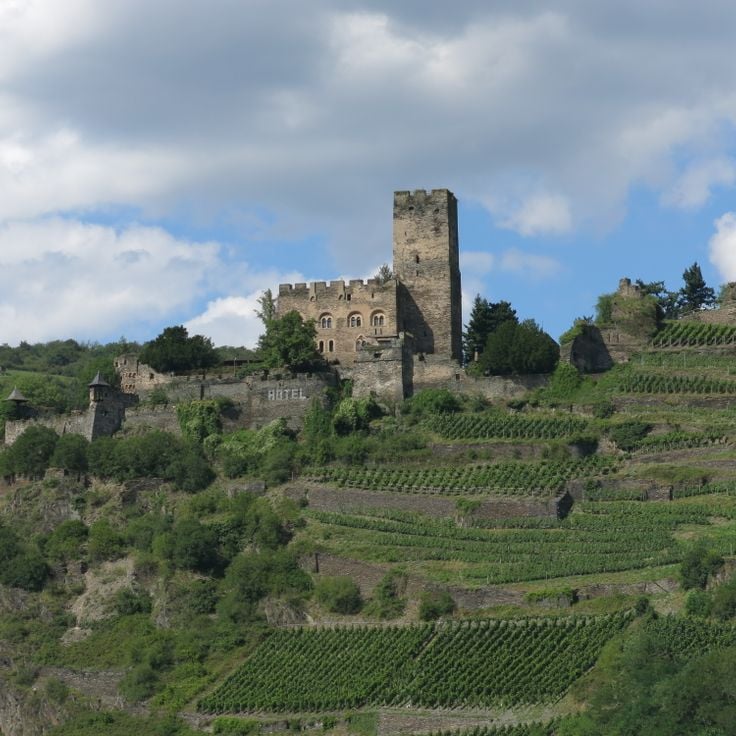
This castle was built in the 13th century at an elevation of 360 feet (110 meters) above the Rhine and secured trade traffic on the river. Gutenfels Castle served for centuries as a strategic control point for Rhine shipping and complemented the customs station Pfalzgrafenstein in the valley below. The medieval fortress displays typical defensive features of Rhineland hilltop castles and belongs to the UNESCO World Heritage Site Upper Middle Rhine Valley.
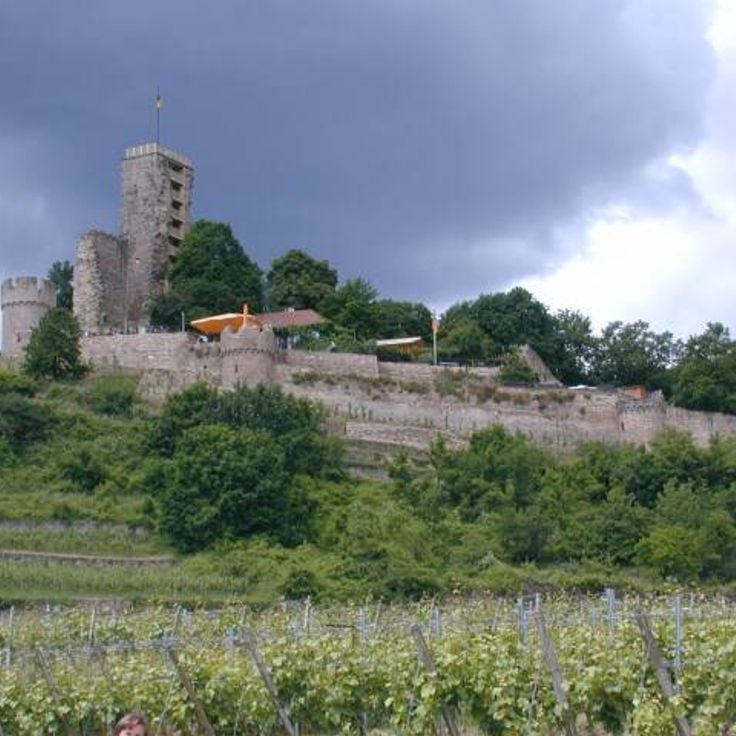
This castle was built in the 12th century on a hill 738 feet (225 meters) above the German Wine Route and belongs to the medieval castles and Roman fortresses of Rhineland Palatinate. The complex initially served the Counts of Leiningen as a residence before it was destroyed during the War of the Palatine Succession in 1689. Parts of the keep, wall remains and the castle courtyard survive from the original fortress. Wachtenburg sits above Wachenheim and overlooks the vineyards of the Haardt mountains.
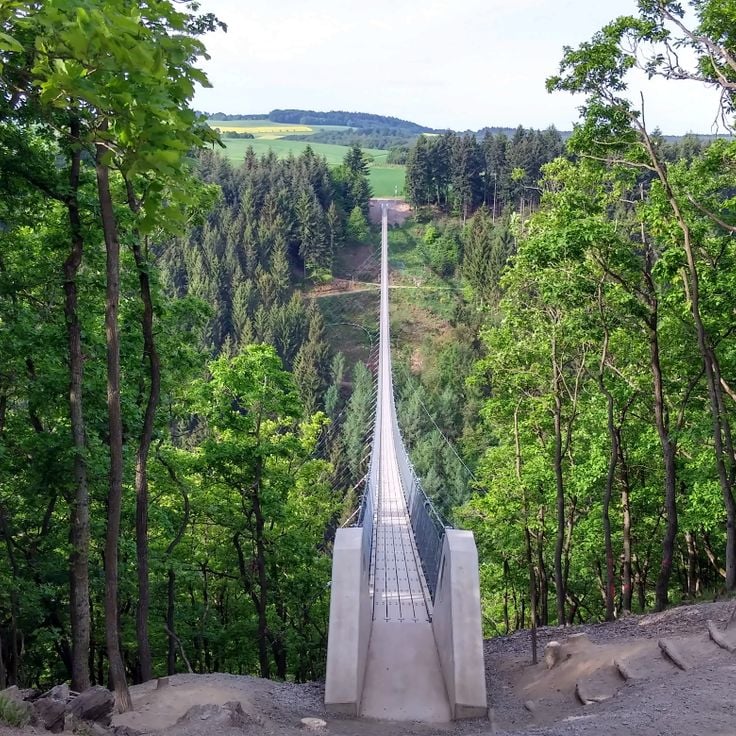
This suspension bridge spans the Mörsdorfer Bachschlucht valley for 1,181 feet (360 meters) at a height of 328 feet (100 meters). The steel cable construction from 2015 connects Mörsdorf with Sosberg in the Hunsrück region and complements the medieval castles and Roman fortifications of Rhineland-Palatinate with a modern engineering structure that links hiking trails through the forested highlands.
This castle ruin dates from the 9th century and sits on a rocky outcrop above Altenahr, where it defended the Ahr valley. The Counts of Are built the fortress and expanded it several times over the centuries. Today visitors can see sections of the ring walls, the keep and various residential buildings. From the ruins, views extend across the Ahr valley and surrounding vineyards. A hiking trail leads from the town center up to the castle.
This castle ruin occupies a hillside site near Bad Dürkheim and presents 13th-century defensive construction with surviving stone walls, towers and arrow slits that document the region's military architecture alongside other castles and Roman fortifications throughout Rhineland-Palatinate.
This 18th century fortress demonstrates Baroque defense strategies and adds to the range of historical fortifications in Rhineland-Palatinate. The complex features bastions and moats typical of military architecture from that period. Constructed under the direction of Maximilian von Welsch, it documents the evolution of fortress construction between the Renaissance and modern eras.
This castle displays medieval construction from the 11th century with Romanesque round arches and massive stone walls, exemplifying the fortification architecture featured in this collection of historical structures across Rhineland-Palatinate.
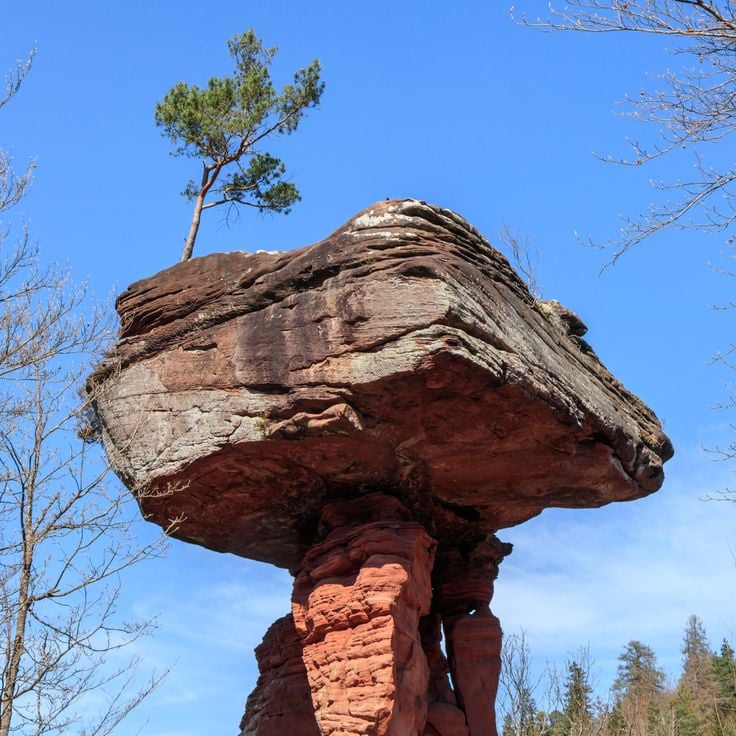
The Devil's Table rises in the Palatinate Forest near Hinterweidenthal and ranks among the geological landmarks of this medieval region. This sandstone formation developed through wind and water erosion over millions of years and displays a massive horizontal plate balanced on a narrow base. The rock reaches approximately 46 feet (14 meters) in height and belongs alongside the castles and fortresses to the cultural and natural heritage of Rhineland-Palatinate.
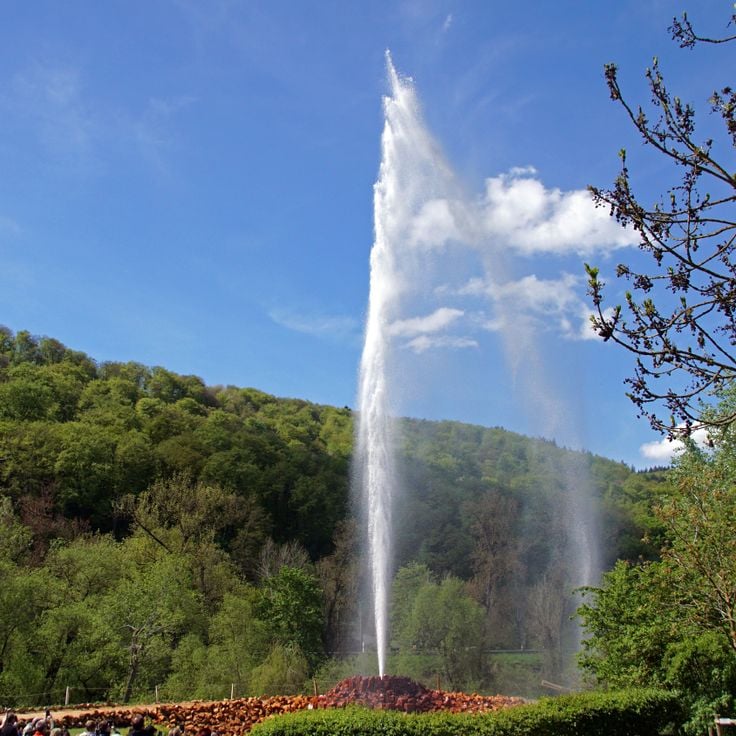
This geyser in Andernach is the world's tallest cold water geyser, shooting up to 197 feet (60 meters) high through naturally rising carbon dioxide. Water from a depth of 1,148 feet (350 meters) erupts at regular intervals and creates a natural spectacle along the Rhine. The eruptions last approximately eight minutes and can be observed from the nearby shore after visitors take a ferry to the small peninsula of Namedyer Werth.
This 12th-century abbey joins the collection's historical structures and displays Gothic architecture with pointed arches, vaulted ceilings and medieval stained glass windows that have survived centuries and document the region's ecclesiastical heritage.
These 12th-century castle structures rise from twin mountain peaks above Wolfstein and preserve medieval defense works including towers and curtain walls. The two ruins rank among the important fortress sites in the northern Palatinate and document the region's fortification architecture during the High Middle Ages.
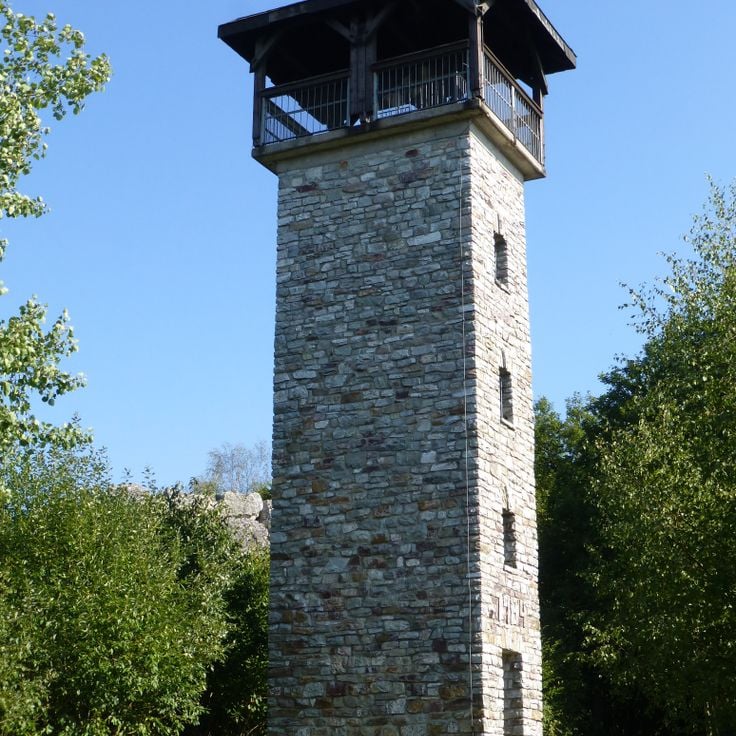
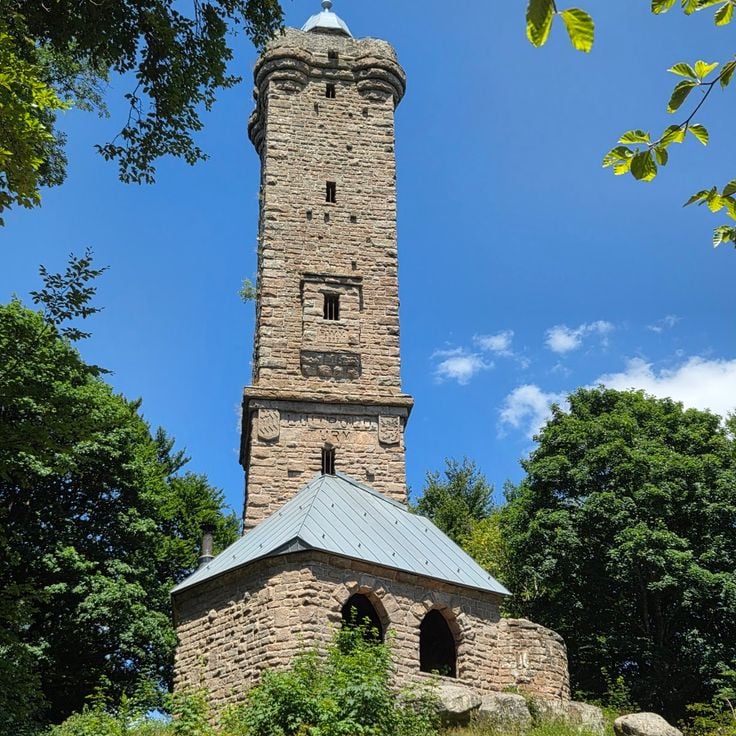
The Luitpold Tower was built in 1909 at 2,000 feet (610 meters) on Weißenberg mountain in the Palatinate Forest. This stone observation tower belongs to the historic structures of Rhineland-Palatinate and provides views across the forested ridges of this low mountain range. The sandstone construction fits into the mountain landscape.
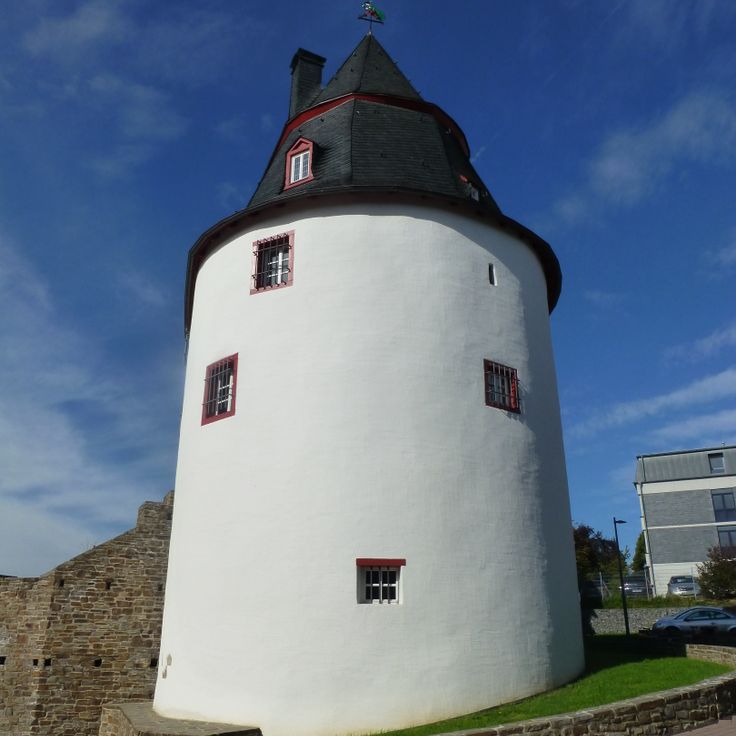
The Schinderhannes Tower in Simmern documents the history of outlaw Johannes Bückler, who was held in this 18th-century prison structure. Alongside medieval castles and Roman fortresses across Rhineland-Palatinate, this tower demonstrates the penal architecture of its era and now houses an exhibition about Bückler's activities in the region and his eventual capture.
This 13th-century fortress rises on a mountain spur above the Moselle Valley and adds to the region's historical structures with a medieval compound that visitors can explore today, offering insights into the fortification architecture of Rhineland-Palatinate alongside castles such as Eltz.
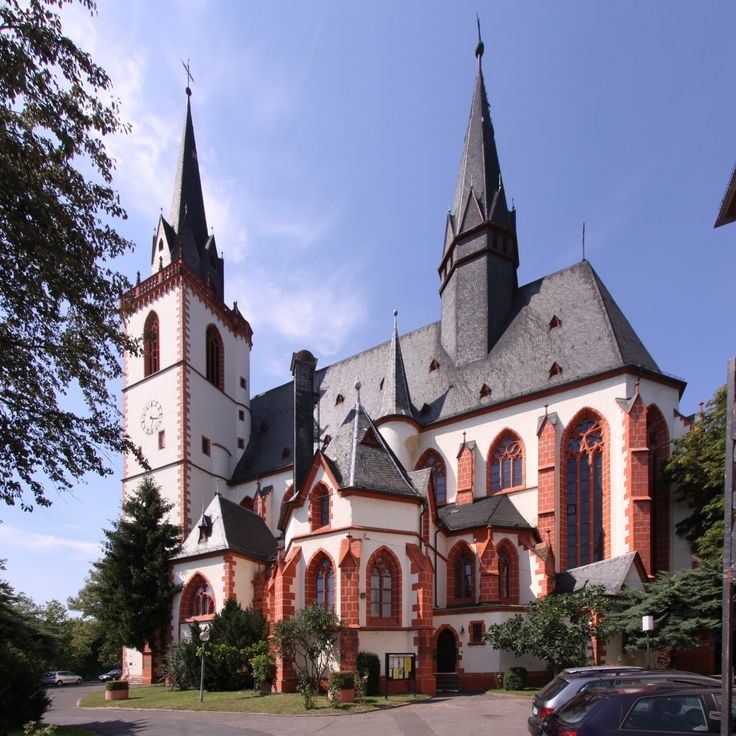
This church in Bingen am Rhein combines 11th-century Romanesque architecture with 15th-century Gothic additions at the center of the town. The Stiftskirche Sankt Martin represents one of the historical structures documenting the medieval heritage of Rhineland-Palatinate, standing alongside castles and monasteries that illustrate different periods of architectural development from the Romanesque era through the Gothic period.
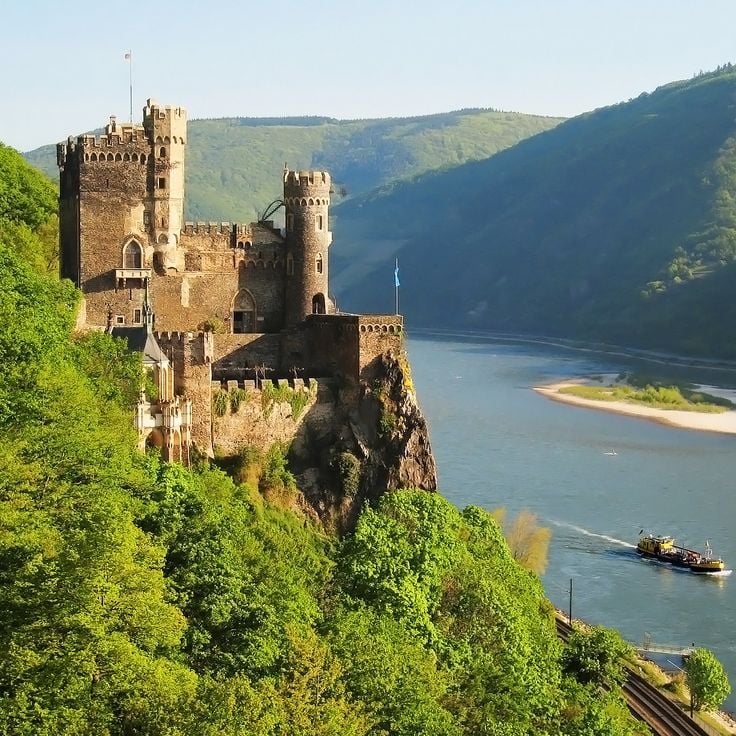
This castle stands on a rocky outcrop above the Rhine Valley near Trechtingshausen and belongs to the medieval castles and Roman fortresses in Rhineland-Palatinate. Rheinstein Castle was rebuilt in the 19th century on older ruins and displays Gothic Revival architecture. The complex contains a chapel with stained glass windows, a weapons collection and rooms furnished with period pieces. The castle walls offer views across the Rhine and surrounding vineyards.
The Obermoschel castle ruins rise on a basalt cone 436 feet (133 meters) above the town. Founded in the 12th century, this hilltop fortress served as administrative center for the Counts of Sponheim. The complex was destroyed during the Wars of Succession in the late 17th century. Hiking trails pass through the remaining walls, which overlook the North Palatinate Uplands. The stone remnants document the medieval fortification architecture of this Rhineland-Palatinate region.
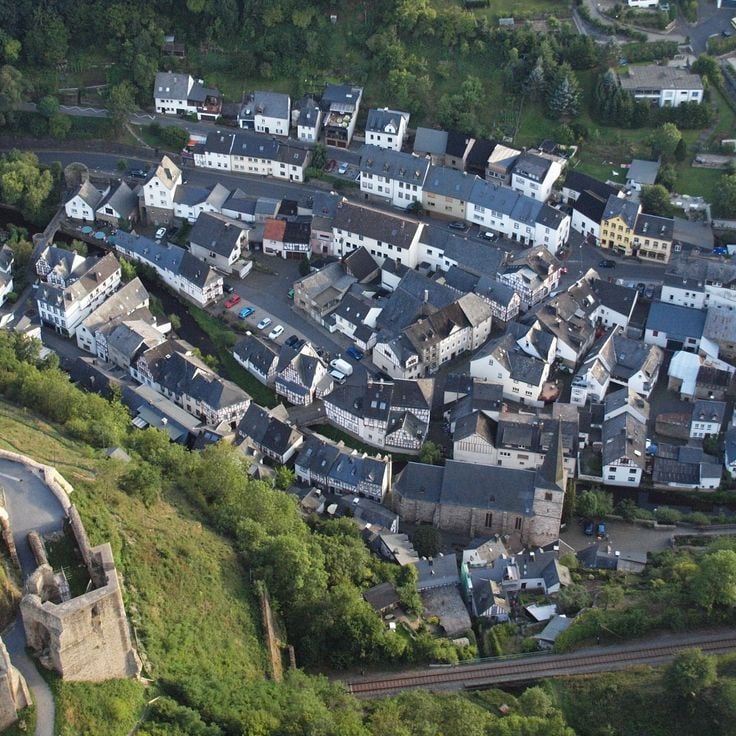
This medieval settlement represents the fortified villages that developed in Rhineland-Palatinate during the Middle Ages, with half-timbered houses from the 16th and 17th centuries lining narrow streets along the Eltzbach stream. Two castle ruins, Philippsburg and Löwenburg, occupy elevated positions above the village. Monreal demonstrates the defensive architecture and residential construction typical of the region's historical settlements.
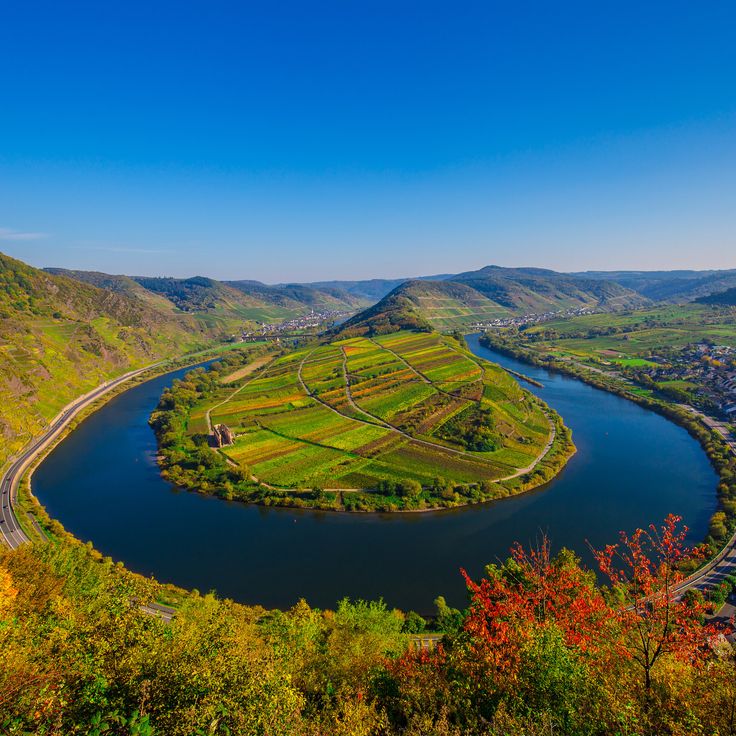
This river loop marks the tightest bend of the Moselle River and stands among the defining landscape features in Rhineland-Palatinate. Vineyards on the steep slopes extend down to the riverbanks, while a viewing platform at 755 feet (230 meters) elevation traces the course of the 180-degree curve.
This castle has stood roughly 100 meters (330 feet) above the Moselle Valley since 1051 and forms a notable point among the historical structures of the Rhineland-Palatinate. After severe destruction by French troops in the 17th century, extensive reconstruction in the neo-Gothic style took place between 1868 and 1877. The interior rooms display medieval furniture, weapons and armor, while the castle courtyard offers wide views over the Moselle loops.
This castle was built in the 13th century on a ridgeline above Neuleiningen village as the seat of the counts of Leiningen. The fortification was destroyed during the War of Palatine Succession, though its courtyard now serves as a venue for concerts and cultural performances during summer months.
This rock outcrop sits at 1,900 feet (580 meters) elevation in Soonwald-Nahe Nature Park and ranks among the geological formations that complement the historical structures and natural landmarks of Rhineland-Palatinate. Marked trails pass through mixed forest to the viewpoint, which offers views across the wooded ridges of the Hunsrück. The formation consists of weathered quartzite and provides orientation for hikers in this section of the Soonwald.
This medieval fortress rises above the Moselle Valley in Rhineland-Palatinate, where it has been continuously expanded since the 12th century. Eltz Castle ranks among the significant historical structures in a region that combines medieval architecture with Roman fortifications. The complex occupies a rocky outcrop above Wierschem and documents several centuries of European castle building.
This 11th-century monastery was an important Benedictine foundation in the Palatinate Forest and displays characteristic features of Romanesque construction in its preserved ruins. The tall arches and massive walls document monastic architecture from the Salian period. Limburg Monastery belongs to the medieval structures in Rhineland-Palatinate that have retained their historical significance despite partial destruction.
This 13th-century fortress rises above a natural waterfall on the Elzbach stream and forms part of this collection's medieval structures across Rhineland-Palatinate, which documents historic fortifications throughout the region. The structure once controlled local trade routes and displays typical features of castle architecture from that era. From its walls, views extend across the surrounding valley and forested hillsides.
This 11th-century Benedictine abbey stands on the shore of Lake Laach and displays Romanesque architecture with six towers. Maria Laach Abbey belongs to the historical structures of Rhineland-Palatinate, where medieval castles and Roman fortresses mark the landscape. Monks continue monastic life here and operate the attached farmlands.
This red sandstone formation rises 492 feet (150 meters) above Hahnenbach Valley in the Hunsrück and offers observation points overlooking the surrounding mountain ranges of Rhineland-Palatinate, where medieval castles and Roman fortresses underscore the historical significance of the region.
This customs fortress was built in the 14th century on a rocky island in the Rhine River and controlled ship traffic between Mainz and Koblenz. The hexagonal tower with its pointed turrets and surrounding curtain wall served as a checkpoint for collecting tolls from passing vessels. The fortress remained nearly intact due to its isolated location on the river and demonstrates the typical construction of medieval toll stations along the Rhine.
Frankenstein Castle Ruins date from the 12th century and consist of foundation walls, a keep, and sections of the medieval fortification system. This structure stands among the historical buildings in Rhineland-Palatinate that document medieval architecture alongside other castles and Roman fortresses in the region.
Stolzenfels Castle rises above the Rhine near Koblenz and ranks among the significant historical structures in Rhineland-Palatinate. Rebuilt in Gothic Revival style during the 19th century, this castle houses a collection of medieval art, armor and wall paintings from the restoration period under King Frederick William IV of Prussia.
This slate cliff rises 132 meters (433 feet) directly from the Rhine at the narrowest point of the Middle Rhine Valley. Currents and underwater rocks made the passage dangerous for ships over centuries, generating numerous legends. The rock marks a significant point along the historic trade route between the Roman fortresses and medieval castles of Rhineland-Palatinate.
This medieval fortress southwest of Neustadt an der Weinstraße became a site of German historical importance in 1832 when approximately 30,000 people gathered here to demonstrate for national unity and democratic rights. The 11th-century structure sits on a forested hill above the Rhine plain and served for centuries as a noble residence under various ruling families. After the Hambach Festival, the castle developed into a symbol of the German democracy movement. Visitors today find a museum dedicated to democracy history within the restored rooms.
This 30-acre (12-hectare) park in the Moselle Valley combines regional wildlife exhibits with amusement rides. Visitors encounter red deer, wild boar and birds of prey in naturalistic enclosures. The grounds include several roller coasters and additional attractions designed for families with children of varying ages. Klotten Wildlife and Adventure Park complements a region known for medieval fortifications like Eltz Castle by offering recreational facilities that serve diverse visitor interests.
This castle rises 494 meters (1,621 feet) above Annweiler and ranked among the most important imperial fortresses during medieval times. The structure safeguarded the crown jewels of the Holy Roman Empire and served as prison for King Richard the Lionheart following his capture in 1193. Construction began in the 11th century, and the fortress formed part of a strategic triangle with neighboring castles Anebos and Scharfenberg to control the surrounding region.
This castle was built in the 13th century at an elevation of 360 feet (110 meters) above the Rhine and secured trade traffic on the river. Gutenfels Castle served for centuries as a strategic control point for Rhine shipping and complemented the customs station Pfalzgrafenstein in the valley below. The medieval fortress displays typical defensive features of Rhineland hilltop castles and belongs to the UNESCO World Heritage Site Upper Middle Rhine Valley.
This castle was built in the 12th century on a hill 738 feet (225 meters) above the German Wine Route and belongs to the medieval castles and Roman fortresses of Rhineland Palatinate. The complex initially served the Counts of Leiningen as a residence before it was destroyed during the War of the Palatine Succession in 1689. Parts of the keep, wall remains and the castle courtyard survive from the original fortress. Wachtenburg sits above Wachenheim and overlooks the vineyards of the Haardt mountains.
This suspension bridge spans the Mörsdorfer Bachschlucht valley for 1,181 feet (360 meters) at a height of 328 feet (100 meters). The steel cable construction from 2015 connects Mörsdorf with Sosberg in the Hunsrück region and complements the medieval castles and Roman fortifications of Rhineland-Palatinate with a modern engineering structure that links hiking trails through the forested highlands.
This castle ruin dates from the 9th century and sits on a rocky outcrop above Altenahr, where it defended the Ahr valley. The Counts of Are built the fortress and expanded it several times over the centuries. Today visitors can see sections of the ring walls, the keep and various residential buildings. From the ruins, views extend across the Ahr valley and surrounding vineyards. A hiking trail leads from the town center up to the castle.
This castle ruin occupies a hillside site near Bad Dürkheim and presents 13th-century defensive construction with surviving stone walls, towers and arrow slits that document the region's military architecture alongside other castles and Roman fortifications throughout Rhineland-Palatinate.
This 18th century fortress demonstrates Baroque defense strategies and adds to the range of historical fortifications in Rhineland-Palatinate. The complex features bastions and moats typical of military architecture from that period. Constructed under the direction of Maximilian von Welsch, it documents the evolution of fortress construction between the Renaissance and modern eras.
This castle displays medieval construction from the 11th century with Romanesque round arches and massive stone walls, exemplifying the fortification architecture featured in this collection of historical structures across Rhineland-Palatinate.
The Devil's Table rises in the Palatinate Forest near Hinterweidenthal and ranks among the geological landmarks of this medieval region. This sandstone formation developed through wind and water erosion over millions of years and displays a massive horizontal plate balanced on a narrow base. The rock reaches approximately 46 feet (14 meters) in height and belongs alongside the castles and fortresses to the cultural and natural heritage of Rhineland-Palatinate.
This geyser in Andernach is the world's tallest cold water geyser, shooting up to 197 feet (60 meters) high through naturally rising carbon dioxide. Water from a depth of 1,148 feet (350 meters) erupts at regular intervals and creates a natural spectacle along the Rhine. The eruptions last approximately eight minutes and can be observed from the nearby shore after visitors take a ferry to the small peninsula of Namedyer Werth.
This 12th-century abbey joins the collection's historical structures and displays Gothic architecture with pointed arches, vaulted ceilings and medieval stained glass windows that have survived centuries and document the region's ecclesiastical heritage.
These 12th-century castle structures rise from twin mountain peaks above Wolfstein and preserve medieval defense works including towers and curtain walls. The two ruins rank among the important fortress sites in the northern Palatinate and document the region's fortification architecture during the High Middle Ages.
The Luitpold Tower was built in 1909 at 2,000 feet (610 meters) on Weißenberg mountain in the Palatinate Forest. This stone observation tower belongs to the historic structures of Rhineland-Palatinate and provides views across the forested ridges of this low mountain range. The sandstone construction fits into the mountain landscape.
The Schinderhannes Tower in Simmern documents the history of outlaw Johannes Bückler, who was held in this 18th-century prison structure. Alongside medieval castles and Roman fortresses across Rhineland-Palatinate, this tower demonstrates the penal architecture of its era and now houses an exhibition about Bückler's activities in the region and his eventual capture.
This 13th-century fortress rises on a mountain spur above the Moselle Valley and adds to the region's historical structures with a medieval compound that visitors can explore today, offering insights into the fortification architecture of Rhineland-Palatinate alongside castles such as Eltz.
This church in Bingen am Rhein combines 11th-century Romanesque architecture with 15th-century Gothic additions at the center of the town. The Stiftskirche Sankt Martin represents one of the historical structures documenting the medieval heritage of Rhineland-Palatinate, standing alongside castles and monasteries that illustrate different periods of architectural development from the Romanesque era through the Gothic period.
This castle stands on a rocky outcrop above the Rhine Valley near Trechtingshausen and belongs to the medieval castles and Roman fortresses in Rhineland-Palatinate. Rheinstein Castle was rebuilt in the 19th century on older ruins and displays Gothic Revival architecture. The complex contains a chapel with stained glass windows, a weapons collection and rooms furnished with period pieces. The castle walls offer views across the Rhine and surrounding vineyards.
The Obermoschel castle ruins rise on a basalt cone 436 feet (133 meters) above the town. Founded in the 12th century, this hilltop fortress served as administrative center for the Counts of Sponheim. The complex was destroyed during the Wars of Succession in the late 17th century. Hiking trails pass through the remaining walls, which overlook the North Palatinate Uplands. The stone remnants document the medieval fortification architecture of this Rhineland-Palatinate region.
This medieval settlement represents the fortified villages that developed in Rhineland-Palatinate during the Middle Ages, with half-timbered houses from the 16th and 17th centuries lining narrow streets along the Eltzbach stream. Two castle ruins, Philippsburg and Löwenburg, occupy elevated positions above the village. Monreal demonstrates the defensive architecture and residential construction typical of the region's historical settlements.
This river loop marks the tightest bend of the Moselle River and stands among the defining landscape features in Rhineland-Palatinate. Vineyards on the steep slopes extend down to the riverbanks, while a viewing platform at 755 feet (230 meters) elevation traces the course of the 180-degree curve.
This castle has stood roughly 100 meters (330 feet) above the Moselle Valley since 1051 and forms a notable point among the historical structures of the Rhineland-Palatinate. After severe destruction by French troops in the 17th century, extensive reconstruction in the neo-Gothic style took place between 1868 and 1877. The interior rooms display medieval furniture, weapons and armor, while the castle courtyard offers wide views over the Moselle loops.
This castle was built in the 13th century on a ridgeline above Neuleiningen village as the seat of the counts of Leiningen. The fortification was destroyed during the War of Palatine Succession, though its courtyard now serves as a venue for concerts and cultural performances during summer months.
This rock outcrop sits at 1,900 feet (580 meters) elevation in Soonwald-Nahe Nature Park and ranks among the geological formations that complement the historical structures and natural landmarks of Rhineland-Palatinate. Marked trails pass through mixed forest to the viewpoint, which offers views across the wooded ridges of the Hunsrück. The formation consists of weathered quartzite and provides orientation for hikers in this section of the Soonwald.
This medieval fortress rises above the Moselle Valley in Rhineland-Palatinate, where it has been continuously expanded since the 12th century. Eltz Castle ranks among the significant historical structures in a region that combines medieval architecture with Roman fortifications. The complex occupies a rocky outcrop above Wierschem and documents several centuries of European castle building.
This 11th-century monastery was an important Benedictine foundation in the Palatinate Forest and displays characteristic features of Romanesque construction in its preserved ruins. The tall arches and massive walls document monastic architecture from the Salian period. Limburg Monastery belongs to the medieval structures in Rhineland-Palatinate that have retained their historical significance despite partial destruction.
This 13th-century fortress rises above a natural waterfall on the Elzbach stream and forms part of this collection's medieval structures across Rhineland-Palatinate, which documents historic fortifications throughout the region. The structure once controlled local trade routes and displays typical features of castle architecture from that era. From its walls, views extend across the surrounding valley and forested hillsides.
This 11th-century Benedictine abbey stands on the shore of Lake Laach and displays Romanesque architecture with six towers. Maria Laach Abbey belongs to the historical structures of Rhineland-Palatinate, where medieval castles and Roman fortresses mark the landscape. Monks continue monastic life here and operate the attached farmlands.
This red sandstone formation rises 492 feet (150 meters) above Hahnenbach Valley in the Hunsrück and offers observation points overlooking the surrounding mountain ranges of Rhineland-Palatinate, where medieval castles and Roman fortresses underscore the historical significance of the region.
This customs fortress was built in the 14th century on a rocky island in the Rhine River and controlled ship traffic between Mainz and Koblenz. The hexagonal tower with its pointed turrets and surrounding curtain wall served as a checkpoint for collecting tolls from passing vessels. The fortress remained nearly intact due to its isolated location on the river and demonstrates the typical construction of medieval toll stations along the Rhine.
Frankenstein Castle Ruins date from the 12th century and consist of foundation walls, a keep, and sections of the medieval fortification system. This structure stands among the historical buildings in Rhineland-Palatinate that document medieval architecture alongside other castles and Roman fortresses in the region.
Stolzenfels Castle rises above the Rhine near Koblenz and ranks among the significant historical structures in Rhineland-Palatinate. Rebuilt in Gothic Revival style during the 19th century, this castle houses a collection of medieval art, armor and wall paintings from the restoration period under King Frederick William IV of Prussia.
This slate cliff rises 132 meters (433 feet) directly from the Rhine at the narrowest point of the Middle Rhine Valley. Currents and underwater rocks made the passage dangerous for ships over centuries, generating numerous legends. The rock marks a significant point along the historic trade route between the Roman fortresses and medieval castles of Rhineland-Palatinate.
This medieval fortress southwest of Neustadt an der Weinstraße became a site of German historical importance in 1832 when approximately 30,000 people gathered here to demonstrate for national unity and democratic rights. The 11th-century structure sits on a forested hill above the Rhine plain and served for centuries as a noble residence under various ruling families. After the Hambach Festival, the castle developed into a symbol of the German democracy movement. Visitors today find a museum dedicated to democracy history within the restored rooms.
This 30-acre (12-hectare) park in the Moselle Valley combines regional wildlife exhibits with amusement rides. Visitors encounter red deer, wild boar and birds of prey in naturalistic enclosures. The grounds include several roller coasters and additional attractions designed for families with children of varying ages. Klotten Wildlife and Adventure Park complements a region known for medieval fortifications like Eltz Castle by offering recreational facilities that serve diverse visitor interests.
This castle rises 494 meters (1,621 feet) above Annweiler and ranked among the most important imperial fortresses during medieval times. The structure safeguarded the crown jewels of the Holy Roman Empire and served as prison for King Richard the Lionheart following his capture in 1193. Construction began in the 11th century, and the fortress formed part of a strategic triangle with neighboring castles Anebos and Scharfenberg to control the surrounding region.
This castle was built in the 13th century at an elevation of 360 feet (110 meters) above the Rhine and secured trade traffic on the river. Gutenfels Castle served for centuries as a strategic control point for Rhine shipping and complemented the customs station Pfalzgrafenstein in the valley below. The medieval fortress displays typical defensive features of Rhineland hilltop castles and belongs to the UNESCO World Heritage Site Upper Middle Rhine Valley.
This castle was built in the 12th century on a hill 738 feet (225 meters) above the German Wine Route and belongs to the medieval castles and Roman fortresses of Rhineland Palatinate. The complex initially served the Counts of Leiningen as a residence before it was destroyed during the War of the Palatine Succession in 1689. Parts of the keep, wall remains and the castle courtyard survive from the original fortress. Wachtenburg sits above Wachenheim and overlooks the vineyards of the Haardt mountains.
This suspension bridge spans the Mörsdorfer Bachschlucht valley for 1,181 feet (360 meters) at a height of 328 feet (100 meters). The steel cable construction from 2015 connects Mörsdorf with Sosberg in the Hunsrück region and complements the medieval castles and Roman fortifications of Rhineland-Palatinate with a modern engineering structure that links hiking trails through the forested highlands.
This castle ruin dates from the 9th century and sits on a rocky outcrop above Altenahr, where it defended the Ahr valley. The Counts of Are built the fortress and expanded it several times over the centuries. Today visitors can see sections of the ring walls, the keep and various residential buildings. From the ruins, views extend across the Ahr valley and surrounding vineyards. A hiking trail leads from the town center up to the castle.
This castle ruin occupies a hillside site near Bad Dürkheim and presents 13th-century defensive construction with surviving stone walls, towers and arrow slits that document the region's military architecture alongside other castles and Roman fortifications throughout Rhineland-Palatinate.
This 18th century fortress demonstrates Baroque defense strategies and adds to the range of historical fortifications in Rhineland-Palatinate. The complex features bastions and moats typical of military architecture from that period. Constructed under the direction of Maximilian von Welsch, it documents the evolution of fortress construction between the Renaissance and modern eras.
This castle displays medieval construction from the 11th century with Romanesque round arches and massive stone walls, exemplifying the fortification architecture featured in this collection of historical structures across Rhineland-Palatinate.
The Devil's Table rises in the Palatinate Forest near Hinterweidenthal and ranks among the geological landmarks of this medieval region. This sandstone formation developed through wind and water erosion over millions of years and displays a massive horizontal plate balanced on a narrow base. The rock reaches approximately 46 feet (14 meters) in height and belongs alongside the castles and fortresses to the cultural and natural heritage of Rhineland-Palatinate.
This geyser in Andernach is the world's tallest cold water geyser, shooting up to 197 feet (60 meters) high through naturally rising carbon dioxide. Water from a depth of 1,148 feet (350 meters) erupts at regular intervals and creates a natural spectacle along the Rhine. The eruptions last approximately eight minutes and can be observed from the nearby shore after visitors take a ferry to the small peninsula of Namedyer Werth.
This 12th-century abbey joins the collection's historical structures and displays Gothic architecture with pointed arches, vaulted ceilings and medieval stained glass windows that have survived centuries and document the region's ecclesiastical heritage.
These 12th-century castle structures rise from twin mountain peaks above Wolfstein and preserve medieval defense works including towers and curtain walls. The two ruins rank among the important fortress sites in the northern Palatinate and document the region's fortification architecture during the High Middle Ages.
The Luitpold Tower was built in 1909 at 2,000 feet (610 meters) on Weißenberg mountain in the Palatinate Forest. This stone observation tower belongs to the historic structures of Rhineland-Palatinate and provides views across the forested ridges of this low mountain range. The sandstone construction fits into the mountain landscape.
The Schinderhannes Tower in Simmern documents the history of outlaw Johannes Bückler, who was held in this 18th-century prison structure. Alongside medieval castles and Roman fortresses across Rhineland-Palatinate, this tower demonstrates the penal architecture of its era and now houses an exhibition about Bückler's activities in the region and his eventual capture.
This 13th-century fortress rises on a mountain spur above the Moselle Valley and adds to the region's historical structures with a medieval compound that visitors can explore today, offering insights into the fortification architecture of Rhineland-Palatinate alongside castles such as Eltz.
This church in Bingen am Rhein combines 11th-century Romanesque architecture with 15th-century Gothic additions at the center of the town. The Stiftskirche Sankt Martin represents one of the historical structures documenting the medieval heritage of Rhineland-Palatinate, standing alongside castles and monasteries that illustrate different periods of architectural development from the Romanesque era through the Gothic period.
This castle stands on a rocky outcrop above the Rhine Valley near Trechtingshausen and belongs to the medieval castles and Roman fortresses in Rhineland-Palatinate. Rheinstein Castle was rebuilt in the 19th century on older ruins and displays Gothic Revival architecture. The complex contains a chapel with stained glass windows, a weapons collection and rooms furnished with period pieces. The castle walls offer views across the Rhine and surrounding vineyards.
The Obermoschel castle ruins rise on a basalt cone 436 feet (133 meters) above the town. Founded in the 12th century, this hilltop fortress served as administrative center for the Counts of Sponheim. The complex was destroyed during the Wars of Succession in the late 17th century. Hiking trails pass through the remaining walls, which overlook the North Palatinate Uplands. The stone remnants document the medieval fortification architecture of this Rhineland-Palatinate region.
This medieval settlement represents the fortified villages that developed in Rhineland-Palatinate during the Middle Ages, with half-timbered houses from the 16th and 17th centuries lining narrow streets along the Eltzbach stream. Two castle ruins, Philippsburg and Löwenburg, occupy elevated positions above the village. Monreal demonstrates the defensive architecture and residential construction typical of the region's historical settlements.
This river loop marks the tightest bend of the Moselle River and stands among the defining landscape features in Rhineland-Palatinate. Vineyards on the steep slopes extend down to the riverbanks, while a viewing platform at 755 feet (230 meters) elevation traces the course of the 180-degree curve.
This castle has stood roughly 100 meters (330 feet) above the Moselle Valley since 1051 and forms a notable point among the historical structures of the Rhineland-Palatinate. After severe destruction by French troops in the 17th century, extensive reconstruction in the neo-Gothic style took place between 1868 and 1877. The interior rooms display medieval furniture, weapons and armor, while the castle courtyard offers wide views over the Moselle loops.
This castle was built in the 13th century on a ridgeline above Neuleiningen village as the seat of the counts of Leiningen. The fortification was destroyed during the War of Palatine Succession, though its courtyard now serves as a venue for concerts and cultural performances during summer months.
This rock outcrop sits at 1,900 feet (580 meters) elevation in Soonwald-Nahe Nature Park and ranks among the geological formations that complement the historical structures and natural landmarks of Rhineland-Palatinate. Marked trails pass through mixed forest to the viewpoint, which offers views across the wooded ridges of the Hunsrück. The formation consists of weathered quartzite and provides orientation for hikers in this section of the Soonwald.