Gerhart-Hauptmann-Museum, Literary museum in Vorpommern-Rügen District, Germany.
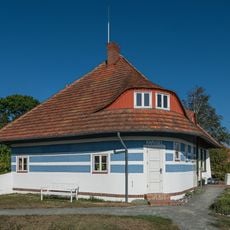
The Gerhart-Hauptmann-Museum occupies the villa "Seedorn" in Kloster on Hiddensee, bought by Hauptmann in 1929 for 32,000 Reichsmark. The two-storey 1920 house was extended in 1930/31 by Dresden architect Arnulf Schelcher with a single-storey wing holding the study and dining room, linked by a cloister corridor above a wine cellar. The living hall, bedrooms, terrace and park remain as he left them.
The museum honors the writer who revolutionized German-language drama in the late 1800s and later became a Nobel laureate. The building itself was preserved as Hauptmann's residence and now serves as a place that keeps his artistic legacy alive.
The exhibitions reveal how Hauptmann shaped the German theater world of his era and what ideas animated his creative work. This becomes visible through the displayed manuscripts and personal objects that document his artistic journey.
Tickets are bought in a separate pavilion that also holds a museum shop with literature on Hauptmann and Hiddensee; from there a path leads to the older part of the villa. The ground floor is entered through a small vestibule with information panels on Hauptmann's life, directly in front of the living hall. The kitchen cannot be visited, and the terrace in front of the study is reached only from outside.
Hauptmann's body was dressed in a monk's habit and brought to Hiddensee by special train and then by ship; he died in 1946 in Agnetendorf in Silesia, then under Polish administration. The SED staged the transfer emotionally to cast the writer, who thought in German-national terms, as a champion of Marxist ideas. His grave lies in the small island cemetery.
The community of curious travelers
AroundUs brings together thousands of curated places, local tips, and hidden gems, enriched daily by 92,770 contributors worldwide.