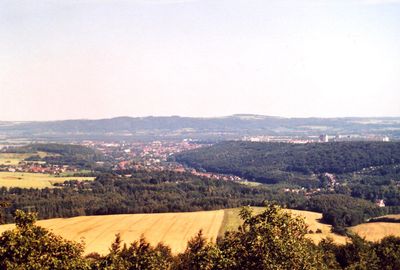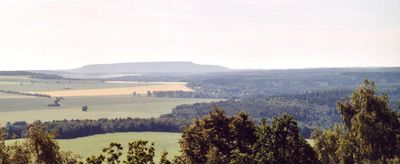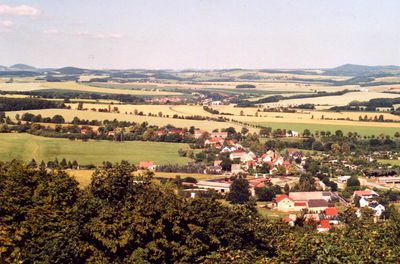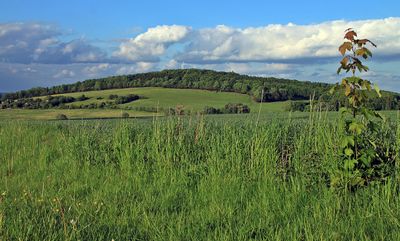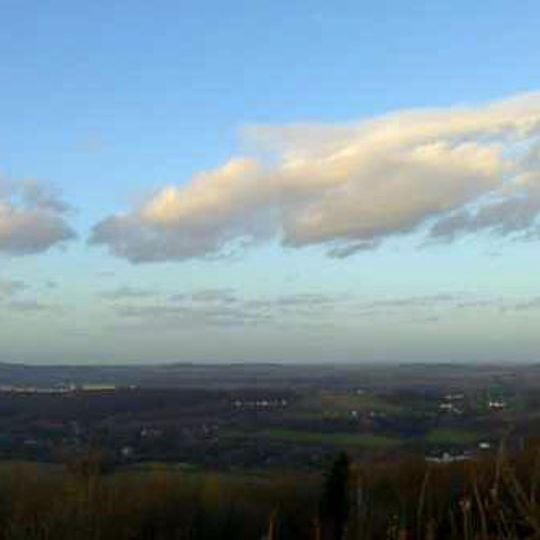
Cottaer Spitzberg, Basalt summit in Sächsische Schweiz-Osterzgebirge, Germany.
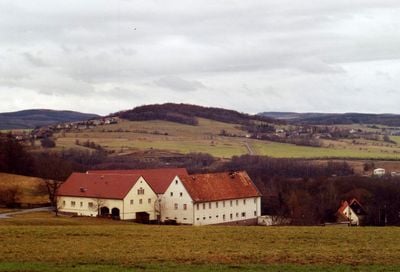
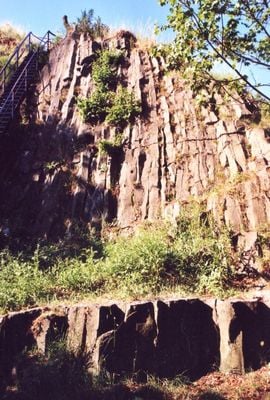
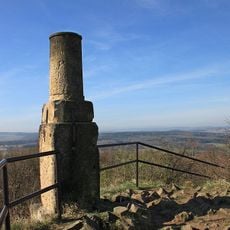
Cottaer Spitzberg is a 390.8-metre tephrite dome on the western edge of Saxon Switzerland, rising at least 70 metres above the village of Cotta. Near the top, grey-black columns of the rock stand almost vertically, about 30 metres thick, exposed by 19th-century quarrying. The northern side carries an oak-hornbeam wood with small-leaved lime, Norway maple, sycamore and ash.
During the 19th century, the summit underwent intensive quarrying for basalt extraction, significantly changing the natural landscape. These mining activities removed valuable geological resources from the mountain's structure.
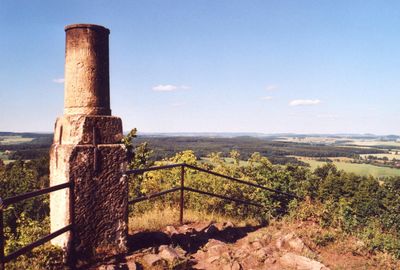
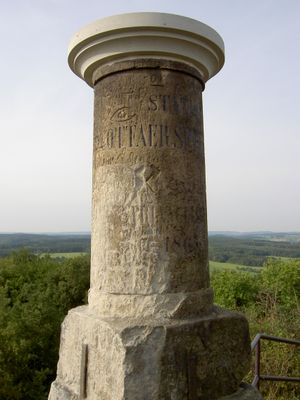
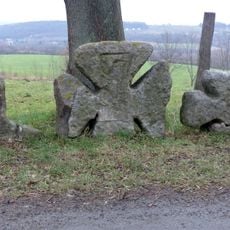
A triangulation column of the Saxon State Survey (Station 2nd Order No. 57) was set directly on the rock in 1865 for the Central European meridian arc. It saved a remnant of the summit from quarrying. A probably medieval atonement cross lies just below the summit on the northwest side.
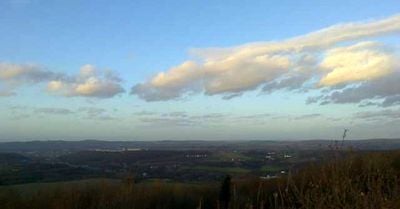
The summit is reached on foot: a short path climbs from Großcotta (Cotta A) to the north and from Kleincotta (Cotta B) to the northeast; from the south, hiking trails come up from Berggießhübel and Zwiesel. The upper slope is rocky and can be slippery when wet, so sturdy footwear helps. The summit itself is treeless, so the all-round view is open in every direction.
On the eastern side of the hill, a small bunker system was built in the early 1960s as an emergency command post for the Pirna district in case of a nuclear attack on Dresden. A separate observation post was set up on the northern side facing Dresden. The site lies just below the summit, near the medieval stone cross on the northwestern slope.
The community of curious travelers
AroundUs brings together thousands of curated places, local tips, and hidden gems, enriched daily by 94,039 contributors worldwide.