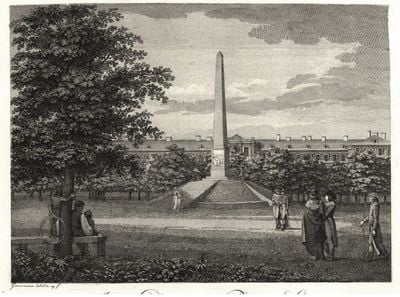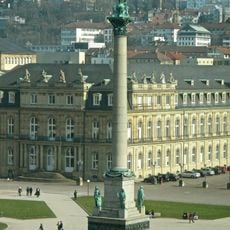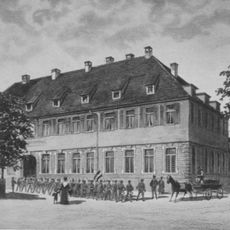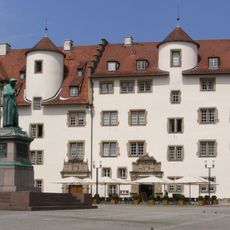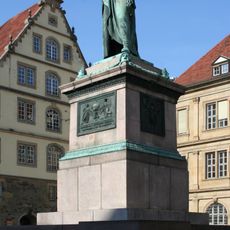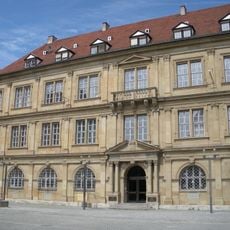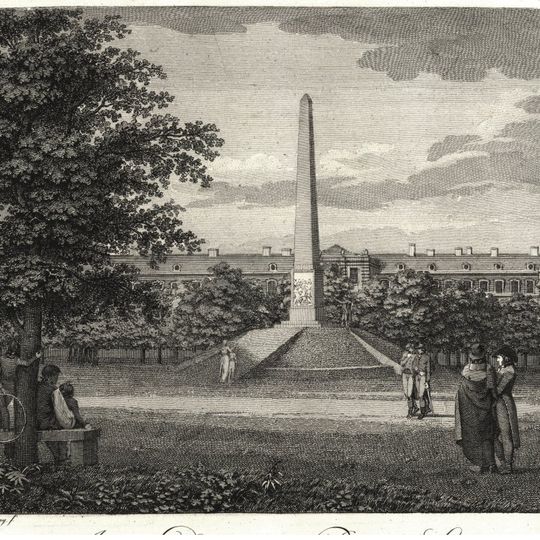
Denkmal der Gattenzärtlichkeit und Volksliebe, Monument of Spousal Tenderness and People's Love in Stuttgart, Germany.
The Denkmal der Gattenzärtlichkeit und Volksliebe is a stone structure with four bas-reliefs on its sides and a tall obelisk rising from the top. The rectangular base with carved scenes forms a commemorative presence in Stuttgart's old town center.
The monument was built in 1796 to honor Duke Friedrich Eugen's recovery from a serious illness. It reflects the deep bond between the ruler and the people he governed.
The four inscriptions on the monument display symbolic representations of family bonds and public gratitude. These reliefs show how deeply the citizens honored their rulers and what importance family closeness held in that era.
The monument no longer exists: it was moved to the Schlossplatz in 1807 and destroyed in 1817 when that square was redesigned. Nothing of Scheffauer's obelisk remains on the Planie or at the Schlossplatz, so there is no site to visit; the only lasting object made for the same occasion is a porcelain column about 30 cm high from the Ludwigsburg manufactory.
The monument was short-lived: Friedrich Eugen's successor had it moved to the Schlossplatz in 1807, and it was destroyed ten years later when that square was redesigned. A porcelain column about 30 cm high, made in Ludwigsburg in 1795 from an older design by Adam Bauer, commemorated the same recovery.
The community of curious travelers
AroundUs brings together thousands of curated places, local tips, and hidden gems, enriched daily by 92,765 contributors worldwide.