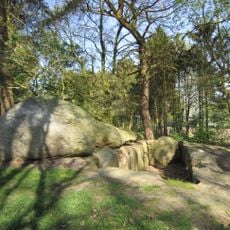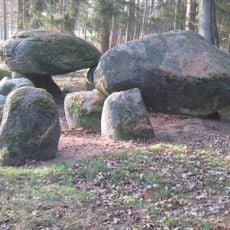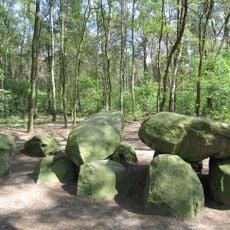
De hoogen Steener, dolmen
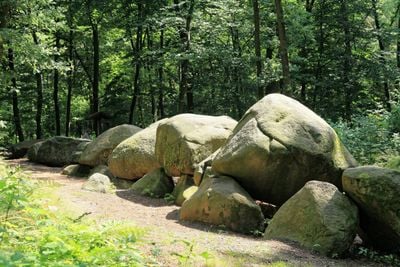
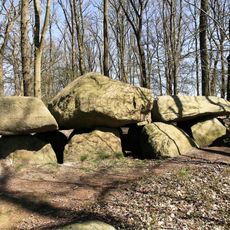
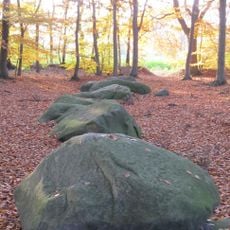
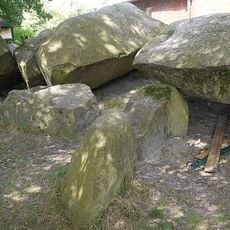
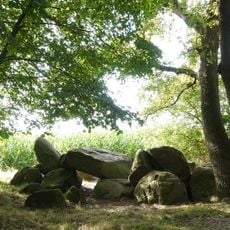
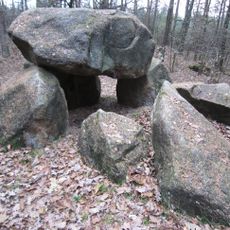
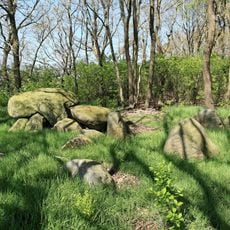
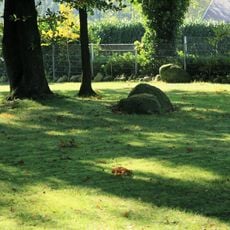
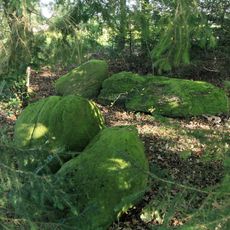
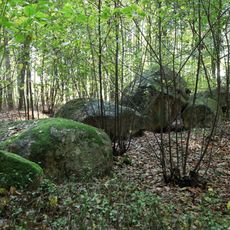
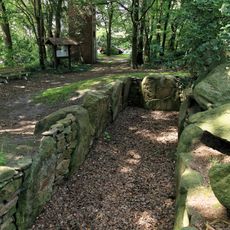
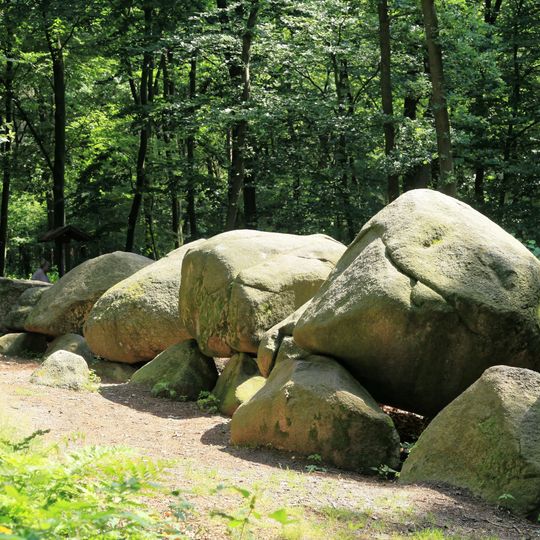
De Hoogen Steener is a megalithic burial structure in a forest north of Werlte, consisting of a corridor-like chamber about 29 meters long with 15 sections. Most of the large capstones remain in place, and the entrance on the south side is easily accessible from the forest path.
The site was built in the early Neolithic period between 3500 and 2800 BCE and belongs to the Funnel Beaker culture. Excavations in 1864 and 1906 uncovered around 150 pottery fragments and stone tools, which are now kept in the Regional Museum of Hannover.
The name De Hoogen Steener means 'the high stones' and refers to the upright megaliths that form the burial chamber. This site served as a place for rituals and ancestor worship, where ancient people gathered to honor their dead and strengthen community bonds.
The site is easily reached on foot about 330 feet (100 meters) from the parking area via a forest path and can be visited anytime at no cost. Access is from the L 30 road heading toward Lorup, then turn right toward Einhaus or Bockholte.
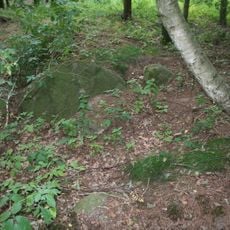
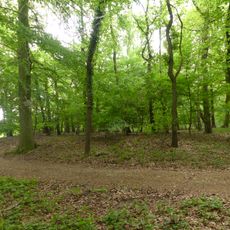
This is the longest passage grave of its kind in the Emsland region and was originally surrounded by an earthwork enclosure, of which only a few stones are visible today. These boundary stones show that the burial site was carefully designed and structured.
The community of curious travelers
AroundUs brings together thousands of curated places, local tips, and hidden gems, enriched daily by 92,601 contributors worldwide.