Pauluskirche, church building in Hückeswagen, North Rhine-Westphalia, Germany
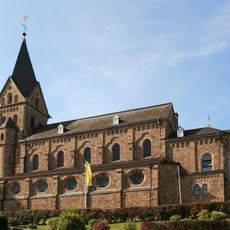
The Pauluskirche is a church building in Hückeswagen with thick stone walls, a simple pitched roof, and a bell tower at the west end topped with a pointed roof and lantern. Inside, a three-level gallery, altar, and organ from around 1830 are arranged facing the congregation, while cast-iron windows with decorative latticework from the early 1800s frame the light entering the space.
A fire destroyed the previous Nikolauskirche in 1753, prompting the reform community to lay a foundation stone for a new building in 1783. The completed structure opened on May 2, 1787, and later drew Lutheran and reform congregations together, who formally merged into a single Protestant church in 1900.
The Pauluskirche is one of two churches of the Evangelical parish of Hückeswagen, in the Lennep church district of the Evangelical Church in the Rhineland. A roaring stag on the seal of the main entrance door stone recalls the seal of the Reformed congregation. The church is a popular postcard motif, second only to the town's castle.
The church stands in Hückeswagen, not on a hill above the Wupper. Inside, seating is arranged on two levels, so visitors should expect stairs or steps to reach the upper benches. The interior is deliberately plain, with colour only in the upper parts of the windows.
A fire in 1753 destroyed the previous church, and during restoration work from 1969 to 1974, workers discovered human bones from an earlier graveyard, which were carefully replaced in the ground. This unexpected discovery reveals the long history of use at this location and the care taken in modern preservation.
The community of curious travelers
AroundUs brings together thousands of curated places, local tips, and hidden gems, enriched daily by 93,640 contributors worldwide.