Steinkiste von Anderlingen, Bronze Age stone cist in Anderlingen, Germany.
The Steinkiste von Anderlingen is a Bronze Age burial cist in Germany built from split granite blocks. The construction measures approximately 2 meters in length, 0.7 meters in width, and 1 meter in height.
The cist was found in 1907 when farmer Gerdt Hinrich Brandt dug into a 25 m wide burial mound for sand and stones; the open grave revealed three carved figures on the southern slab. In January 1908 Hans Hahne excavated the mound, and the cist was moved to the courtyard of the Provincial Museum in Hanover. It was reburied during World War II, re-excavated in 1975, and since 1986 has stood in a park beside the Lower Saxony State Museum.
The southern stone displays three carved human figures that resemble rock carvings from Southern Scandinavia. These representations offer insight into the artistic expression of the people who built this grave.
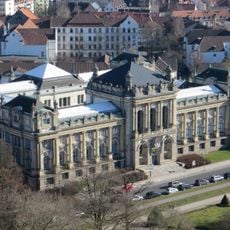
The object is now on display at the Lower Saxony State Museum in Hanover, where it was relocated after excavation. Its location within the museum makes it easily accessible for visitors interested in archaeological discoveries.
Inside the cist, archaeologists found unburned bone remains in the northern section and bronze artifacts in the southern part. This distinct arrangement of finds suggests intentional placement patterns typical of that era.
The community of curious travelers
AroundUs brings together thousands of curated places, local tips, and hidden gems, enriched daily by 93,453 contributors worldwide.