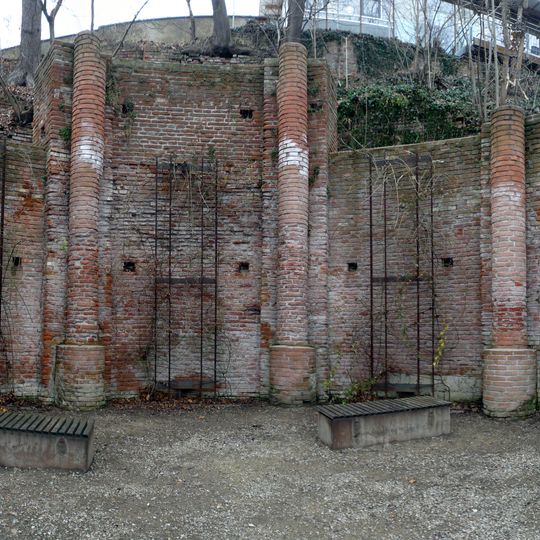
St. Korbinian, Chapel ruins on Weihenstephaner Berg in Freising, Germany.
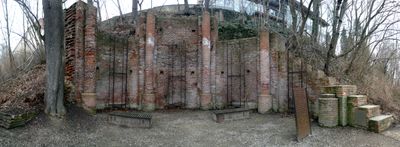
St. Korbinian is a ruined chapel on the south slope of the Weihenstephaner Berg in Freising. Only the rear walls survive as a supporting wall, built of reddish-brown brick with four rounded brick columns bearing pale worn bands near their tops; dark metal trellises stand between them, and a rounded stone base runs along the bottom. The Korbiniansbrünnlein spring lies beneath the ruin.
The chapel was built in 1718 by the Asam brothers following plans from Weihenstephan Abbey, replacing an earlier structure from 1608. It was demolished in 1803, though its remains have endured and were later restored.
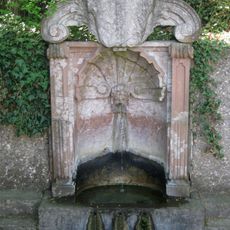
The spring's water was held to cure eye ailments and fever, drawing pilgrims to Saint Corbinian's shrine in the Middle Ages. Records from the 18th century show the water was also served at the Freising court table. The spring is still opened on a few days each year.
The site sits atop a hill and is reachable by walking paths that wind through the area with benches to rest along the way. The spring entrance is gated and only open on specific days, so plan your visit accordingly.
The spring water was prized at the Freising court table into the 18th century, long after the chapel's medieval heyday. In 2000/2001 a Munich firm proposed a small prayer room of plexiglass rods on the ruin's site; the plan was dropped after protests because parts of the old masonry would have been removed.
The community of curious travelers
AroundUs brings together thousands of curated places, local tips, and hidden gems, enriched daily by 93,673 contributors worldwide.