Giebelmoor, Nature reserve in Lower Saxony, Germany
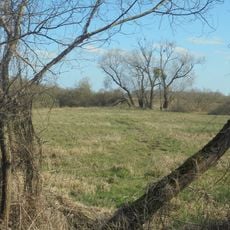
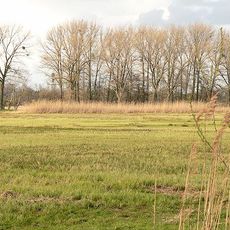
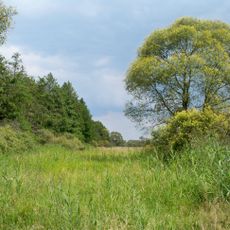
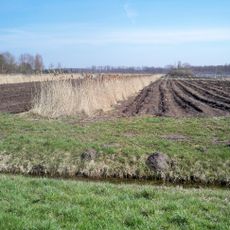
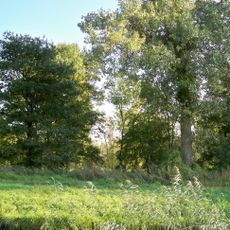
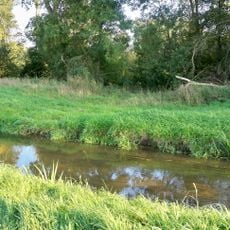
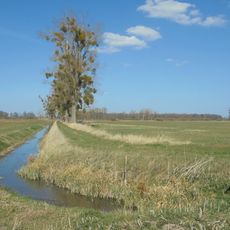
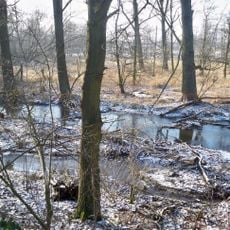
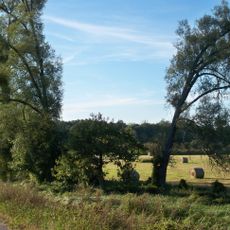
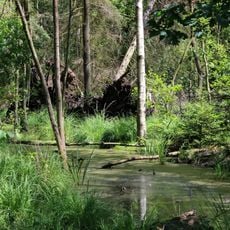
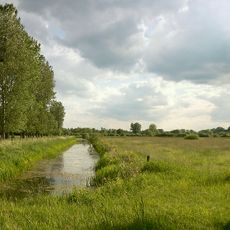
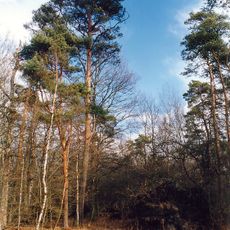
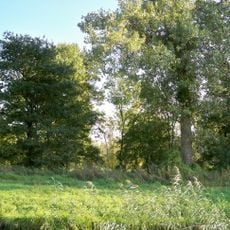
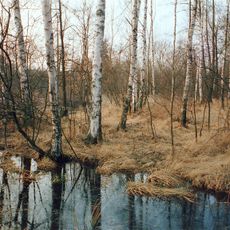
Giebelmoor is a nature reserve in Lower Saxony covering roughly 670 hectares and consisting of alder swamp, birch woodland, and oak mixed forest. The terrain is crossed by numerous drainage ditches that manage the wet moorland.
The Giebelmoor is the only surviving connected swamp forest in the Drömling; the rest of the wetland was converted to grassland and fields in the 19th century. The Aller-Ohre regulation of 1868 with its drainage ditches lowered the water table, killing much of the alder forest. A first 24-hectare natural forest was designated in 1972, and the present nature reserve dates from 2 February 1979.
The Giebeldamm, a narrow county road, cuts the moor west to east and separates the Kleine Giebelmoor to the north from the Große Giebelmoor to the south. The drainage ditches carry names taken from their width in feet: the Sechzehnfüßergraben marks the western boundary, the Zwanzigfüßergraben, the widest, runs north to south, and the Durchhaugraben lies to the east.
The Giebeldamm, a narrow county road, crosses the moor from west to east and divides the Kleine Giebelmoor to the north from the Große Giebelmoor to the south. Inside the woodland a Naturwaldzelle is closed to all entry, even on paths, and the surroundings of the crane breeding site must be avoided during the breeding season.
Since 1 January 2026, 641 hectares — 95.7% of the moor — have been designated as natural forest, where forestry use has ceased. A first 24-hectare natural forest area was already set aside in the Große Giebelmoor in 1972. Inside the woods lies a Naturwaldzelle where entry is forbidden even on paths.
The community of curious travelers
AroundUs brings together thousands of curated places, local tips, and hidden gems, enriched daily by 93,992 contributors worldwide.