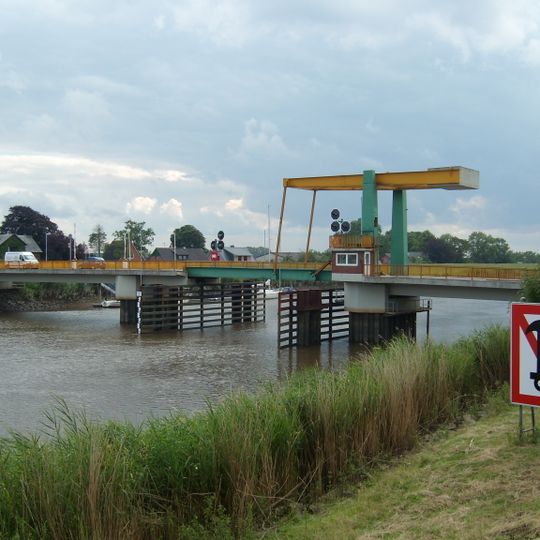
Klappbrücke Heiligenstedten, road bridge
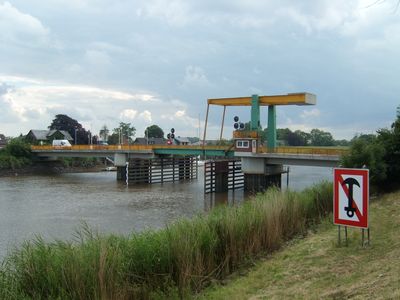
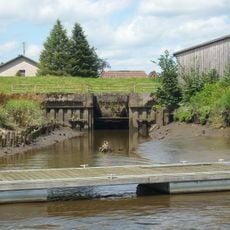
The Klappbrücke Heiligenstedten is a bascule bridge carrying road traffic over the Stör River, built with three steel and concrete sections where the central span lifts to allow boats to pass. It operates three times daily and handles around 6400 vehicles, serving as a key connection in the local transport network.
The first bridge at this location was built in 1392, followed by a wooden bridge in 1442 that was converted to a bascule bridge in 1777. The current steel structure was completed in 1967 after the historic wooden bridge was destroyed by a ship collision in 1966.
The bridge appears on the village coat of arms and represents how Heiligenstedten's identity is tied to river crossings. It demonstrates the community's long relationship with water transport and how this crossing remains a symbol of local continuity.
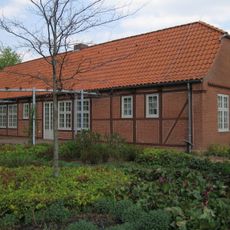
The bridge is centrally located in Heiligenstedten on Brückenstraße and easily accessible by car or bicycle. The village is small and walkable, making it simple for visitors to explore both the bridge and the nearby keeper's house from the 19th century on foot.
The wooden bridge that preceded the current structure was Germany's last toll bridge, collecting passage fees since 1661 that users had to pay for crossing. The bridge keeper collected these fees using a small collection box called a Klingelbeutel.
The community of curious travelers
AroundUs brings together thousands of curated places, local tips, and hidden gems, enriched daily by 91,511 contributors worldwide.