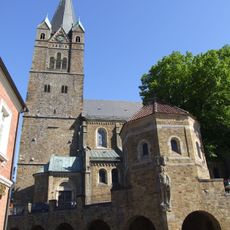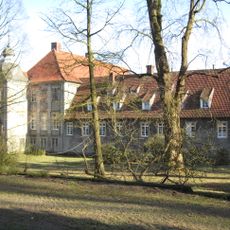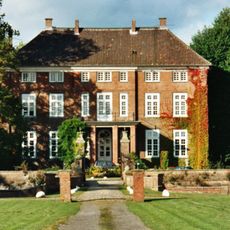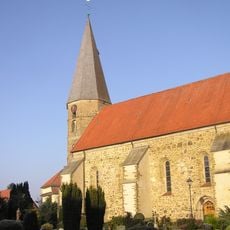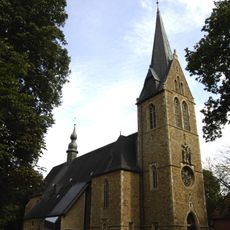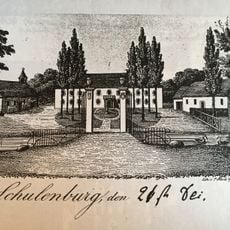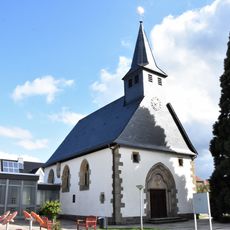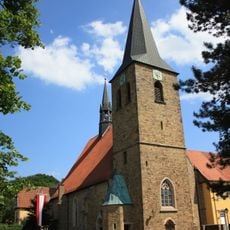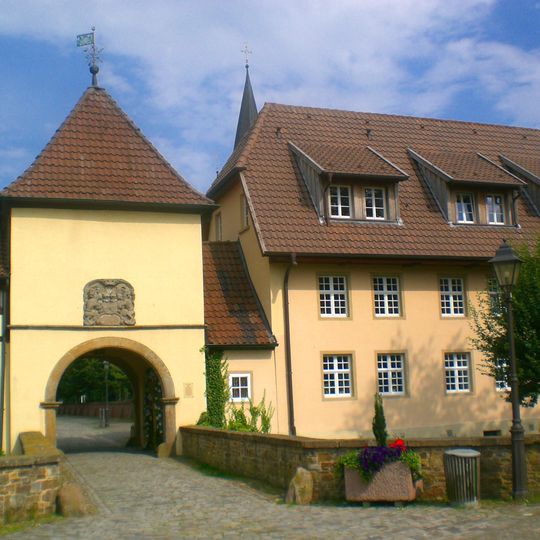
Kloster Bersenbrück, Cistercian monastery in Bersenbrück, Germany.
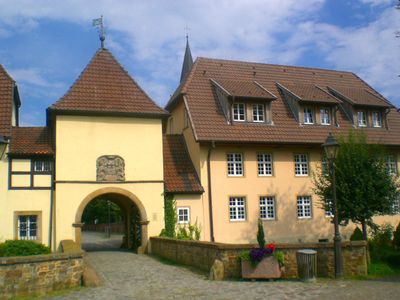
Kloster Bersenbrück is a former Cistercian convent in Lower Saxony featuring multiple buildings grouped around a central courtyard with stone walls and topped by a baroque gateway constructed in 1700. The layout follows the traditional monastery arrangement with distinct sections dedicated to different aspects of communal life, all connected through the central open space.
The monastery was established in 1231 by Count Otto II of Ravensberg and his wife Sophia as a Cistercian women's abbey under abbess Clementia. It remained an active religious community for centuries, becoming deeply embedded in the region's social and economic fabric.
The courtyard layout reflects the structured daily routine that the Cistercian sisters followed for centuries, with buildings positioned to serve specific functions of convent life. Walking through the space, visitors can sense how the nuns moved between prayer, work, and rest in a carefully planned environment.
The site is freely accessible from the outside, allowing visitors to walk around the central courtyard and view the exterior of the buildings at any time. For interior access to the museum and court facilities, it is wise to check opening hours in advance, as some areas may have restricted visiting times.
The monastery gardens were redesigned based on historical records and now feature native plants chosen to support local birds and insects. This approach offers visitors insight into how medieval convents managed their surroundings and maintained self-sufficient communities.
The community of curious travelers
AroundUs brings together thousands of curated places, local tips, and hidden gems, enriched daily by 91,503 contributors worldwide.