Stadtmuseum Gera, History museum in Gera, Germany
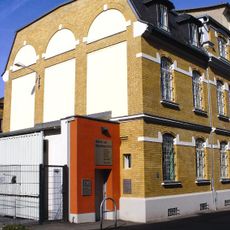
The Stadtmuseum Gera occupies the former Zucht- und Waisenhaus, built between 1724 and 1738 on the site of the Marienhospital first mentioned in 1445 and burned in 1639. The baroque building has prison cells in the basement and upper floors that once housed orphans and mentally ill people. Since 2005 the permanent exhibition "Romantisches Gera" covers around 1000 m² on four floors.
The museum's collection began in 1878 on the initiative of Johann Christian Seydel, a wealthy Gera citizen who owned a dye works. It opened to the public on 12 April 1914 in the converted former orphanage on Heinrichstraße. On 6 April 1945 the building burned out completely in the heaviest air raid on Gera; after a provisional stay at the Schreibersches Haus on Nicolaiberg, the collections returned and the museum reopened in 1956.
The museum's name goes back to a citizens' initiative of 1878 led by the dyer Johann Christian Seydel, who pushed for a town collection. Its departments of natural history and cultural history grew step by step, and today the permanent exhibition "Romantisches Gera" covers around 1000 m² on four floors, from the first settlement to the 21st century.
The permanent exhibition "Romantisches Gera" occupies four floors and about 1000 m², tracing the city's history from the first settlement to the 21st century. The entrance was moved back to the front of the building on Museumsplatz 1 during the 2002–2004 renovation, where it had been until the early 20th century. Two to three temporary exhibitions are added each year.
The Geraer Höhler, the underground storage cellars of the old town, are not part of the museum's exhibition space: the Stadtmuseum looks after them as a separate collection. The vaulted cellars were dug as cool lager rooms for the town's brewers and merchants.
The community of curious travelers
AroundUs brings together thousands of curated places, local tips, and hidden gems, enriched daily by 92,804 contributors worldwide.