Kloster Heilig Kreuz, Benedictine monastery ruins along Elbe River in Meissen, Germany
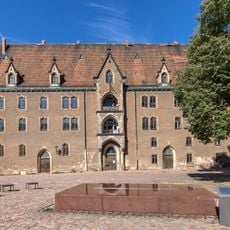
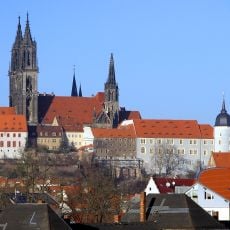
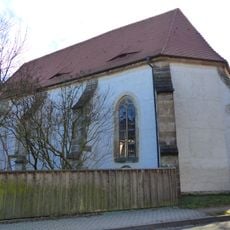
Kloster Heilig Kreuz is a former Benedictine convent on the banks of the Elbe River in Meissen, with surviving sections that include parts of the original church, vaulted rooms in the eastern wing, and basement chambers of the northern section. The remains spread directly along the riverbank, giving a sense of how the full complex once ran parallel to the water.
Margrave Dietrich the Oppressed founded the Benedictine convent in the late 12th century and moved it to its present location on the riverbank in 1217. The convent closed in 1568 following the Reformation, after which the buildings gradually fell into ruin.
The convent's name, Heilig Kreuz, refers to the Holy Cross to which it was dedicated. Margrave Dietrich the Oppressed endowed it with the village of Sommerfeld near Leipzig on 24 April 1220, and the church of Luppa was also a gift that year. Sommerfeld lay too far off to manage, so it was sold in 1391 for 200 Freiberg groschen to the Thomaskloster in Leipzig.
The ruins lie on the left bank of the Elbe about 1.5 km north of Meissen's old town. Since 1994 the site has been used by the Meißner Hahnemannzentrum, which had the buildings secured and restored in 2004; parts of the grounds are therefore not open to walkers. Excavations between 1997 and 2001 examined the former cloister and post-medieval farm buildings.
Adelheid of Meissen, a Wettin queen of Bohemia, died on 2 February 1211 in the convent of the Holy Cross, before the move to the left bank. The site later became a separate cadastral district, Klostergut zum Heiligen Kreuz, still recorded in Meissen land registers, made up of a narrow strip left of the Elbe plus two detached parcels.
The community of curious travelers
AroundUs brings together thousands of curated places, local tips, and hidden gems, enriched daily by 94,113 contributors worldwide.