Kloster Brunnen, Capuchin monastery in Sundern, Germany
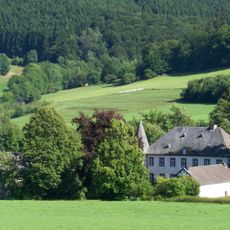
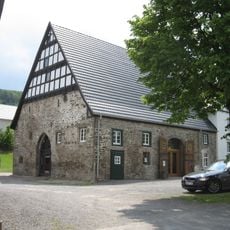
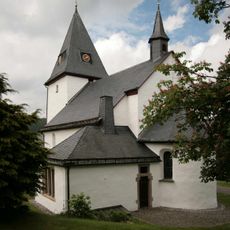
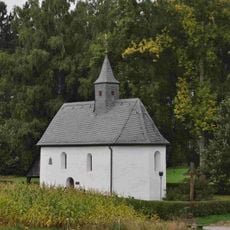
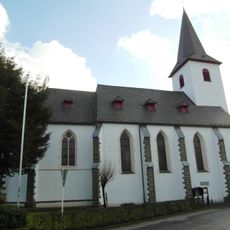
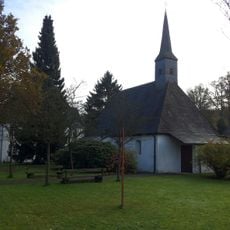
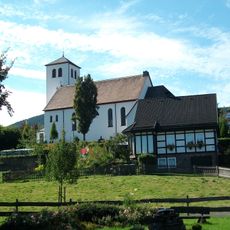
Kloster Brunnen is a former Capuchin monastery near Endorf, south of Sundern in the Sauerland. The church, built between 1742 and 1748 by a master builder from Augsburg, is a plain hall church with a rectangular choir to the south, a barrel vault and narrow round-arched windows; the simple monastery building adjoins it to the west. The altars were designed by Johann Conrad Schlaun.
A hermitage with a chapel stood by a healing spring, marked "Fons medicinalis" on maps, by 1705. In 1722 a Capuchin residence was set up, raised to a monastery in 1724; the convent buildings went up between 1729 and 1735 and the church was built from 1742 to 1748. The 1804 secularisation barred new monks, and after the last father died in 1834 the monastery became a school vicariate.
The monastery church holds an organ from 1801 and an interior furnished entirely in the 18th century; the altars were designed by Johann Conrad Schlaun. Since 1975 the convent building has served as the diocesan and education centre of the Katholische Junge Gemeinde (KJG) of the Paderborn diocese, while the church belongs to the Pastoralverbund Oberes Röhrtal.
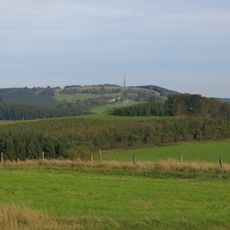
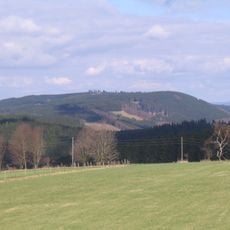
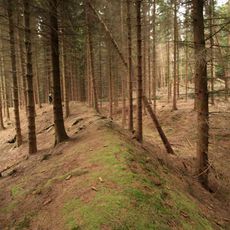
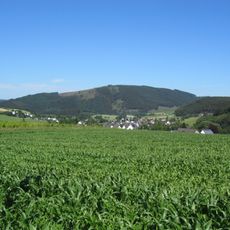
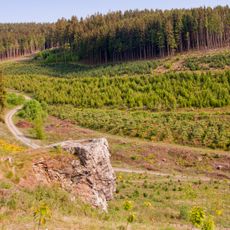
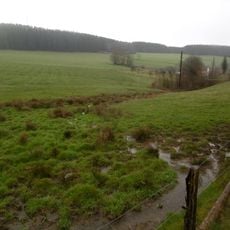
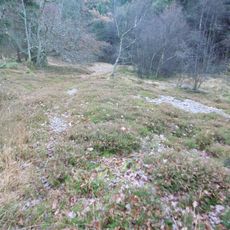
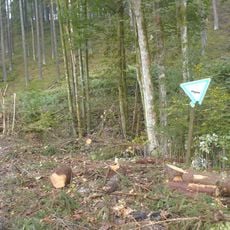
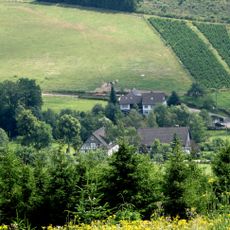
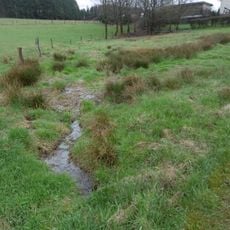
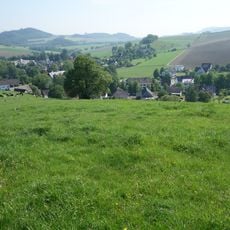
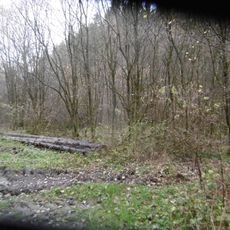
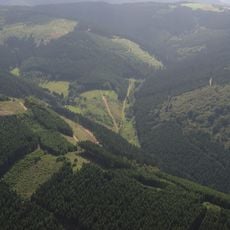
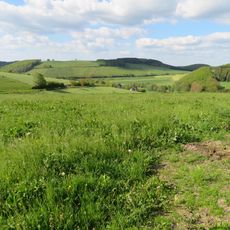
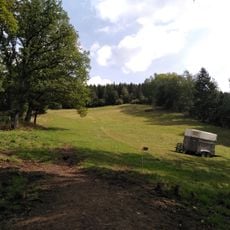
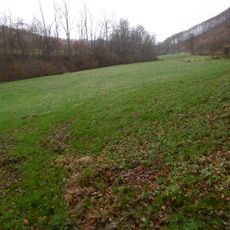
The monastery stands near Endorf, a short distance from Sundern in the Sauerland. The grassland around the buildings is protected as the Landschaftsschutzgebiet Kloster Brunnen, and the adjoining forest as the Landschaftsschutzgebiet Sundern. The church belongs to the Pastoralverbund Oberes Röhrtal, so check service times before visiting the interior.
The monastery library, described in the sources as valuable and unmatched in this sparsely populated area, was scattered during the secularisation of 1804, before the monastery itself was dissolved. The biologist and university lecturer Reiner Feldmann was born at Kloster Brunnen in 1933. The church preserves an organ built in 1801.
The community of curious travelers
AroundUs brings together thousands of curated places, local tips, and hidden gems, enriched daily by 94,487 contributors worldwide.