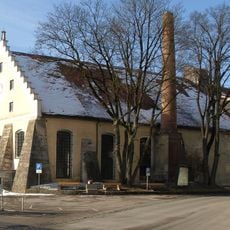
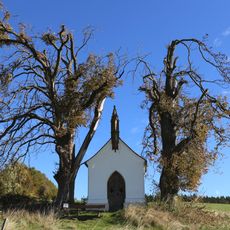
Kloster Ramsau bei Haag, Monastery in Ramsau, Germany
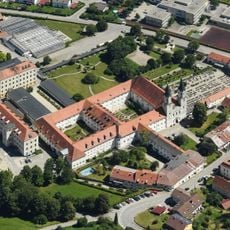
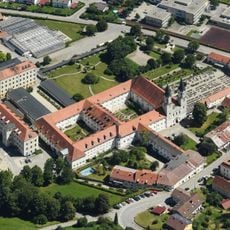
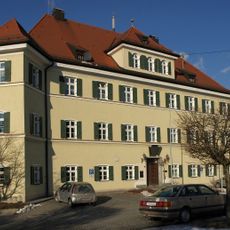
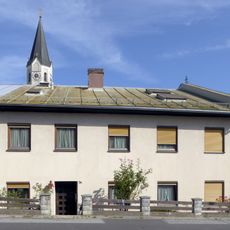
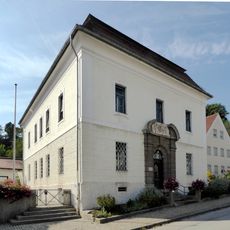
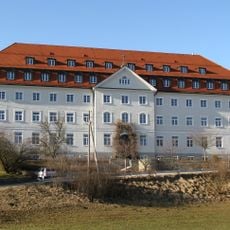
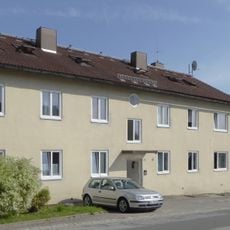
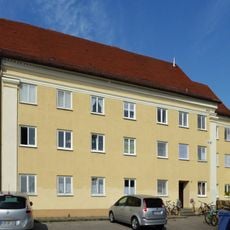
Kloster Ramsau bei Haag is an Augustinian monastery in the same-named village, mainly characterized by a three-story Baroque wing with a hipped roof from 1731. This structure in the southern section of the complex forms the core of the visible complex today.
Jörg von Fraunberg, lord of Haag, founded the monastery in 1412 for the Augustinian Hermits, dedicated to Saint Mary, Saint Augustine and Saint George. Under Count Ladislaus von Fraunberg the Augustinians left during the Reformation; after Haag passed to the Bavarian Wittelsbachs in 1567 the house was restored, and two fathers moved back in 1593 to serve as pastors in Ramsau. It was dissolved in 1802 during secularisation.
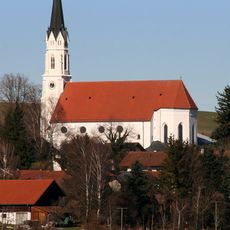
The monastery's church was dedicated to Saint Mary, Saint Augustine and Saint George. Augustinian friar Theodor Grünberger (1756–1820), a composer and priest, created a large part of his most important works at Ramsau. After the 1802 dissolution, Franciscan sisters ran an orphanage, the Kinderheim St. Josef, in the buildings from 1899.
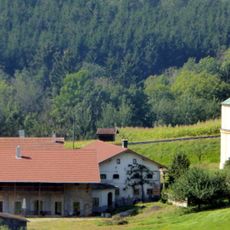
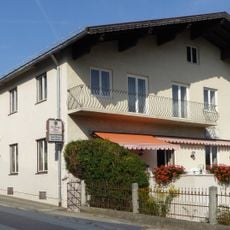
The grounds can be viewed from outside today as part of a social facility, with the Baroque architecture visible from a distance. Visitors should remember this is an inhabited location with private grounds where respecting the residents is important.
The composer Theodor Grünberger (1756–1820), an Augustinian monk and priest, wrote a large part of his most important works at Ramsau monastery. The south wing that survives today is a three-storey Baroque hipped-roof block, 1731 in its core, later modernised and extended.
The community of curious travelers
AroundUs brings together thousands of curated places, local tips, and hidden gems, enriched daily by 94,173 contributors worldwide.