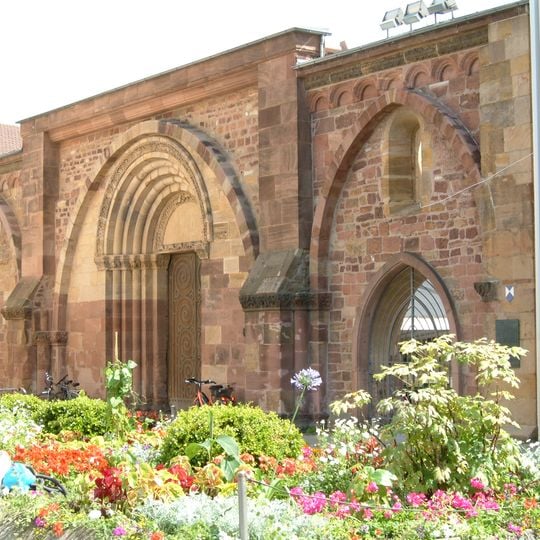
Klosterruine Frankenthal, Romanesque church ruins in Frankenthal, Germany
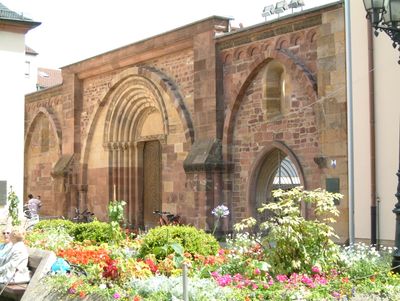
The Frankenthal monastery ruins are the remains of a three-nave pillar basilica from the 12th century. The surviving sections show the lower west wall, portions of the nave masonry, and fragments of the medieval rood screen.
The monastery was founded in 1119 by Erkenbert and elevated to abbey status in 1140, making it a major center of religious life. The abbey played a role in regional church development until its dissolution in the 16th century.
Erkenbert was a ministerialis of the Bishop of Worms, not a monk; he founded the Augustinian canons' monastery here in 1119 and served as provost until his death in 1132. He is venerated as Blessed, and his wife Richlinde founded a canonesses' convent in Frankenthal the same year. The site is now used for open-air theatre, film screenings and concerts, including a two-week summer festival each July and August.
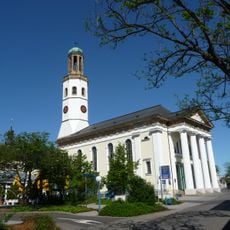
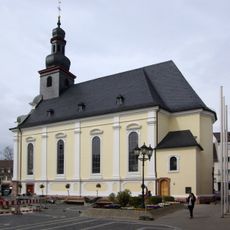
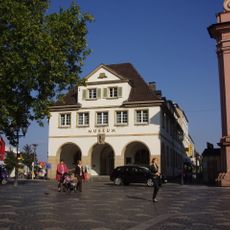
The ruin lies in Frankenthal's centre, between the Catholic Trinity Church to the west and the Twelve Apostles Church to the east, with the town hall and Kornmarkt to the south. The surviving lower west facade, the north aisle wall, the rood screen and the lower south tower were restored in the 1990s. The courtyard-like atrium is used for open-air theatre, film and concerts, including the two-week summer festival in July and August; in winter 2008/09 an ice rink was set up there.
The western portal displays finely carved leaf motifs and animal figures that share similarities with the northern portal of Worms Cathedral. These artistic details reveal the connections between regional building centers and the exchange of craftsmanship techniques in medieval times.
The community of curious travelers
AroundUs brings together thousands of curated places, local tips, and hidden gems, enriched daily by 93,096 contributors worldwide.