Weiselberg, Mountain summit in Freisen, Germany
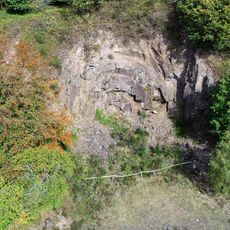
Weiselberg is a mountain summit near Freisen standing about 570 meters high and displays distinctive pentagonal basalt columns throughout its geological layers. Its southern slope is blanketed with an extensive field of basalt blocks known locally as Stone Sea.
The summit dome is made of volcanic rock about 280 million years old, from the Permian Rotliegend. The hill is the type locality of weiselbergite, first described by Karl Heinrich Rosenbusch in 1887. Agate was dug at the surface in Roman times and mined in adits from the 15th century; extraction stopped when the hill became a nature reserve in 1950.
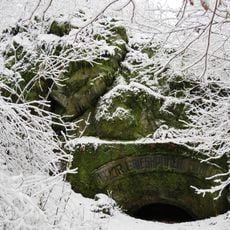
Local legend tells of a castle on the Weiselberg with a just king murdered in his bed by men from a stronghold on the southern slope; the Königskeller mentioned in these tales may refer to an agate adit. No buildings have been traced on the hill, and the Steinernes Meer is a natural formation. Agate finds from the hill are displayed in Oberkirchen's mineralogical museum.
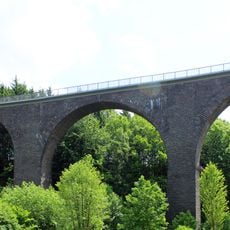
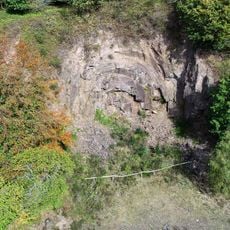
A 4 km circular route is laid out as a geological teaching trail, and an access path from the Bosenborn leads to the Steinerne Schrank rock face. The Weiselberg-Gipfeltour runs 14.9 km, or 17.6 km in its extended variant, and links Oberkirchen with its former Westrichbahn viaduct (1934–1936); it is part of the 24 km Fritz-Wunderlich cycle and hiking path.
The rock weiselbergite, first described by Karl Heinrich Rosenbusch in 1887, is named after this hill, its type locality. It is deep black with pale blue tints and isolated feldspar spots that resemble a starry sky, and it contains about 66% glass according to Tröger. Agates are embedded in it, and the greenish stone was mined in adits from the 15th century.
The community of curious travelers
AroundUs brings together thousands of curated places, local tips, and hidden gems, enriched daily by 94,588 contributors worldwide.