König-Albert-Bad, Cultural heritage monument in Löbau, Germany
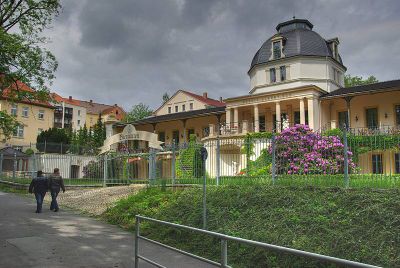
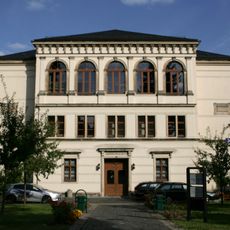
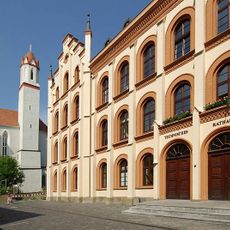
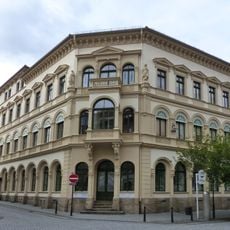
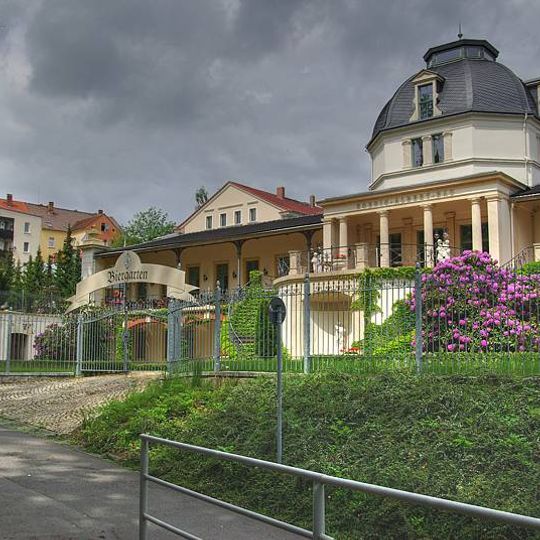
König-Albert-Bad is a bathhouse in Löbau built in late classical style during the 19th century. The garden-facing facade features Italian-style loggias and a two-sided outdoor staircase, while the interior has been entirely converted into a restaurant with terrace areas and event spaces.
The bathhouse was constructed in 1876 following designs by Dresden architect Ernst Giese, replacing an earlier bathhouse from 1824 that had used iron, salt, and sulfur springs. The new building continued this therapeutic tradition and became an important spa destination in the region.
The building takes its name from King Albert of Saxony, whose 1878 visit brought significant attention to the site. The therapeutic baths and steam facilities were once a major draw for visitors seeking health and recovery treatments.
The building is fully modernized today and functions as a restaurant with outdoor terrace, making it easily accessible for day visitors. Beyond dining, the location offers a bowling alley with cocktail bar, both housed within the historical setting.
The bowling alley with integrated cocktail bar represents an unusual combination that blends modern entertainment within historical architecture. This contemporary use demonstrates how the location has adapted over decades to changing leisure and dining trends.
The community of curious travelers
AroundUs brings together thousands of curated places, local tips, and hidden gems, enriched daily by 92,593 contributors worldwide.