Epprechtstein granite, Granite quarries in Kirchenlamitz, Germany
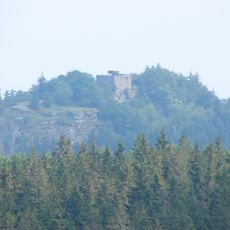
Epprechtstein granite is a pale yellow, medium-grained two-mica granite quarried on the 798-metre Epprechtstein, two kilometres west of Kirchenlamitz in the northern Fichtelgebirge. It is an Upper Carboniferous biotite-muscovite granite with mineral grains 1.5 to 1.6 mm across: 33 percent quartz, 37 percent alkali feldspar, 20 percent plagioclase, 6 percent biotite, 2 percent muscovite and chlorite, and 2 percent accessories. The light grey tone comes from the quartz, the white to pale pinkish-white from the feldspars and the black from the biotite.
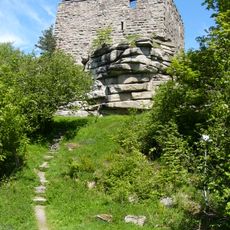
Blocks of Epprechtstein granite were used in the 12th-century Epprechtstein Castle, but no systematic quarrying existed then. A Kirchenlamitz stonemason received a margravial lease in 1724, and the Bavarian mining law of 1869 regulated quarrying. Railway building drove the granite industry: by 1897 five Kirchenlamitz firms employed around 450 workers.
This stone shaped the look of many buildings across the region and was used for local construction over centuries. People in the area recognized its durability and built houses with it that still stand today.
The stone resists frost and salt well, making it suitable for both indoor and outdoor building applications. Visitors should know that the site is an active or former quarry area where safety rules apply.
Six quarries can be visited along a circular hiking trail on the Epprechtstein: Lenks-Bruch, Alberts-Bruch, Schoberts-Bruch, Geyers-Bruch, Blauer Bruch and Schloßbrunnen-Bruch. In 2009 three were still in operation; most abandoned ones have largely been renaturalised.
The community of curious travelers
AroundUs brings together thousands of curated places, local tips, and hidden gems, enriched daily by 94,383 contributors worldwide.