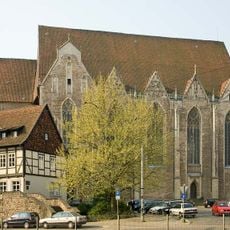
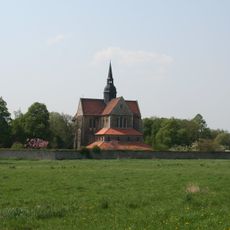
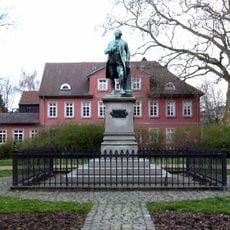
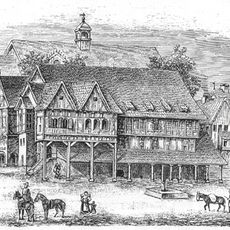
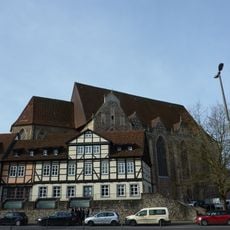
Paulinerkloster, Dominican monastery in Brunswick, Germany.
The Paulinerkloster was a Dominican monastery on the Bohlweg in Brunswick, opposite Dankwarderode Castle. Its high-Gothic hall church, consecrated in 1343, held 13 altars, among them guild altars of the clothmakers and goldsmiths; the cloister was still being built in 1438. The monastery was demolished in 1903; only the Paulinerchor survives, moved to the Aegidienkirche in 1906.
The Dominicans, called Pauliner in Brunswick, received ducal permission in 1294 and bought a noble court with a chapel on the Bohlweg in 1307. Master Eckhart visited in 1309, and papal approval followed in 1310. Bishop Albrecht of Halberstadt consecrated the hall church in 1343. The friars left in 1528 after the Reformation; the buildings became an arsenal from the early 18th century, then a museum, and were demolished in 1903.
The Dominicans were called "Pauliner" in Brunswick, after their patron apostle Paul. Their church held 13 altars, several endowed by guilds: the clothmakers in 1426, the goldsmiths, tanners and the Liebfrauengilde in 1429. The pulpit carved by Hans Witten around 1501–1512 now stands in the Aegidienkirche.
The monastery itself no longer stands: it was demolished in 1903, so there is no cloister or grounds to visit. What survives is the Paulinerchor, moved in 1906 to the Aegidienkirche, where the pulpit carved by Hans Witten between 1501 and 1512 can also be seen. Look for these inside that church.
The monastery was demolished in 1903, but its Gothic choir was moved in 1906 to the Aegidienkirche, where it still stands. The pulpit carved by Hans Witten between 1501 and 1512 also survives there, along with the keystone of the west gable dated 1525.
The community of curious travelers
AroundUs brings together thousands of curated places, local tips, and hidden gems, enriched daily by 93,952 contributors worldwide.