Villa Salve Hospes, Neoclassical villa in Innenstadt, Braunschweig, Germany.
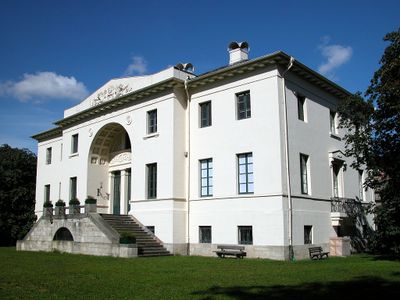
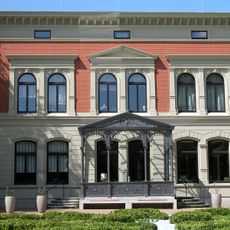
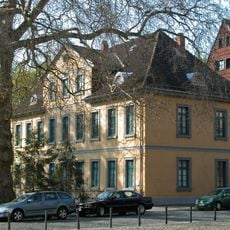
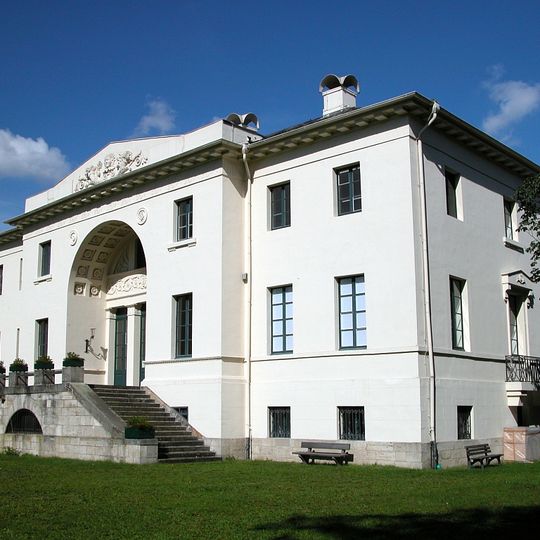
Villa Salve Hospes is a two-story neoclassical residence in Braunschweig featuring Ionic columns and a double-flight staircase. The main building and its adjoining Remise structure together provide exhibition spaces with decorative stucco work throughout.
The villa was built between 1805 and 1808 by architect Peter Joseph Krahe for merchant Dietrich Wilhelm Krause. The city acquired it in 1927 and has used it for cultural purposes since then.
The Latin name Salve Hospes ("Welcome, guest") is carved in a frieze above the portal, between Ionic columns. The Kunstverein Braunschweig, co-founded in 1832 by the villa's architect Peter Joseph Krahe, was revived in 1941 and has used the villa since 1946; from 1942 to 1943 it issued the journal Braunschweiger Kunstspiegel. From autumn 1962 the west side building housed Galerie Schmücking, run by Henny and Rolf Schmücking.
The villa stands at Lessingplatz in the Innenstadt, on ground levelled from the former fortifications; the two-storey main house is flanked by single-storey wings, and the west wing housed the Galerie Schmücking from 1962. A double-flight staircase with two griffin candelabra leads up to the portal, whose Ionic columns carry the SALVE HOSPES frieze. Part of the former park is now used as open ground by the municipal swimming pool to the southwest.
Hans Christian Andersen visited in 1831 and wrote in a letter that near a gate lay a pretty garden, open to everyone, with a forest of flowers and large southern fruit trees standing in tubs around the house. The facade already read "Salve Hospes".
The community of curious travelers
AroundUs brings together thousands of curated places, local tips, and hidden gems, enriched daily by 93,643 contributors worldwide.