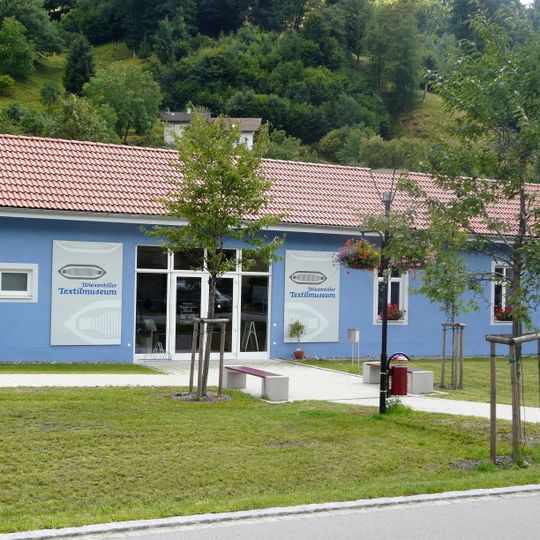
Wiesentäler Textilmuseum, Textile museum in Zell im Wiesental, Germany
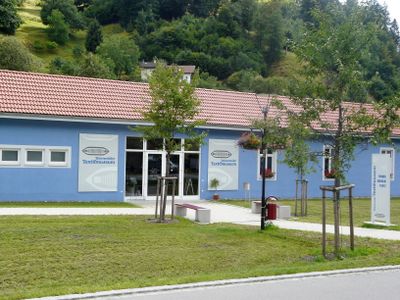
The Wiesentäler Textilmuseum occupies the shed-roof halls of a former weaving factory on the bank of the Wiese river in Zell im Wiesental. Its permanent exhibition follows cotton from fibre preparation through spinning, winding, warping and sizing to weaving, bleaching and dyeing, with mechanical looms, spinning and winding machines, cord-braiding machines, dyeing equipment and cotton-testing instruments. All processes are demonstrated on working machines, including Jacquard looms.
In the 18th century, Zell's vogt Meinrad Montfort brought a small weaver colony from Augsburg and set up a cloth bleaching ground, founding the local textile trade. In 1837 Peter Koechlin of Mulhouse built Zell's first hand-weaving mill after the town fire of 1818. Water power from the Wiese, Baden's entry into the German Customs Union in 1834/35 and the 1889 Zell–Todtnau railway drove industrial growth; over 20,000 people worked in the valley's textile industry at its height.
The museum is named after the Wiesental valley and reflects the regional textile brands like Irisette that produced fabrics for people worldwide for many decades. The space reveals how cloth making was more than a craft, shaping daily life and community identity across generations of local families.
The museum is easy to reach, located near Zell im Wiesental train station with signs pointing to the building. Visitors should allow time to walk through displays of old machinery, sample collections, and weaving demonstrations, including Jacquard looms that create detailed patterns in fabric.
A special feature is the demonstration of Jacquard looms that control thousands of threads to weave complex images and patterns into fabric. Visitors can see how these technically demanding machines work and understand why the craftsmanship from this area was once known worldwide.
The community of curious travelers
AroundUs brings together thousands of curated places, local tips, and hidden gems, enriched daily by 92,812 contributors worldwide.