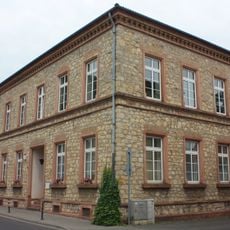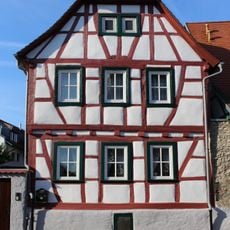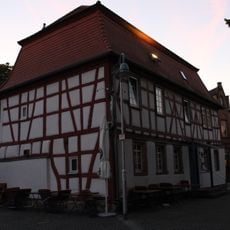
Festung Rüsselsheim, Medieval fortress in Rüsselsheim am Main, Germany.
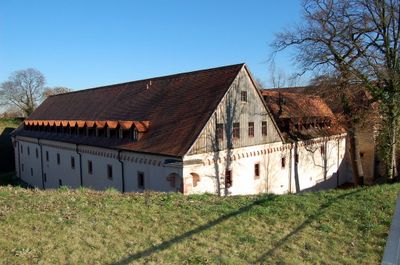
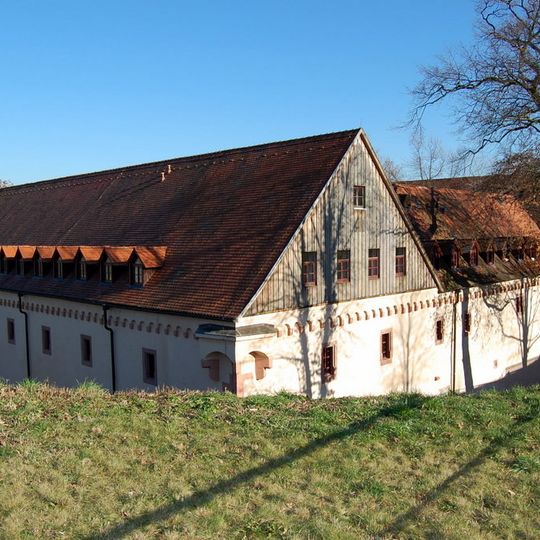
Festung Rüsselsheim is a former defensive complex in Rüsselsheim am Main, built from 1479 under Heinrich III of Hesse with ramparts, moats and five bastions. The grounds now house the Stadt- und Industriemuseum Rüsselsheim, founded in 1976, along with the city archive and a café.
A castle of the Counts of Katzenelnbogen was first documented in 1399. From 1479, after Rüsselsheim passed to Hesse under Heinrich III, it was rebuilt as a fortress with ramparts, ditches and five bastions, completed by 1546. Philipp the Magnanimous surrendered it to Emperor Charles V in 1547; it was demolished, then rebuilt in 1560–1563. French troops blew it up on 6 April 1689.
The Stadt- und Industriemuseum Rüsselsheim, founded in 1976, has occupied the fortress since the 1970s and received a Council of Europe museum prize in 1979. The city archive, a café and the local heritage association (Heimatverein) are also based here, and a regular arts and crafts market is held on the grounds.
The fortress was bought by the city of Rüsselsheim in 1954 and has been open to the public since then; it has been restored in keeping with its listed status since the 1990s. The Stadt- und Industriemuseum, the town archive, a café and the local heritage association are housed on the grounds. The museum is closed on Mondays.
The fortress ruins served as a prison, a military hospital, a mushroom farm and a youth hostel before the city bought the site in 1954 and opened it to the public.
The community of curious travelers
AroundUs brings together thousands of curated places, local tips, and hidden gems, enriched daily by 93,373 contributors worldwide.