Villa Mumm, Cultural heritage monument in Frankfurt, Germany
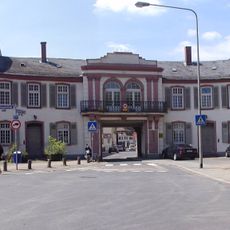
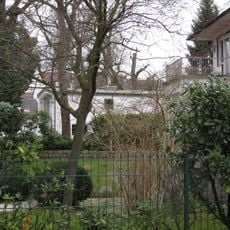
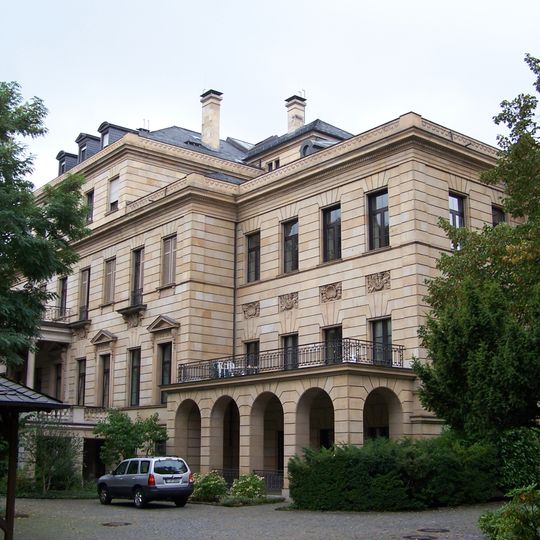
Villa Mumm is a palais-like building in Sachsenhausen, Frankfurt, erected 1902–1904 for champagne producer Hermann Mumm von Schwarzenstein and his wife Emma Passavant. The Danish architect Aage von Kauffmann designed a compact, symmetrical block of three main storeys drawing on Renaissance, Baroque and Neoclassical forms; its resemblance to the Alte Oper earned it the nickname "Kleine Oper". Six terraces belong to the house.
The villa was built in the early 1900s by the wealthy Mumm champagne family, who used the estate as a symbol of their prosperity. During World War II, the building remained largely unharmed and subsequently served various institutions.
The villa is named after Hermann Mumm von Schwarzenstein, the "champagne baron" who had it built with his wife Emma, née Passavant. The family's champagne house in Reims lost its holdings in the Champagne region as a result of the First World War. The building is nicknamed "Kleine Oper" (Little Opera) because of its external resemblance to the Alte Oper and its six terraces.
The building currently houses a government agency and is not generally open to visitors since it serves as office space. The architectural design and garden can be viewed from outside, from the street.
The villa's resemblance to the Alte Oper and its six terraces earned it the nickname "Kleine Oper" (Little Opera). In 1949, when Frankfurt applied to become the federal capital, the building was intended as the residence of the Federal President; Bonn won instead.
The community of curious travelers
AroundUs brings together thousands of curated places, local tips, and hidden gems, enriched daily by 93,790 contributors worldwide.