Villa rustica of Holheim, Roman country estate near Nördlingen, Germany
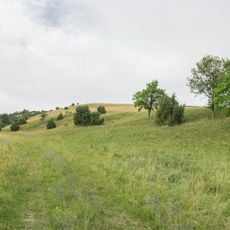
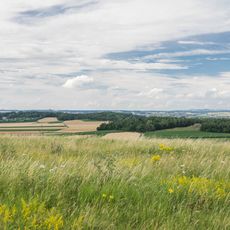
The Villa rustica of Holheim is a small Roman farmstead in the Maienbach valley near Nördlingen, excavated between 1975 and 1981. Its main house has a rectangular plan around an open courtyard, with two wings of rooms set at right angles; it lacked hypocaust heating and a cellar but had glass windows and a shingled roof. Five further buildings, including a bath, and parts of a man-high perimeter wall were uncovered.
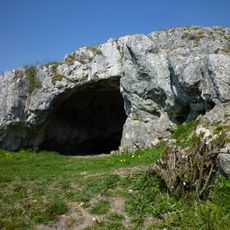
The villa was built in the 2nd century AD, and Roman finds had already been reported below the Ofnethöhlen in the 19th century. The main house was uncovered in 1975 and 1976 during land consolidation, with further digs in 1980 and 1981; in 1983 Nördlingen had the remains conserved for visitors. A burnt layer and the unburied remains of its inhabitants point to destruction around the mid-3rd century, by 259/260 at the latest.
The villa's name follows Latin usage: pars urbana for the living quarters, pars rustica for the farm buildings, and the two were kept apart. A millstone found on site shows that the residents ground their own grain. Veterans of the Roman army usually established estates of this kind after discharge, and the army itself bought supplies from them.
The artifacts from the site are displayed at the Nördlingen City Museum, where visitors can examine the recovered objects and learn more about the excavations. This museum visit provides the most complete picture of what was found and discovered here.
The satyr statuette from the burnt layer of the main house had eyes made of silver, and its double flute (aulos) may also have been silver, though the instrument was probably lost in antiquity. Two fibulae of the type worn by Roman soldiers were found as well. The finds are kept in the Nördlingen City Museum.
The community of curious travelers
AroundUs brings together thousands of curated places, local tips, and hidden gems, enriched daily by 94,204 contributors worldwide.