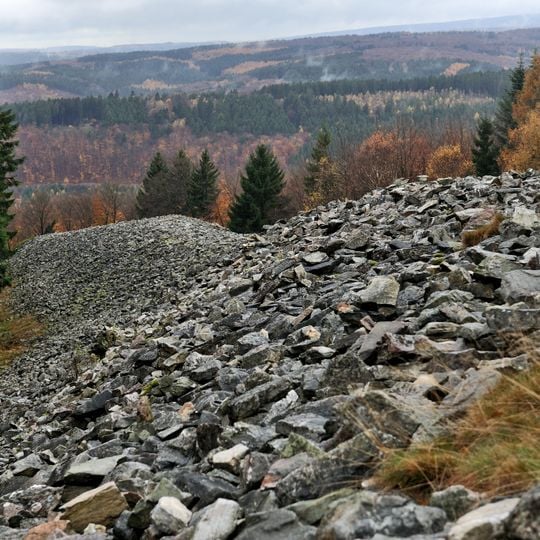
Celtic circular wall of Otzenhausen, Celtic hillfort in Nonnweiler, Germany
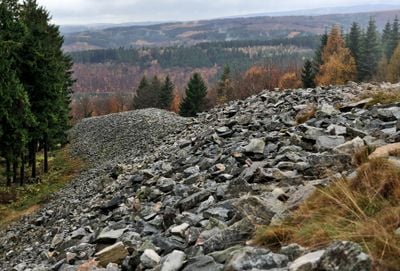
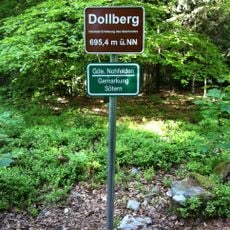
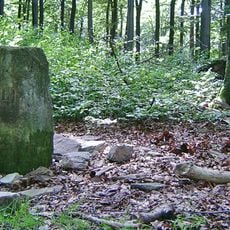
The Celtic circular wall of Otzenhausen is a hilltop fortification on the Dollberg, built by the Treveri. Its main rampart runs 2,500 metres around 18 hectares, reaching 10 metres high and over 40 metres wide at the base. The wall used the murus gallicus technique: a timber framework filled with loose stone, visible today as a long mound of grey rubble.
Built around 400 BC as a refuge fort by the Treveri, the site was abandoned and resettled from the mid-2nd century BC, when the ramparts were extended into a full ring wall in the 1st century BC. In 51 BC it was probably taken by Roman troops under Titus Labienus, whose camp lay 3.5 km away at Hermeskeil. The fort was left after the Gallic War; a small Gallo-Roman temple district kept the old sacred area in use.
The name "Hunnenring" (Ring of the Huns) is a popular label with no link to the Huns; it may derive from an old word for king, from "Hünen" (giants) because of the wall's size, or from early 19th-century romantic naming. The site is counted among the five known town-like settlements of the Treveri.
A marked path guides you around the fortification with information boards explaining the history and daily life of past inhabitants. The trail is easily walkable and allows you to explore the different sections at your own pace.
The rampart was built in murus gallicus technique: a timber framework of horizontal beams, mortised and held by iron spikes, filled with loose stone. Julius Caesar described this method in Book 7, chapter 23 of his Commentaries on the Gallic War, noting that the stone protected the wood from fire and the wood shielded the stone from battering rams.
The community of curious travelers
AroundUs brings together thousands of curated places, local tips, and hidden gems, enriched daily by 93,368 contributors worldwide.