Kloster St. Wolfgang, Medieval monastery ruins in Hanau, Germany.
Kloster St. Wolfgang is a religious community building and archaeological site in Hanau with medieval remains. The complex contains a roughly 10-meter-high square tower and visible foundation walls of a former church.
The site was founded in 1468 when a trumpet player for a local count built a chapel there. By the early 1490s, Servite monks had settled at the location and established it as their monastery.
The monastery gave its name to the present-day Hanau district of Wolfgang. Clemens Brentano wrote the fairy-tale novel Gockel, Hinkel und Gackeleia in the 1830s during a stay at nearby Hof Trages; descriptions of places in the book suggest the romantic ruin served as the model for the setting "Gockelsruh".
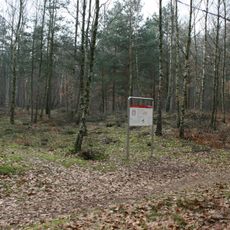
The ruin stands in woodland roughly midway between Hanau-Wolfgang and Niederrodenbach, about 1.5 km from the edge of each, near the Forsthaus Wolfgang; the Limes runs some 750 m to the west. Ground is uneven, with earth banks and hollows from old ore pits around the walls. Excavated building parts were documented and then covered again with soil.
Scientific excavations since 2013 have uncovered additional building structures that reveal the original monastery layout. These discoveries help visitors understand the true size and arrangement of the former complex.
The community of curious travelers
AroundUs brings together thousands of curated places, local tips, and hidden gems, enriched daily by 94,019 contributors worldwide.