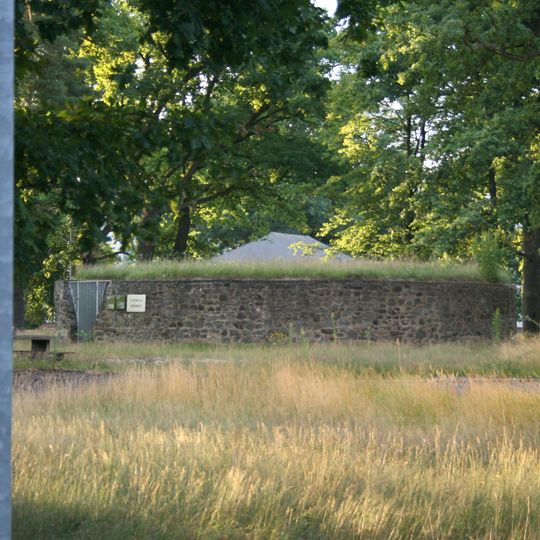
Hochgericht Hanau, Execution site of 1839 in Hanau-Wolfgang, Hanau, Germany
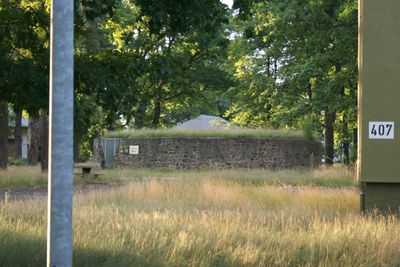
Hochgericht Hanau is a preserved execution site from the 19th century with a circular stone enclosure about 13 meters in diameter. The structure consists of a stone wall roughly 2 meters high filled with earth, with interior stairs leading up to the raised platform where sentences were carried out.
The Electorate of Hesse built this execution site in 1839 to replace the medieval gallows of the Hanau high court, which stood between Kesselstadt and Dörnigheim and was demolished in 1834, its stone reused here. The last execution took place in January 1861, when the murderer Nolte was beheaded before more than 12,000 spectators. The site was restored as a monument in 1926.
The site's name, Hochgericht, refers to the high court of Hanau whose sentences were carried out here. Executions were public: when the murderer Nolte was beheaded in January 1861, more than 12,000 people reportedly watched. The platform itself stayed empty because beheading was done with the sword alone.
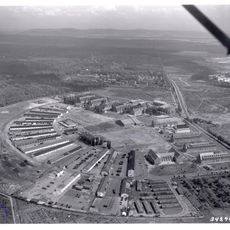
The site lies in the Wohngebiet built on the former Old-Argonner-Kaserne, used by the U.S. Army after 1937; it was closed to the public until the barracks were converted. The circular platform is reached by an interior staircase on its south side, so approach from the south. The roughly 2-metre stone wall and earth fill leave the top open and exposed.
The last person executed here was the murderer Nolte, beheaded with a sword in January 1861 before a reported crowd of more than 12,000 spectators. Because beheading was the only method used, the platform never carried a gallows or any superstructure.
The community of curious travelers
AroundUs brings together thousands of curated places, local tips, and hidden gems, enriched daily by 93,789 contributors worldwide.