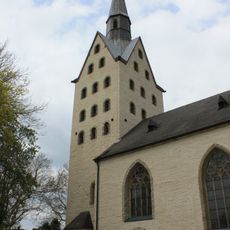
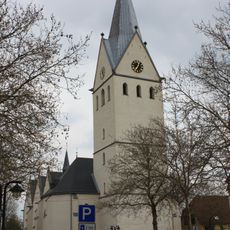
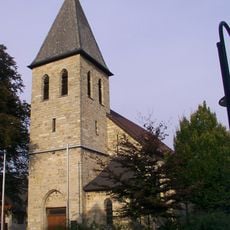
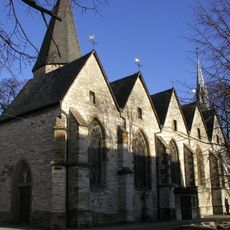
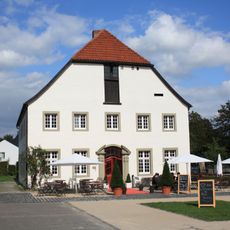
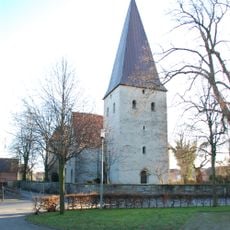
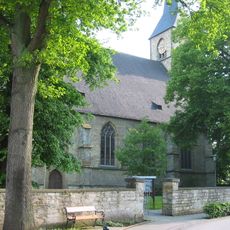
Frauenstift Geseke, Former canoness convent in Geseke, Germany
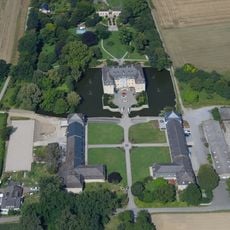
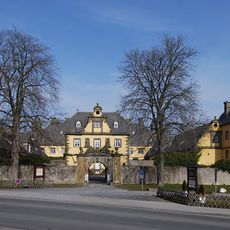
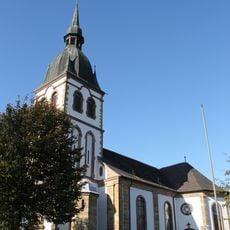
Frauenstift Geseke is a convent complex with a medieval church and cloister whose buildings reflect typical ecclesiastical architecture of that era. The structures display the craftsmanship and spatial organization characteristic of communities where religious women lived and worked together.
The foundation was established in the 10th century and housed canonesses who followed strict religious rules for many centuries. In the early 19th century the community was dissolved as part of wider changes affecting religious institutions.
The canonesses' duties centred on the choir office, Mass, processions and memorials for the dead, and on high feast days they gave alms to the poor. A boys' school led by the canons existed by 1354, and in 1608 construction began on its own building, the Stiftsschule. Around 1700 two girls' schools were added for a time.
The complex is located within Geseke town and is reachable on foot from the town center. Allow time for a slow walk through the site to take in the church and cloister details at a comfortable pace.
The convent ran a boys' school at least since 1354; in 1608 it began building its own schoolhouse, the Stiftsschule, and around 1700 two girls' schools existed at times. The last canoness was Ludowine von Haxthausen (1794–1872), known as an assistant to the Brothers Grimm.
The community of curious travelers
AroundUs brings together thousands of curated places, local tips, and hidden gems, enriched daily by 94,976 contributors worldwide.