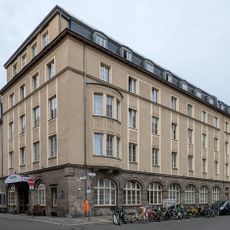
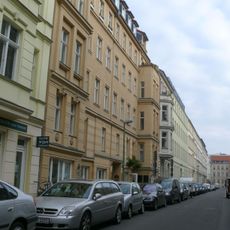
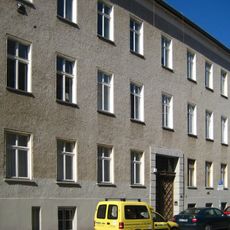
Mori-Ôgai-Gedenkstätte, University biographical museum in Mitte, Berlin, Germany.
The Mori-Ôgai-Gedenkstätte is a biographical museum in Berlin-Mitte dedicated to a Japanese writer and physician who lived in the city during the late 1800s. Inside, visitors find personal letters, manuscripts, and photographs that document his life and intellectual work.
Mori Ōgai, born Mori Rintarō, lodged in a boarding house at Luisenstraße 39 from April to June 1887 while studying hygiene and medicine in Berlin. The memorial room was established in the building of what is now Humboldt University and belongs to its Asian and African Studies institute. It documents his stay and the Japanese-German exchange of that era.
The memorial room holds the desk and chair Mori Ōgai used during his stay, alongside first editions of his translations, including works by Goethe and Lessing. He translated European literature into Japanese while studying hygiene under Robert Koch, and the displays trace how these two strands of his Berlin years fed into his later writing.
The museum opens Tuesday through Friday from noon to 4 p.m., with extended hours until 6 p.m. on Thursdays. Admission is free, making it easy to visit alongside other museums in the neighborhood without advance planning.
Mori Ōgai lived in this building at Luisenstraße 39 from April to June 1887, during his stay as a military doctor studying in Berlin. The memorial room keeps the connection to that address, and the site belongs to Humboldt University's Asian and African Studies institute, which uses it for research on his life and work.
The community of curious travelers
AroundUs brings together thousands of curated places, local tips, and hidden gems, enriched daily by 93,896 contributors worldwide.