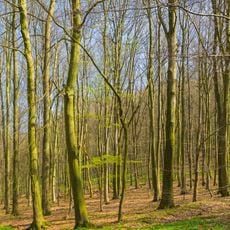
Großer Freeden, Hill and nature reserve in Bad Iburg, Lower Saxony, Germany
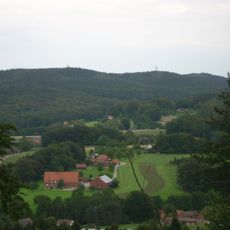
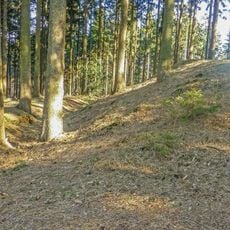
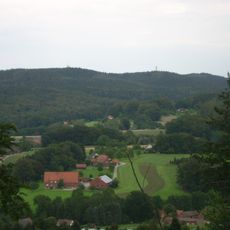
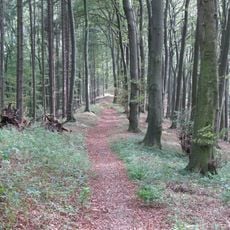
Großer Freeden is the 269-metre main summit of the Freeden, a beech-covered hill in the Teutoburger Wald within Bad Iburg, Lower Saxony; the smaller Kleiner Freeden reaches 200 metres. Its slopes carry lime-rich beech woodland on the north side and grass-rich beech woodland on the south, and a former limestone quarry on the Kleiner Freeden exposes folded, near-vertical Cenomanian and Turonian limestone beds.
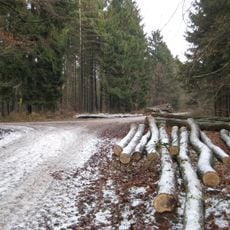
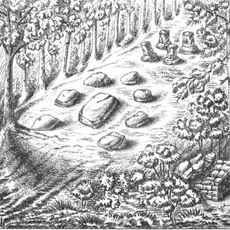
Local communities have used this area since medieval times, harvesting timber and grazing livestock in designated zones. These land management practices shaped the hill's appearance over the centuries.
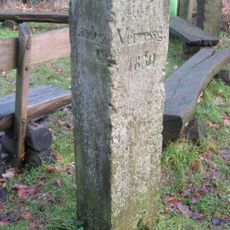
The name comes from the Low German verb freden, meaning to enclose or fence in; in Iburg the hill is still called Freden, and an 1847 survey map of the Kingdom of Hanover used that spelling. The hollow corydalis that carpets the slopes in spring is known locally as the Freedenblume.
The site is accessible from a parking area with multiple marked trails leading from it. Informational boards along the paths provide details about local plants and animals.
A former limestone quarry on the Kleinen Freeden exposes rock layers of Cenomanian Pläner and Turonian limestone that tectonic forces folded and tilted almost vertically. The quarry shows how the hill rose from the floor of a prehistoric sea.
The community of curious travelers
AroundUs brings together thousands of curated places, local tips, and hidden gems, enriched daily by 94,637 contributors worldwide.