St. Aegidii, Parish church in Münster, Germany
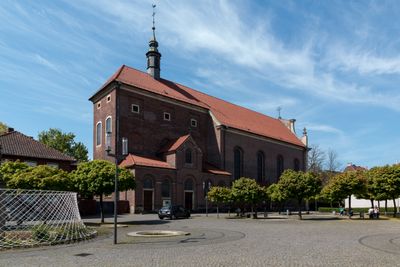
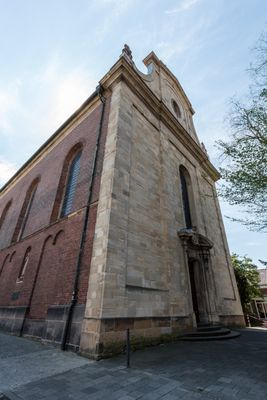
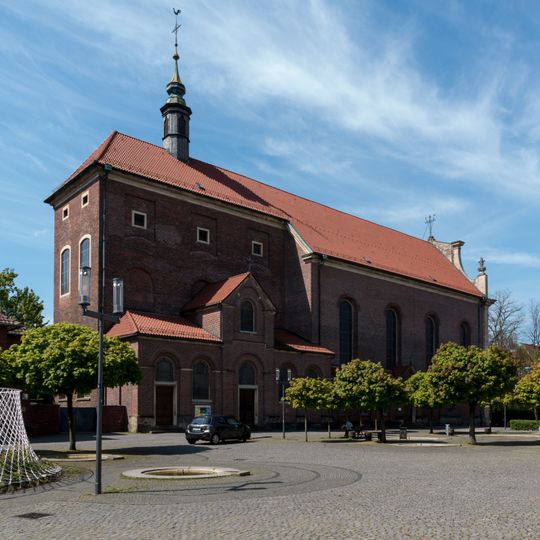
St. Aegidii is a parish church in Münster featuring classical architecture with a sandstone facade and exposed brickwork. The building has a four-bay hall layout with a rectangular choir section that defines its interior space.
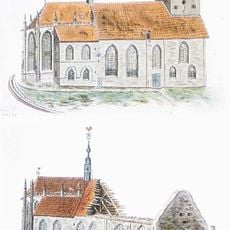
The first St. Aegidii church existed by 1181 and collapsed in 1821; its parish then took over the Capuchin church about 100 m east. That church was built from 1724 to 1729 to plans by Johann Conrad Schlaun, financed by Ferdinand von Plettenberg, and was consecrated in 1725. The Capuchin monastery was dissolved in 1811 and its convent buildings demolished in 1828.
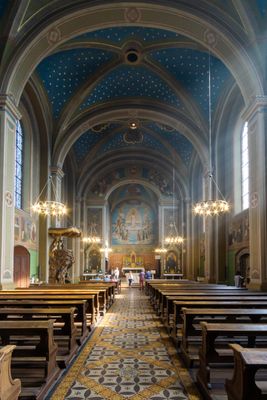
The interior displays a baptismal font from 1557 and a neo-Gothic high altar with ceiling paintings of Old Testament scenes. These decorative elements show how artistic styles changed over centuries and remain central to the church experience today.
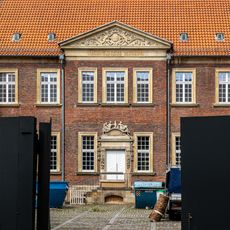
The church stands on Aegidiikirchplatz in the southwestern part of Münster's old town, about 100 m east of the Aegidiimarkt, where the medieval predecessor collapsed in 1821. Mass in the extraordinary form is celebrated here twice a week, and the Portuguese-language community also holds its services in the church. Enter from the paved square with trees; the sandstone portal with the Plettenberg crest faces the square.
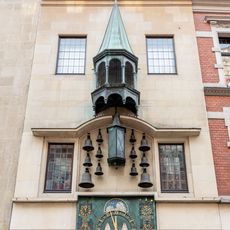
The only original piece of Schlaun's church interior is the wooden pulpit, carved by lay brother Stephan to Schlaun's designs; it shows the rule being handed to St Francis beneath a carved oak tree, with a sounding board shaped as a cloth held by angels. The small St Joseph bell of 1690 in the roof turret came from the old parish church.
The community of curious travelers
AroundUs brings together thousands of curated places, local tips, and hidden gems, enriched daily by 93,101 contributors worldwide.