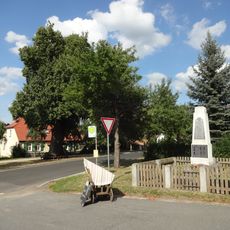
Golmberg, Mountain summit in Brandenburg, Germany
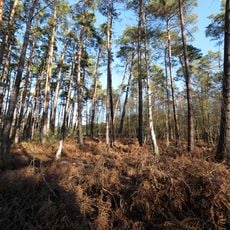
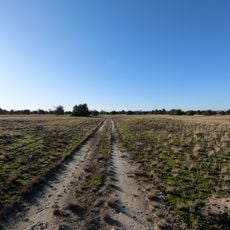
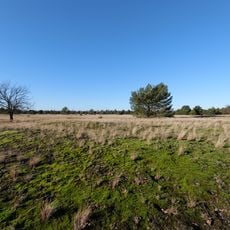
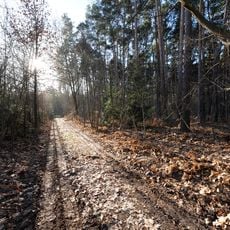
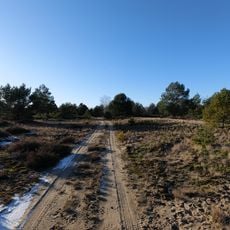
The Golmberg is the highest point in the Fläming landscape of Brandenburg, Germany, rising to 178 meters above sea level. It sits within a wide area of pine forest and heathland, with gentle slopes on all sides that make it easy to approach on foot.
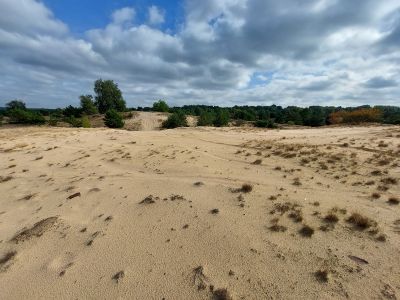
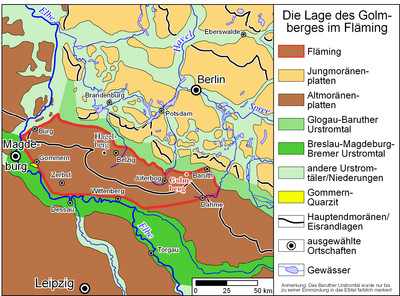
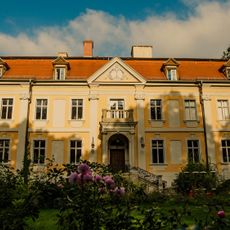
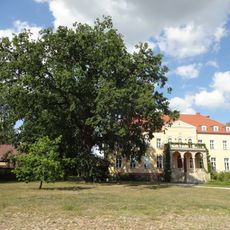
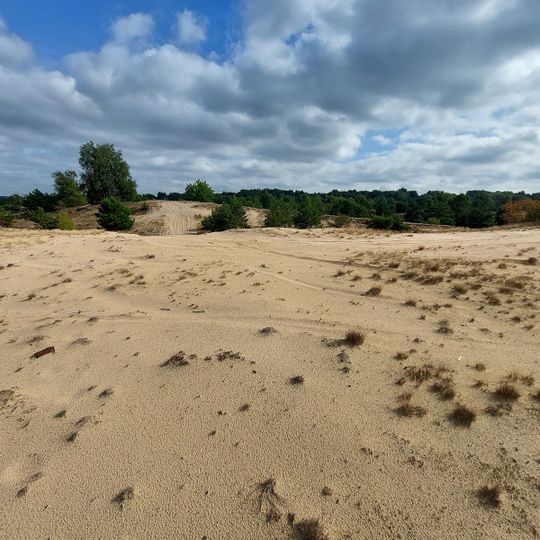
The Golmberg is a Saale Ice Age end moraine, part of the Werbig-Petkuser Staffel, its sands and till compressed by inland ice. For centuries it formed the core of the Stülpe estate around Stülpe Palace. After 1945 the Red Army used the surrounding area as a training ground, which left large open and succession areas; today the hill lies in the Heidehof-Golmberg nature reserve.
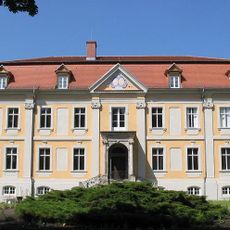
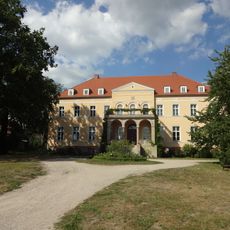
The name Golm derives from a Slavic word for hill or mound. On the summit a Slavic sanctuary is said to have stood, and legend holds that pilgrims were preached to from the Kanzelstein, a boulder in Jagen 84 between the summit and the old path from Lynow to Petkus. The hill lay for centuries at the core of the Stülpe estate around Schloss Stülpe.
The summit is reached by marked forest trails starting from several nearby villages, with the eastern approach being the most straightforward. The walk up is short because the slopes are gentle, so visitors of most fitness levels can get to the top without difficulty.
The Golmberg's southern face drops about 120 metres over just one kilometre to the Flemmingwiesen meadows of the Baruth glacial valley, one of Brandenburg's steepest gradients. Around 1900 the open summit gave views of 50 to 60 kilometres as far as Berlin and Potsdam, and 1920s hiking guides called it the "Märkische Rigi"; since 1990 the last bare knolls have grown over with oak, pine and blackthorn, so only a thin view remains in winter.
The community of curious travelers
AroundUs brings together thousands of curated places, local tips, and hidden gems, enriched daily by 94,321 contributors worldwide.