Schloss Stülpe, Baroque castle in Stülpe, Germany
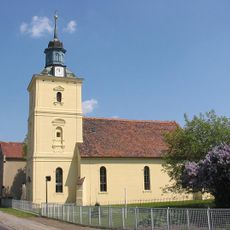
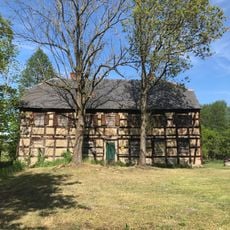
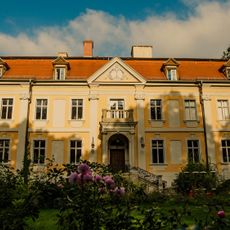
Schloss Stülpe is a Baroque castle with a central residence, stables, coach house, and smithy, all set within a 12-hectare park featuring cultivated gardens. The layout shows how such estates were organized, with distinct structures arranged to serve different functions in daily life.
A 16th-century von Hake castle on the site had fallen into disrepair when the von Rochow family acquired the estate by exchange contract in 1648. Adam Ernst II von Rochow took over in 1738, built a sawmill in neighbouring Schmielickendorf, and had the new house built between 1740 and 1754. After his death in 1759 the estate passed by lot to his third son Adolf Friedrich, who turned the park into a landscape garden with an outdoor staircase to a viewing terrace.
The old stables display decorative Meissen tiles on their walls, showing how much care was taken with even secondary buildings. Walking through these rooms gives you a sense of the craftsmanship and attention to detail that shaped life here centuries ago.
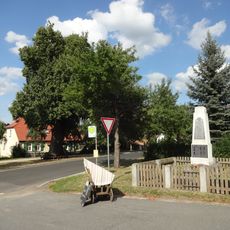
The estate lies northwest of the junction of Schönefelder Chaussee (L70) and Sandstraße (L73) in Stülpe, enclosed by a wall. The house now operates as a hotel, so the park and grounds are reached on foot from the village centre; visitors arriving by car approach via the L70 from the north.
The staircase balustrade was carved by Paulus Bartus in 1754 and carries the monogram AER of the builder Adam Ernst von Rochow. Sandstone figures of the four seasons from the Torgau sculptor Siegeißer once stood at the entrance; they and their putti are lost. In the park, a small burial ground holds Rochus von Rochow (1856–1901) and his wife Margarethe; a marble cross added in 1937 marks a stillborn daughter of the last owner.
The community of curious travelers
AroundUs brings together thousands of curated places, local tips, and hidden gems, enriched daily by 93,838 contributors worldwide.