Städtischer Friedhof Altglienicke, Municipal cemetery in Altglienicke, Berlin, Germany
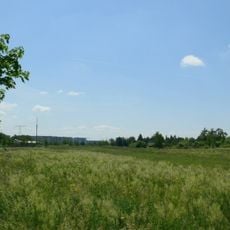
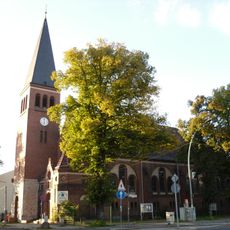
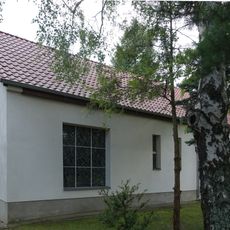
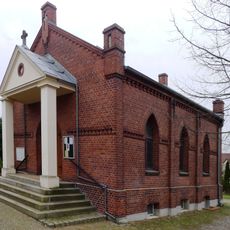
Städtischer Friedhof Altglienicke is a burial ground in Berlin that spreads across a large area with diverse grave types and memorial structures throughout. The grounds feature paved pathways, planted areas, and a chapel building distinguished by architectural elements reflecting southern European design.
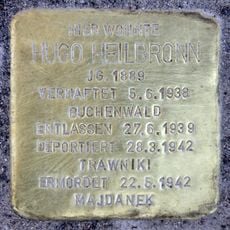
From 1940 the cemetery held a collective urn site for more than 1,370 prisoners from concentration camps, opponents of the Nazi regime including several priests, and victims of the Aktion T4 euthanasia programme, about a third of them Polish. A collective grave followed in 1950, and in 2021 an L-shaped glass wall was added bearing the victims' names, some written in 2020 in the handwriting of interested citizens.
The cemetery has served as a place of remembrance for Berlin families across generations, and this role shapes how people move through and use the space today. Visitors encounter quiet corners where the city's past becomes visible through the names and dates inscribed on the stones.
The cemetery is easy to reach on foot and has marked pathways that make navigation straightforward. Most areas are accessible for regular visits, though some sections may have uneven surfaces to be aware of when walking around.
The mortuary hall holds a water-hydraulic lift, a technical monument that has not operated since the 1930s. Even after recent renovation work, the TÜV did not approve it, so coffins are still carried up from the cellar by hand.
The community of curious travelers
AroundUs brings together thousands of curated places, local tips, and hidden gems, enriched daily by 93,898 contributors worldwide.