Goethebrunnen, Cultural heritage monument and water well in Bad Berka, Germany.
The Goethebrunnen is a stone fountain structure in Bad Berka surrounded by green spaces and walking paths. The installation sits within a spacious park featuring maintained walkways and seating areas that invite visitors to pause and take in the surroundings.
The fountain was established on 24 June 1813 as the Carl-August-Brunnen, named after Duke Carl August, with support from Goethe, who had outlined his doubts in a memorandum of 22 November 1812. It first offered sulphur baths and drinking cures under inspector Heinrich Friedrich Schütz. After the sulphur spring dried up in 1840, the spa switched to the iron-rich Stahlquelle. In 1949 it was renamed Goethe-Brunnen.
The fountain takes its name from German writer Johann Wolfgang von Goethe and connects the site to Germany's literary heritage. The installation shows how the town preserves and celebrates its connection to cultural history through such monuments.
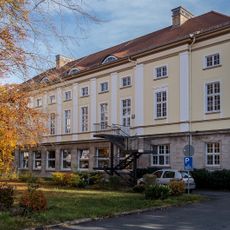
The fountain stands about 300 metres east of the town centre, at the start of Goetheallee where the Goethepark begins and a few metres from the right bank of the Ilm. The 1835 Stahlbadehaus, now housing the tourist information and spa administration, is nearby. The spring pavilion dates from 1909 and the small fountain figure was added in 1950 by Bad Berka artist Bruno Eyermann.
The spring the fountain was built over dried up in 1840, after which the spa switched its bathing operations to the iron-rich steel spring. The present pavilion above the source dates from 1909, and the small fountain figure was made in 1950 by Bad Berka artist Bruno Eyermann.
The community of curious travelers
AroundUs brings together thousands of curated places, local tips, and hidden gems, enriched daily by 93,722 contributors worldwide.