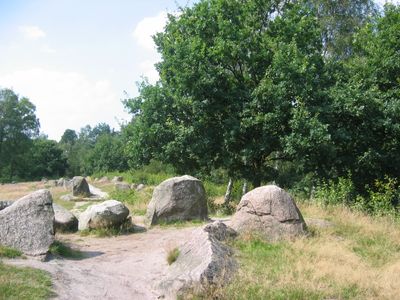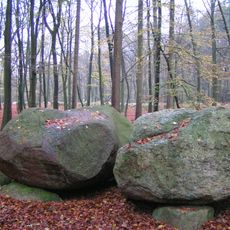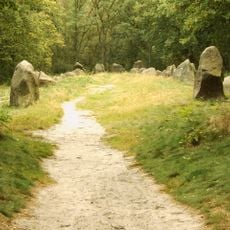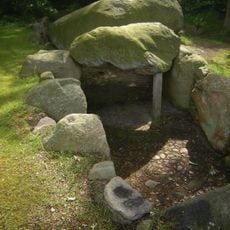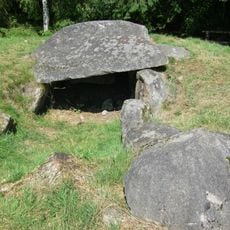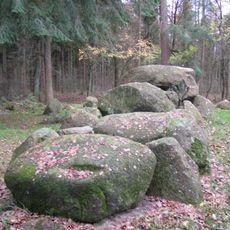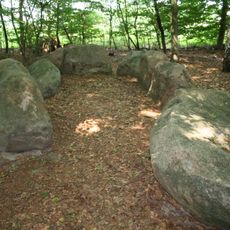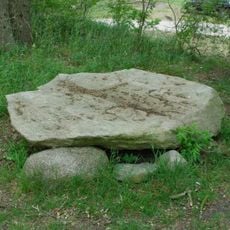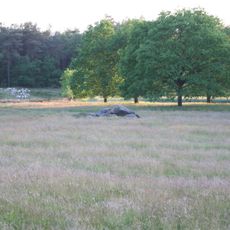
Glaner Braut, Neolithic dolmen in Wildeshausen, Germany
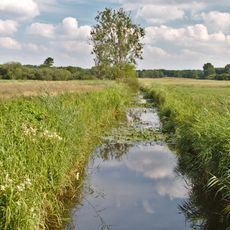
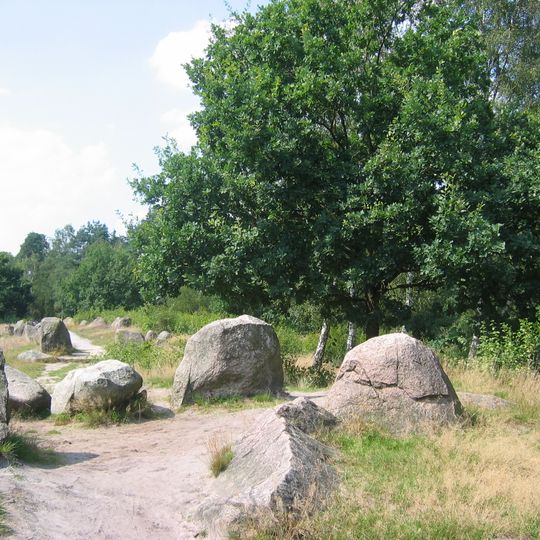
Glaner Braut is an archaeological site with four megalithic structures positioned along the Hunte River within the Glaner Heath. These stone chambers were originally built to serve as burial chambers and remain visible in their original arrangement today.
These structures were built between 3500 and 2800 BCE during the Funnel Beaker culture, a prehistoric society that lived in this region. An archaeological excavation in 2011 found an urn with cremated remains, showing that the site continued to serve as a burial place into the Iron Age.
The name Glaner Braut refers to these megalithic structures positioned in the local landscape. Across different eras, people returned to bury their dead here, showing that this location held deep meaning for communities over centuries.
The site sits within the Glaner Heath and is accessible on foot, though it offers minimal facilities on the grounds. Visitors should wear weather-appropriate clothing and allow time for a leisurely walk to see all four structures.
The concentration of megalithic structures in this area is unusually high, indicating that the region was densely settled during the Neolithic. This makes the site an important record of prehistoric settlement patterns.
The community of curious travelers
AroundUs brings together thousands of curated places, local tips, and hidden gems, enriched daily by 90,802 contributors worldwide.