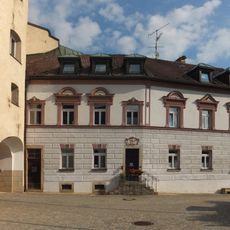
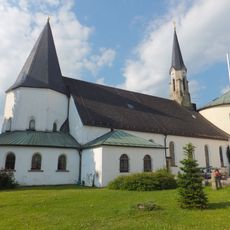
Schloss Fürstenstein, Architectural heritage château in Fürstenstein, Germany.
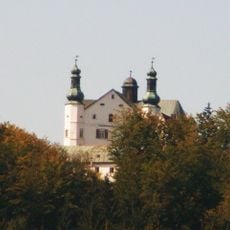
Schloss Fürstenstein stands on a 578-metre rock about 70 metres above the road junction at the foot of the village in the Bavarian Forest. The complex is split into a lower castle grouped around a courtyard, with three massive round towers on its east side holding medieval masonry, and an upper castle reached by an outdoor staircase, a two-winged building whose south side shows remains of medieval fortification.
Duke Albrecht I of Bavaria built the castle between 1347 and 1365; a 1365 charter calls it "the stone that the high-born prince Duke Albrecht has built". In 1570 Artolf Schwarzensteiner had it converted into a palace, and Swedish troops plundered it during the Thirty Years' War. A fire destroyed it in 1848; Bishop Heinrich von Hofstätter of Passau bought the ruin in 1860 and had it rebuilt.
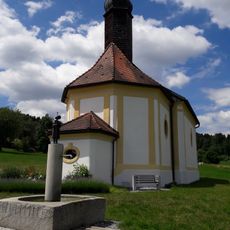
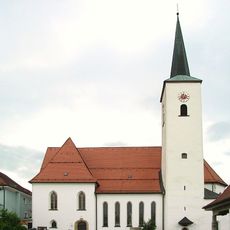
The castle church, built in 1629 after the model of the Altötting Gnadenkapelle, held a copy of the Black Madonna of Altötting from around 1620 and was a much-visited pilgrimage church into the 19th century. A staircase links the church directly to a side hall of the castle. Since 2007 the Rittersaal and inner courtyard host cultural events and the annual Europa-Gipfel.
The castle can only be viewed from the outside; the publicly accessible part is limited to the northern wing of the lower castle, opened during events. It stands on a rock about 70 metres above the road junction at the foot of the village, visible from afar.
The castle appeared in 2005 on the online auction site eBay, advertised together with the Englburg as "jewels in the Bavarian Forest". Two years later, the roughly 5,000-square-metre complex was bought by Annette Pinker, a German living in Spain, who died in 2014.
The community of curious travelers
AroundUs brings together thousands of curated places, local tips, and hidden gems, enriched daily by 92,871 contributors worldwide.