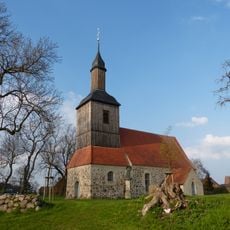
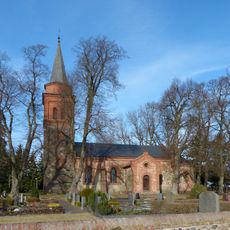
Gutshaus Wietzow, manor house in Wietzow, Daberkow, Germany
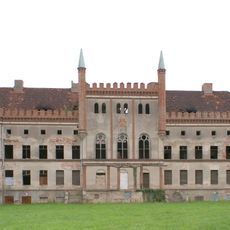
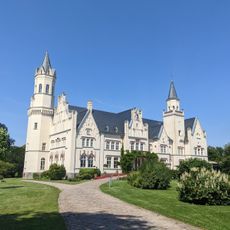
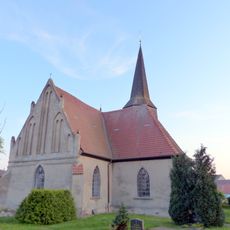
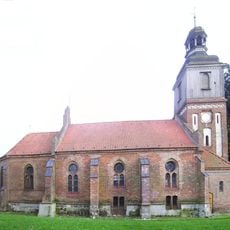
Gutshaus Wietzow is a Gothic Revival manor house featuring pointed arches, intricate masonry details, and carved stone ornaments across its exterior walls and window frames. The structure displays the typical layout of rural estate houses with architectural features spanning multiple construction periods.
Wietzow was a fief of the von Perselin family in the 15th century and passed to the von Blücher family in the 17th century, when it was a Vorwerk of Daberkow. Around 1700 the Pomeranian lands went to the von Linden family, and Karl Friedrich von Linden laid out an English landscape park after 1750. In 1865 the estate passed to Adolf Graf von Blücher, who gave the baroque core of the house a neo-Gothic form.
The manor reflects how estate owners shaped village life as major landowners with deep roots in the region. The building's position and design reveal how such families displayed their wealth and authority through their rural seats.
The manor is located in Daberkow and can best be explored on foot, allowing views of the exterior architecture and surrounding landscape from different angles. It is best visited during clear weather to fully appreciate the stone details and the surrounding countryside.
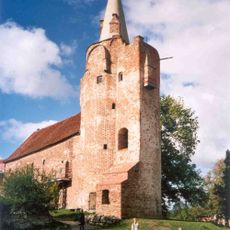
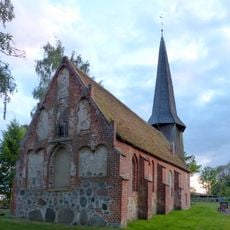
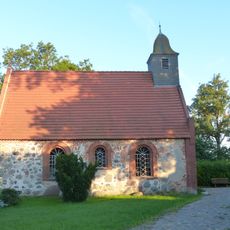
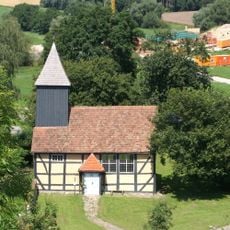
In the park stands a burial chapel built probably in the second half of the 19th century; until the 1990s it held two busts, likely of members of the von Blücher family, set in niches. The busts are now kept in the Kreisheimatmuseum Demmin.
The community of curious travelers
AroundUs brings together thousands of curated places, local tips, and hidden gems, enriched daily by 94,601 contributors worldwide.