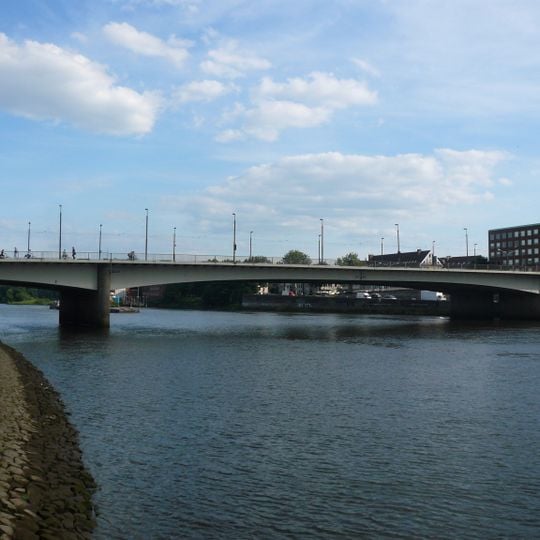
Wilhelm-Kaisen-Brücke, Road bridge in Bremen, Germany
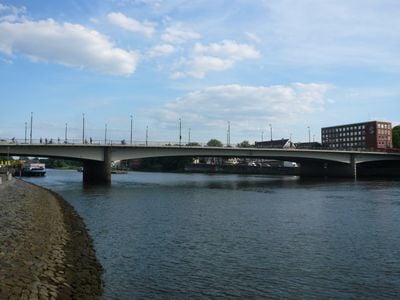
The Wilhelm-Kaisen-Brücke is a road bridge over the Weser in Bremen, linking the Altstadt with the Neustadt. It carries separate lanes for motor traffic, trams, cyclists and pedestrians. Since 1903 the Große and Kleine Weser bridges have stood on one axis, and the present structure was inaugurated in 1960.
The first documented mention of a Weser bridge here appears in a 1244 deed recording the sale of land in the Neuen Lande by Hude monastery to the Teutonic Order. A 1250 privilege for the ship mills describes the site as an island on both sides of the bridge. For six centuries the crossing was a timber structure with eight to fourteen supporting piers, financed by 102 mostly left-bank parishes; the present bridge opened in 1960 and has borne the name Wilhelm-Kaisen-Brücke since 1980.
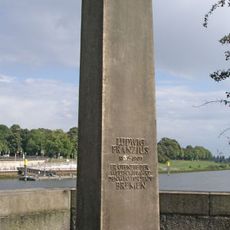
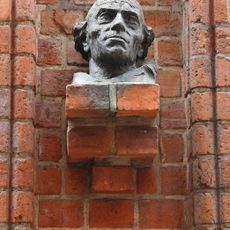
The bridge is named after Wilhelm Kaisen, who rebuilt Bremen as mayor after World War II. His name symbolizes the city's recovery and development.
The bridge carries tram and bus lines with stops on the Teerhof side, and separate lanes serve pedestrians and cyclists. Since 1903 the Große and Kleine Weser bridges have stood on one axis, so a crossing continues straight over the small arm. Ice floes on the Weser were once held off by rows of ice breakers set across the river at the city moat.
The name refers not to a "great bridge over the Weser" but to a bridge over the "Große Weser", the main river channel; the smaller left arm, the Kleine Weser, was crossed by a separate bridge until 1903, when both were aligned on one axis.
The community of curious travelers
AroundUs brings together thousands of curated places, local tips, and hidden gems, enriched daily by 92,653 contributors worldwide.