Gustavsburg, Castle ruin and architectural heritage monument in Homburg, Germany.
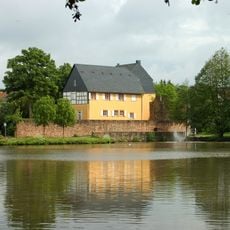
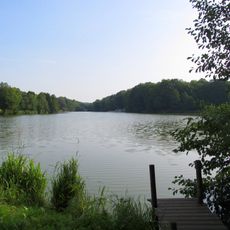
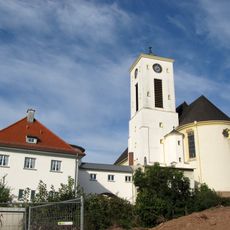
Gustavsburg is a Baroque building by Swedish architect Jonas Erikson Sundahl in the centre of Jägersburg, directly on the 1.7-hectare Schloßweiher pond. It began as the Salian border castle Burg Hattweiler, destroyed around 1168 by Barbarossa and rebuilt as a Staufer castle; after a fire in the Thirty Years' War, Duke Gustav Samuel Leopold had the residential building renewed in Baroque style in 1720 and a chapel added, naming the complex after himself.
Remains show the site began as a Salian border castle, destroyed by Barbarossa around 1168 and rebuilt as a Staufer stronghold. It passed to the Counts of Zweibrücken, and a Bartholomäus von Hattweiler is first mentioned in 1272. Duke Johann I of Palatinate-Zweibrücken converted it into a palace in 1590; after a fire in the Thirty Years' War, Duke Gustav Samuel Leopold had Jonas Erikson Sundahl rebuild it in Baroque style in 1720 and named it Gustavsburg after himself.
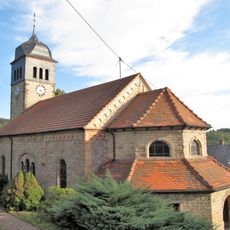
The building has been renamed three times: Burg Hattweiler, Schloss Hansweiler in 1590, and Gustavsburg in 1720 after Duke Gustav Samuel Leopold. Elisabeth von Nassau-Saarbrücken liked it enough to swap the French name Hautefeuille for Hattweiler in the Minnelied she worked into her Moselle Franconian romance "Sibille". Today the upper-floor hall hosts exhibitions, concerts and festivities, and the chapel and festival hall are used for weddings.
Gustavsburg stands in the centre of Jägersburg, directly on the bank of the 1.7-hectare Schloßweiher pond, so it is reached on foot from the village rather than by a mountain trail. The building is owned by the town of Homburg and houses the Burg- und Schlossmuseum Jägersburg; the upper-floor hall is used for exhibitions, concerts and celebrations, and the chapel and festival hall are booked by couples for weddings. Visitors should check opening times of the museum before setting out, since the building is not a freely walkable ruin.
The name Gustavsburg comes from Duke Gustav Samuel Leopold of Palatinate-Zweibrücken, who had Jonas Erikson Sundahl renew the building in Baroque style in 1720 and named it after himself. The chapel and the hall on the upper floor are now used by couples for weddings.
The community of curious travelers
AroundUs brings together thousands of curated places, local tips, and hidden gems, enriched daily by 94,505 contributors worldwide.