Gut Kaltenbrunn, Architectural heritage monument in Gmund am Tegernsee, Germany
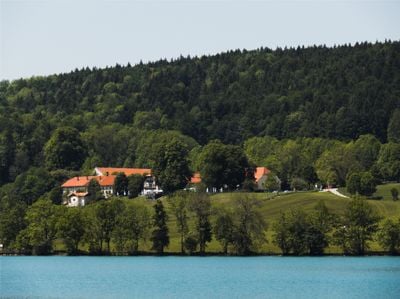
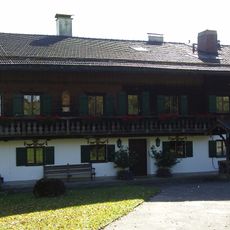
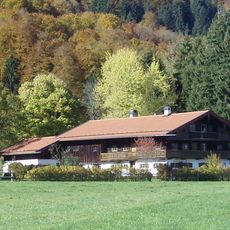
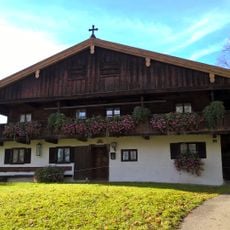
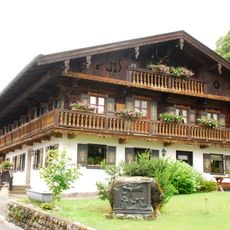
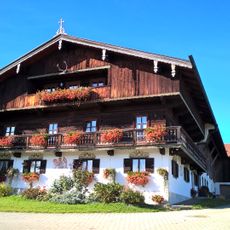
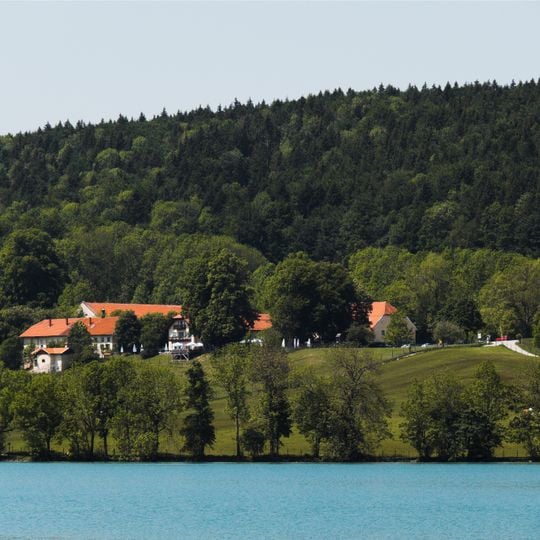
Gut Kaltenbrunn is a quadrangular farmstead on the northern shore of Lake Tegernsee consisting of four interconnected buildings that form a legally protected architectural complex. The ensemble functions today partly as a restaurant and retail space while maintaining its historic building structure.
The estate originated in the 14th century under the administration of Tegernsee Monastery until 1821, when Bavarian King Max I Joseph purchased it and introduced cattle breeding operations. This transition marked a shift from monastic to royal agricultural management in the region.
The name Kaltenbrunn comes from a farming family from Kaltenpronn who settled here in 1411 and worked the land for generations. The eastern former Herrenhaus, or Königshaus, now serves as a Gasthaus; the Königsflügel wing was renovated and reopened as a restaurant in summer 2015 with a concept developed with Michael Käfer. The estate's own lakeside Strandbad reopened in summer 2010.
The four buildings of the Vierseithof stand around an inner courtyard; the former Herrenhaus or Königshaus in the east serves as the inn, and the terrace with white umbrellas faces the slope. The associated lakeside Strandbad reopened in summer 2010, initially without catering. The Königsflügel was renovated by 2015, when the restaurant opened there.
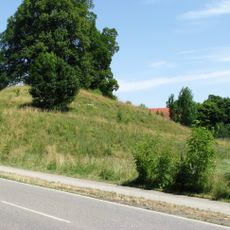
Beneath the present-day farmstead lies a medieval castle mound and remains of earlier settlements preserved as archaeological monuments. These buried layers reveal how the site evolved across centuries with successive structures built upon older foundations.
The community of curious travelers
AroundUs brings together thousands of curated places, local tips, and hidden gems, enriched daily by 94,370 contributors worldwide.